Do houseplants need fertilizer in fall and winter? For most indoor plants, the answer is usually less fertilizer—and often none during the darkest part of winter.
As days become shorter and indoor light levels decrease, many houseplants naturally slow their growth. When a plant isn't actively producing new leaves, stems, roots, or flowers, it has less need for additional nutrients. Continuing a heavy summer fertilizing schedule during this slower period can lead to fertilizer buildup in the soil and may stress the roots. Penn State Extension notes that most indoor plants do not need fertilizer during winter because of lower light levels.
However, there isn't one fertilizer rule that applies to every houseplant.
A plant growing under strong artificial lighting, a tropical plant that continues actively growing indoors, or a winter-flowering houseplant may still need nutrients during fall or winter.
The better question isn't simply “Is it fall or winter?”
It's:
“Is my houseplant actively growing, and does it have enough light to use the nutrients?”
Do Houseplants Need Fertilizer in Fall?
In most cases, houseplants can still be fertilized during early fall if they are actively growing.
Fall is a transition period. Some plants continue producing new growth for several weeks, while others slow down as daylight decreases.
If your plant is still producing:
- New leaves
- New stems
- New roots
- Flower buds
- Flowers
it may still benefit from fertilizer.
But as growth slows, fertilizer applications should generally become less frequent.
Minnesota Extension recommends fertilizing houseplants while they are actively growing, generally from late spring into early fall.
A practical fall approach
Instead of abruptly stopping fertilizer on the first day of autumn:
Early fall: Continue feeding if the plant is actively growing.
Mid-to-late fall: Gradually reduce feeding as growth slows.
Winter: Usually stop fertilizing plants that have stopped growing.
This approach is more useful than following a strict calendar because indoor conditions vary considerably.
Do Houseplants Need Fertilizer in Winter?
For most houseplants, fertilizer is unnecessary during winter if growth has slowed or stopped.
The main reason is reduced light.
Shorter days and weaker indoor light can cause plants to grow more slowly. If the plant isn't actively growing, applying fertilizer doesn't automatically make it grow faster.
Penn State Extension specifically recommends little or no winter fertilizer for most indoor plants because winter light levels are lower.
This is especially important if your houseplant is sitting:
- Far from a window
- In a dim room
- In a north-facing window with limited light
- In a cool location
- Under short periods of artificial light
In these conditions, heavy fertilization can do more harm than good.
Why You Shouldn't Fertilize a Slow-Growing Houseplant
Fertilizer provides nutrients, but nutrients aren't a substitute for light.
Plants need sufficient light to photosynthesize and use those nutrients for growth.
If light levels drop dramatically in winter, a plant may use fewer nutrients. Repeated fertilizer applications can therefore leave excess salts in the potting medium.
Overfertilizing can contribute to:
- Leaf tip burn
- Brown leaf edges
- Root damage
- Stunted growth
- Leaf drop
- Salt buildup
- Poor root health
Minnesota Extension warns that overfertilizing can cause stunting, leaf drop, and even plant death.
So if your plant isn't growing, don't assume fertilizer is what it needs.
It may need better light, appropriate watering, or simply time to get through its slower season.
The Most Important Factor: Is Your Houseplant Actively Growing?
This is the easiest way to decide whether to fertilize in fall and winter.
Signs your plant is actively growing
You may see:
- New leaves opening
- New shoots appearing
- Fresh stems developing
- New roots
- Flower buds forming
- Continued flowering
- Noticeably increasing plant size
If your plant is actively growing and has sufficient light, you may be able to continue feeding at a reduced frequency.
Signs your plant is dormant or barely growing
Look for:
- No new leaves
- No new stems
- Very slow growth
- Soil staying wet for much longer
- Reduced water consumption
- Leaf drop associated with seasonal transition
- Little change in plant size
In this situation, fertilizer is generally unnecessary.
Should You Stop Fertilizing Houseplants in Fall?
Not necessarily.
Early fall and late fall are different.
If your houseplants are still receiving good light and actively growing, you don't necessarily need to stop fertilizer immediately.
Instead, gradually reduce feeding as the plant's growth slows.
For example, if you normally fertilize every two weeks during summer, you might move toward less frequent feeding during the fall rather than continuing the exact same schedule indefinitely.
The important point is to follow the plant's growth and environment rather than the calendar.
When Should You Stop Fertilizing Houseplants for Winter?
There isn't a single date when every houseplant should stop receiving fertilizer.
A good general rule is:
Stop or greatly reduce fertilizer when your plant stops actively growing because of lower light and cooler conditions.
For many common indoor plants, this happens during the darker winter months.
If the plant is still actively growing indoors under strong natural or supplemental lighting, it may not need a complete fertilizer break.
Can You Fertilize Houseplants During Winter?
Yes, some can, but only when the growing conditions support active growth.
A houseplant growing under a good-quality grow light for 12–14 hours a day may continue growing through winter. Supplemental lighting can help compensate for reduced natural light during winter.
Similarly, some tropical houseplants kept in a warm, bright indoor environment may continue producing new growth.
In these situations, completely stopping fertilizer isn't necessarily required.
But even actively growing winter houseplants generally don't need an aggressive fertilizer schedule.
Think of winter fertilizer as conditional:
Active growth + sufficient light = possible light feeding
Little/no growth + low light = usually no fertilizer
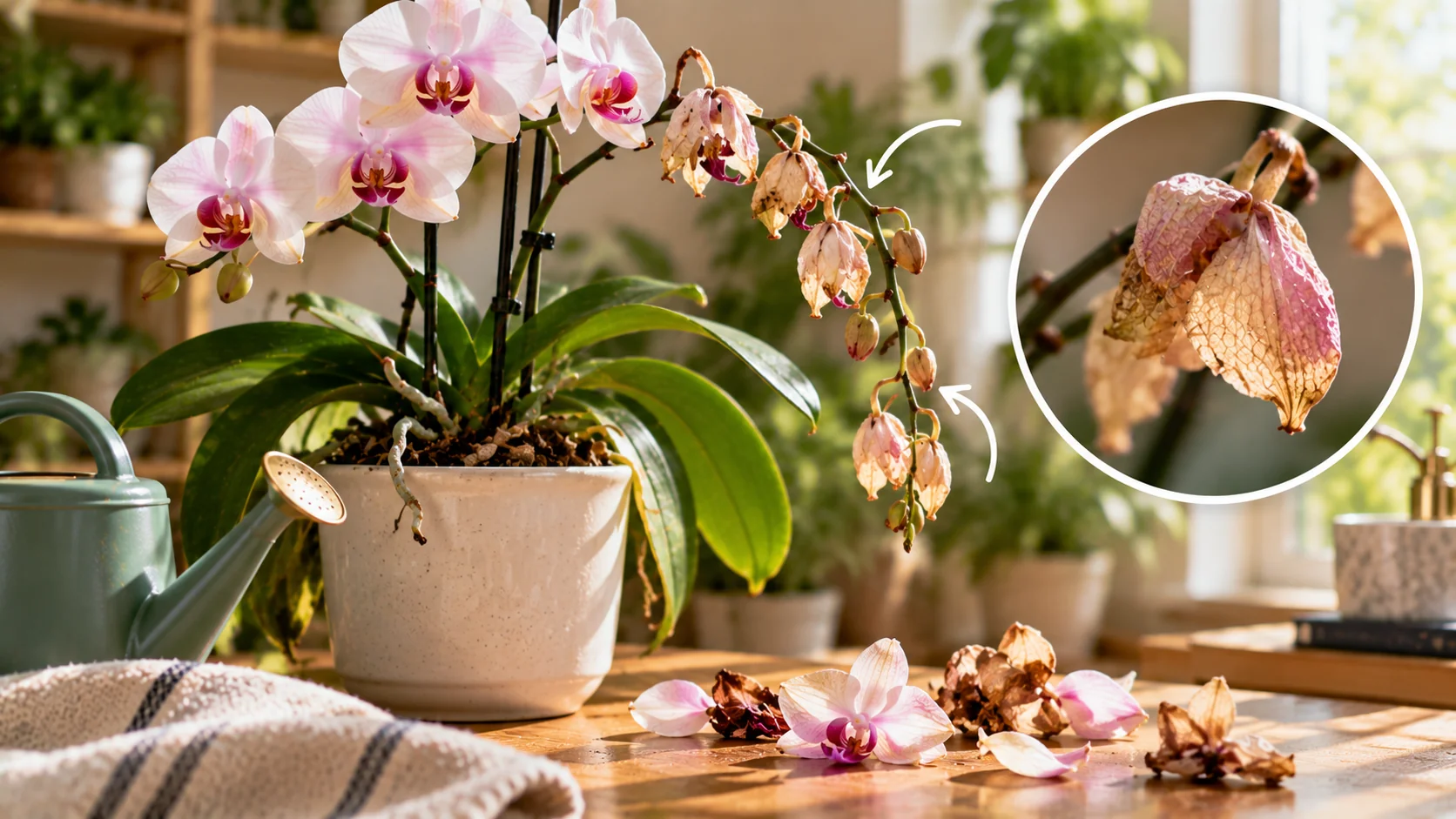
What About Winter-Flowering Houseplants?
Winter-flowering plants are an important exception.
Some houseplants naturally produce flowers during fall or winter and may continue requiring nutrients while they are actively growing or flowering.
Holiday cacti are one example. Minnesota Extension notes that they can have specific fall fertilization needs as flower buds form.
Other examples of plants that may have seasonal flowering cycles include:
- Christmas cactus
- Thanksgiving cactus
- Some orchids
- African violets
- Certain bromeliads
- Some cyclamen
The fertilizer requirements depend on the plant.
Don't assume that every winter-flowering plant needs a high-phosphorus “bloom booster.” Proper light, temperature, watering, and overall plant health are usually more important than simply increasing fertilizer.
Should You Use Bloom Fertilizer in Fall?
You may have seen fertilizers marketed specifically as:
- Bloom booster
- Flower fertilizer
- Bloom formula
- High-phosphorus fertilizer
But don't automatically switch to one just because fall has arrived.
A plant doesn't flower simply because you give it more phosphorus.
Flowering depends on a combination of:
- Plant maturity
- Light
- Temperature
- Watering
- Nutrition
- Seasonal signals
- Species-specific requirements
Some plants have specific fall fertilizer recommendations, while others don't need a special bloom formula.
The safest approach is to identify the plant first and follow its nutritional requirements.
What Type of Fertilizer Should You Use in Fall?
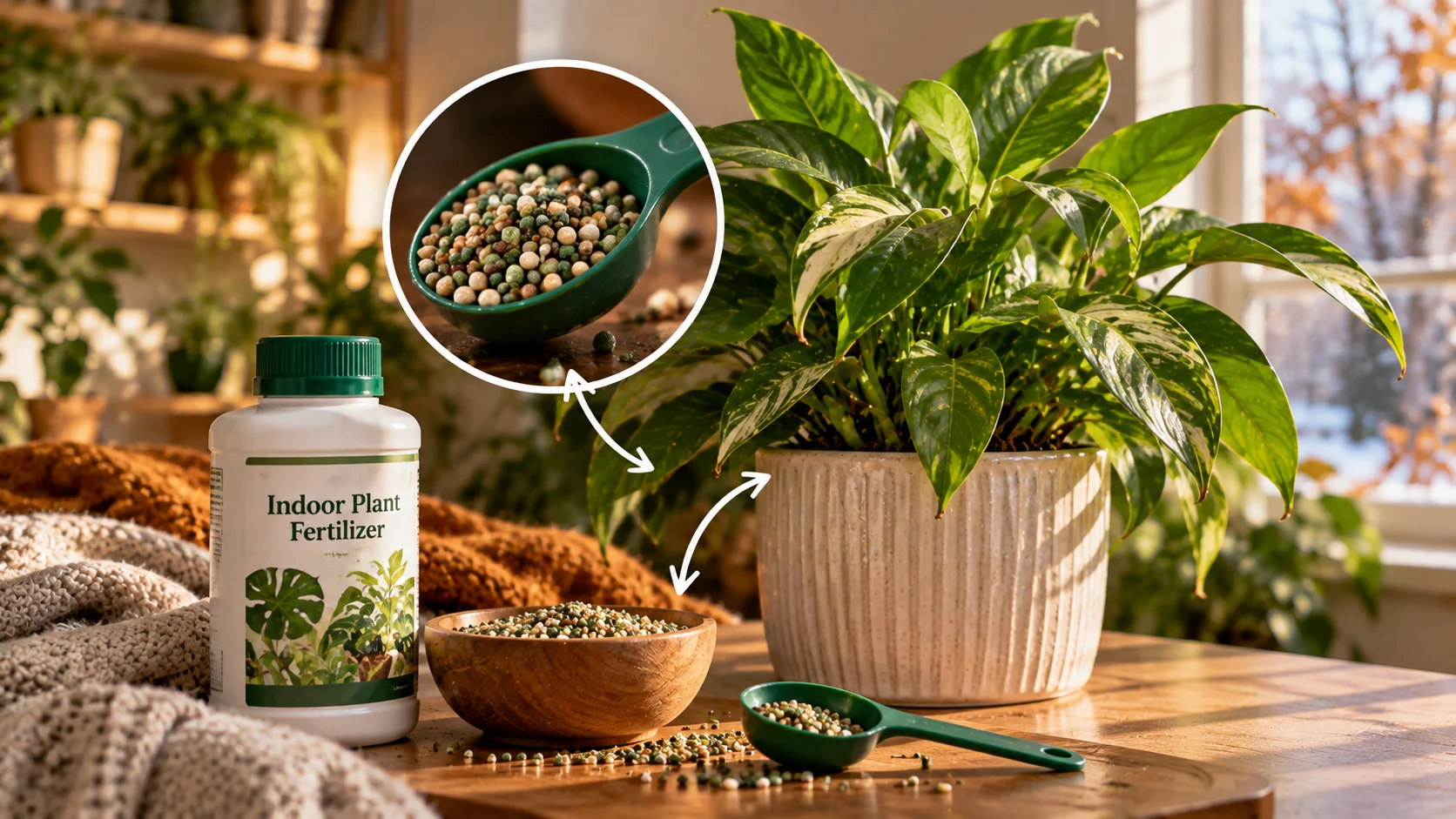
If your houseplant is still actively growing, a balanced houseplant fertilizer is generally a reasonable option.
Fertilizers provide nutrients such as:
- Nitrogen (N)
- Phosphorus (P)
- Potassium (K)
The correct fertilizer depends on the plant.
Nitrogen
Supports leafy and vegetative growth.
Phosphorus
Plays a role in root development and reproductive growth.
Potassium
Supports several plant processes, including water regulation and overall plant function.
Don't assume that a fertilizer with the highest numbers is automatically better.
More fertilizer does not mean more growth.
Follow the product label and avoid exceeding the recommended concentration.
Minnesota Extension recommends using fertilizer according to label directions and notes that liquid/soluble fertilizers are immediately available, while slow-release products release nutrients over a longer period.
Should You Dilute Fertilizer for Houseplants?
Many indoor gardeners prefer using fertilizer at a reduced concentration rather than applying a strong dose.
Minnesota Extension's indoor-plant guidance recommends applying fertilizer at half the recommended strength when plants are actively growing.
This can be particularly useful for houseplants because indoor plants often grow more slowly than outdoor plants.
However, always follow the specific fertilizer label. Different products have different concentrations and instructions.
What Happens If You Fertilize Too Much in Fall or Winter?
Overfertilizing during a period of slow growth can cause several problems.
Excess fertilizer can accumulate in the potting soil as soluble salts.
You may eventually notice:
- Brown leaf tips
- Crispy leaf margins
- Yellowing leaves
- Weak growth
- Wilting despite moist soil
- Root damage
- White crust on the soil surface
If you've been fertilizing frequently and your plant develops unexplained brown tips, fertilizer buildup is one possibility to investigate.
Don't respond by adding even more fertilizer.
How Does Winter Light Affect Fertilizer Needs?
This is one of the most important concepts in seasonal houseplant care.
More light → more potential growth → greater nutrient demand
Less light → slower growth → lower nutrient demand
This is why the same fertilizer routine that worked beautifully in July may be inappropriate in December.
A plant sitting near a bright window may continue growing.
A plant sitting several feet away from that window may barely grow.
Two identical plants can therefore have completely different fertilizer needs during winter.
Penn State Extension notes that indoor plants often grow more slowly during winter because of changing environmental conditions and reduced light, which is one reason fertilizer is generally unnecessary during this period.
Do Grow Lights Change Winter Fertilizer Needs?
Yes.
Grow lights can extend the amount of usable light available to indoor plants during winter.
If a plant receives enough supplemental light and continues actively growing, it may continue needing nutrients.
Minnesota Extension recommends supplemental lighting when winter light is insufficient and notes that full-spectrum LED lighting can be used for houseplants.
However, simply installing a grow light doesn't mean you need to immediately increase fertilizer.
Watch the plant.
If new growth is appearing, its nutrient requirements may increase.
Should You Fertilize a Houseplant With Yellow Leaves in Winter?
Not automatically.
Yellow leaves are not proof of nutrient deficiency.
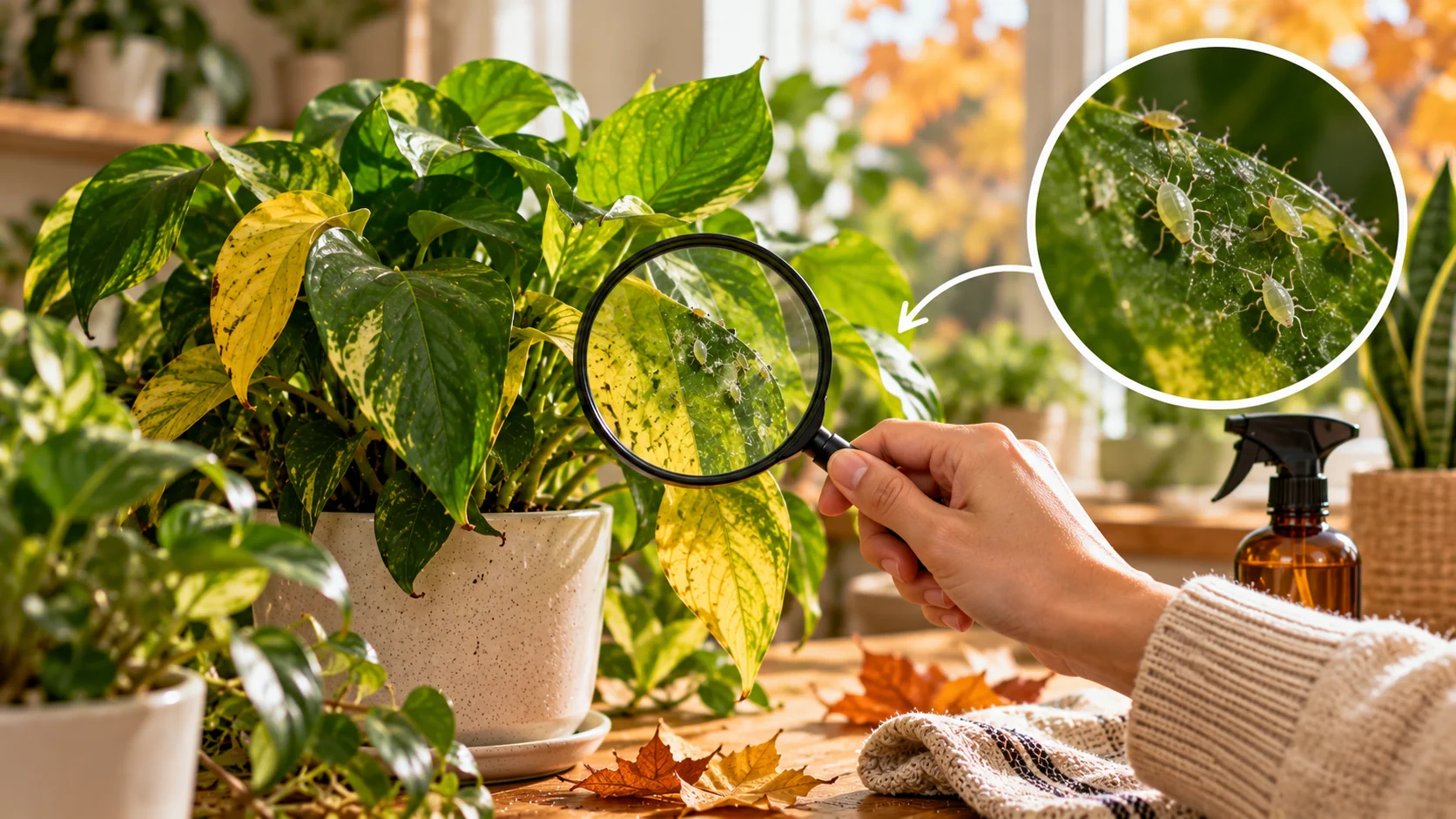
Yellowing can also result from:
- Overwatering
- Underwatering
- Root problems
- Low light
- Temperature stress
- Natural aging
- Pests
- Poor drainage
Adding fertilizer without identifying the cause can make a stressed plant worse.
First check:
- Soil moisture
- Drainage
- Light
- Roots
- Pests
- Recent environmental changes
Only consider nutrient deficiency after other common causes have been evaluated.
Should You Fertilize a Newly Repotted Houseplant in Fall or Winter?
Usually, don't rush to fertilize immediately after repotting.
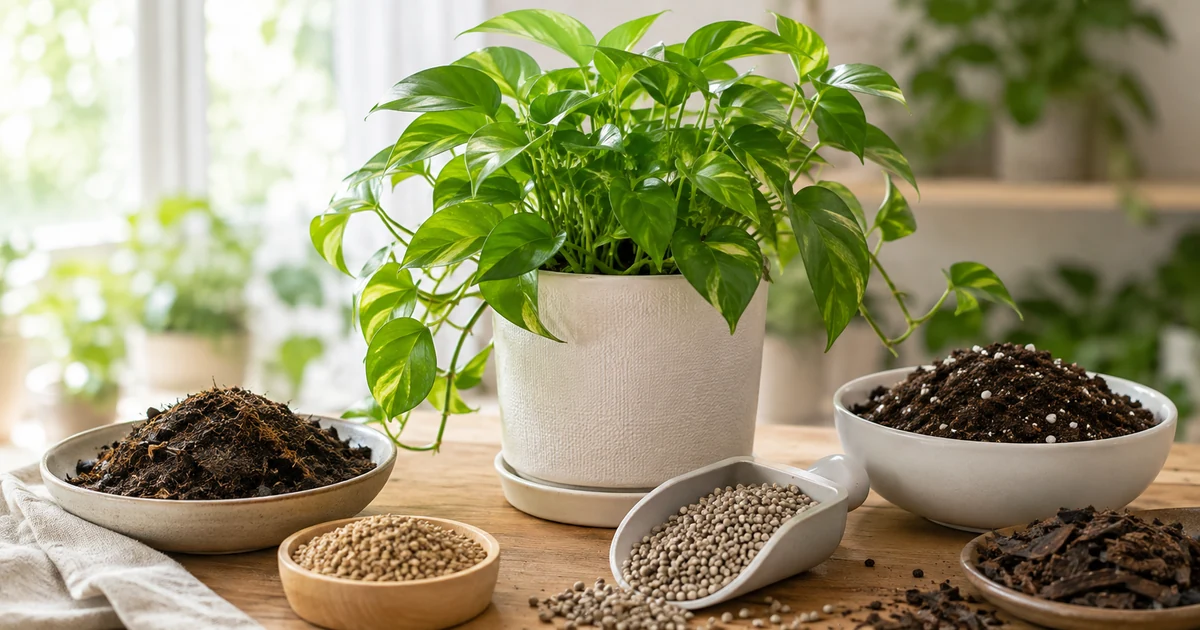
Fresh potting mixes may already contain nutrients, depending on the product.
More importantly, a recently repotted plant may need time to recover from root disturbance.
If the plant isn't actively growing, there is little reason to add fertilizer simply because you've changed the soil.
Allow the plant to establish itself and follow the fertilizer recommendations for the particular potting mix and plant.
What About Houseplants Brought Indoors in Fall?
If your houseplants spent the summer outdoors, their needs can change significantly when you bring them inside.
Indoor conditions typically mean:
- Less intense light
- Shorter light duration
- Lower airflow
- Different humidity
- Different temperatures
- Slower water use
Penn State Extension recommends adjusting watering based on soil moisture because plants often grow more slowly indoors, and it states that fertilizer is generally unnecessary when plants are not actively growing.
This is one reason you shouldn't bring a plant indoors and immediately continue its full outdoor summer fertilizer routine.
What Should You Do With Fertilizer in Early Fall?
Early fall is often a transition period.
If your plant is still growing strongly:
- Continue light feeding.
- Monitor new growth.
- Watch soil moisture.
- Avoid excessive fertilizer.
As daylight decreases:
- Reduce feeding frequency.
- Monitor growth.
- Stop when active growth ends.
This gradual adjustment is often more appropriate than abruptly changing everything on September 1.
What Should You Do With Houseplants During Winter?
Winter care is about maintaining healthy conditions rather than pushing growth.
Focus on:
Light
Give plants as much appropriate light as they need.
Water
Water according to soil moisture rather than your summer schedule.
Temperature
Keep plants away from cold drafts and extreme heat sources.
Humidity
Winter heating can make indoor air very dry. Some humidity-loving plants may benefit from additional humidity.
Fertilizer
Generally stop feeding plants that have stopped growing.
Pests
Continue checking plants regularly. Indoor pests can become easier to notice and manage once plants are inside.
Fall and Winter Fertilizer Guide by Houseplant Type
| Houseplant | Fall | Winter |
|---|---|---|
| Pothos | Reduce as growth slows | Usually stop if growth stops |
| Monstera | Continue while actively growing, then reduce | Usually stop in low light |
| ZZ Plant | Reduce as growth slows | Usually no fertilizer |
| Snake Plant | Reduce significantly | Usually no fertilizer |
| Peace Lily | Reduce as growth slows | Usually stop if growth is minimal |
| Philodendron | Feed during active growth | Reduce or stop in low light |
| Spider Plant | Reduce toward late fall | Usually stop if growth slows |
| Orchids | Depends on type and growth cycle | Depends on species and flowering |
| Christmas Cactus | May need feeding around active bud development | Follow its flowering cycle |
| Succulents | Usually reduce | Generally little or no fertilizer |
These are general guidelines rather than rigid schedules. Plant variety, temperature, light, and indoor growing conditions can change the appropriate routine.
How Often Should You Fertilize Houseplants in Fall?
There is no universal fall fertilizer schedule.
A better approach is to adjust based on growth.
If your plant is actively growing, you may continue feeding according to its fertilizer instructions, often at a reduced strength or frequency.
As growth slows, reduce applications.
By late fall, many houseplants will need significantly less fertilizer than they did during summer.
How Often Should You Fertilize Houseplants in Winter?
For most houseplants:
Little or none.
If the plant is dormant or barely growing, don't fertilize simply because a certain number of weeks has passed.
If it continues actively growing under strong natural or artificial light, occasional feeding may be appropriate.
The plant's growth is a better indicator than the season alone.
A Simple Fall-to-Winter Fertilizer Schedule
You can use this as a general framework:
September / Early Fall
Check whether the plant is still actively growing.
If yes, continue feeding but consider reducing frequency.
October / Mid-Fall
Watch daylight and growth.
If new growth slows, begin reducing fertilizer.
November / Late Fall
Many houseplants are entering a slower growth period.
Fertilize only if there is continued active growth and adequate light.
December–January / Winter
For most low-light houseplants, stop fertilizer.
Continue only when the plant is actively growing under suitable conditions.
Late Winter / Early Spring
As daylight increases and new growth appears, gradually resume feeding.
Minnesota Extension recommends starting regular fertilization again as plants move out of winter and into active spring growth.
Common Fertilizer Mistakes in Fall and Winter
1. Following a summer schedule all year
Your plant's nutrient needs change as growth and light change.
2. Fertilizing because the leaves are yellow
Yellowing has many possible causes.
3. Using more fertilizer to force growth
More nutrients cannot compensate for insufficient light.
4. Fertilizing dry soil
Fertilizer can be stressful to roots when applied improperly. Follow the product's directions.
5. Fertilizing a dormant plant
If the plant isn't growing, it generally has little need for additional nutrients.
6. Ignoring fertilizer buildup
Repeated feeding can increase soluble salts in the potting mix.
7. Using a bloom booster on every plant
Different plants have different nutritional requirements.
8. Assuming every houseplant has the same winter needs
A tropical foliage plant, succulent, orchid, and winter-flowering cactus may have very different seasonal growth cycles.
How to Know When to Start Fertilizing Again
The easiest signal is new growth.
Look for:
- New leaves
- New shoots
- New stems
- Fresh roots
- Flower buds
- Increasing water consumption
As winter ends and daylight increases, many houseplants naturally begin growing more actively.
That's the time to gradually resume feeding.
Don't go from zero fertilizer to heavy feeding overnight.
Start gently and monitor the plant.
Frequently Asked Questions
Do houseplants need fertilizer in fall?
Some do, but not necessarily all season. If a plant is actively growing in early fall, you can usually continue feeding according to its needs. As growth slows, reduce or stop fertilizer.
Do houseplants need fertilizer in winter?
Most houseplants don't need fertilizer during winter if they are growing slowly or not growing at all. Lower winter light reduces growth and therefore reduces nutrient demand.
Should I stop fertilizing houseplants in fall?
You don't necessarily need to stop immediately. Reduce fertilizer as growth slows, then stop when the plant enters its low-growth period.
Can you fertilize houseplants in winter?
Yes, if the plant is actively growing under adequate light. But for most houseplants receiving limited winter light, fertilizer is usually unnecessary.
Is fertilizer necessary for houseplants in winter?
Generally, no. A dormant or slow-growing houseplant usually benefits more from appropriate light, watering, temperature, and humidity than additional fertilizer.
Should I fertilize a houseplant with yellow leaves?
Not until you determine why the leaves are yellow. Overwatering, low light, root problems, pests, and natural aging can all cause yellow leaves.
Does winter fertilizer make houseplants grow faster?
Not if the plant lacks sufficient light. Fertilizer supplies nutrients, but it cannot replace the energy plants obtain through photosynthesis.
When should I start fertilizing houseplants again?
Resume regular feeding when daylight increases and your plants begin producing new growth. Late winter or early spring is a common transition point.
Do succulents need fertilizer in winter?
Most succulents grow slowly or become dormant in winter, so fertilizer is usually unnecessary. Their requirements can vary depending on species and indoor growing conditions.
Do orchids need fertilizer in fall and winter?
It depends on the orchid type and whether it is actively growing or flowering. Orchids shouldn't automatically be treated like ordinary foliage houseplants; follow the nutritional requirements of the specific orchid.
Final Thoughts
So, do houseplants need fertilizer in fall and winter?
For most plants, fertilizer should decrease as growth slows and is often unnecessary during the darkest part of winter.
The biggest mistake is treating fertilizer as something plants need on a fixed calendar schedule.
Instead, look at three things:
Light + Growth + Plant Type
If your houseplant is receiving enough light and actively producing new growth, it may still benefit from occasional feeding.
If it is sitting in low winter light and barely growing, fertilizer is usually unnecessary.
As spring approaches, increasing daylight will naturally encourage new growth. That's when you can gradually return to a more regular fertilizing routine.
In other words, don't fertilize the season—fertilize the plant's active growth.