As summer ends, your houseplants begin to respond to shorter days, lower light levels, cooler temperatures, and changing indoor humidity. Even plants that stay indoors all year may need a different care routine in fall.
If your plants spent the summer outdoors, autumn is also the time to bring them inside, check for pests, and help them adjust to indoor conditions.
Knowing how to prepare houseplants for fall can prevent common problems such as overwatering, yellow leaves, pest infestations, and leaf drop.
Here are 10 essential fall houseplant care tips to help your plants transition smoothly into the cooler months.
1. Move Houseplants to Brighter Light
Fall brings shorter days and less intense sunlight, so your plants may receive less light than they did during summer.
Move light-loving plants closer to a bright window while keeping sensitive plants away from harsh direct sunlight or cold glass. Watch for signs of low light, including:
- Leggy growth
- Pale leaves
- Smaller new leaves
- Slow growth
- Plants leaning toward windows
If natural light is limited, a grow light can provide supplemental lighting during fall and winter.
2. Adjust Your Watering Schedule
One of the most common fall houseplant mistakes is continuing the same watering routine used during summer.
As light and temperatures decrease, many plants grow more slowly and their soil takes longer to dry. Watering too frequently can leave roots sitting in wet soil and increase the risk of root rot.
Instead of watering on a fixed schedule, check the potting mix first.
Plants have different needs. Succulents and snake plants generally prefer more drying between waterings, while plants such as peace lilies prefer more consistent moisture.
Always make sure excess water can drain through the pot's drainage holes.
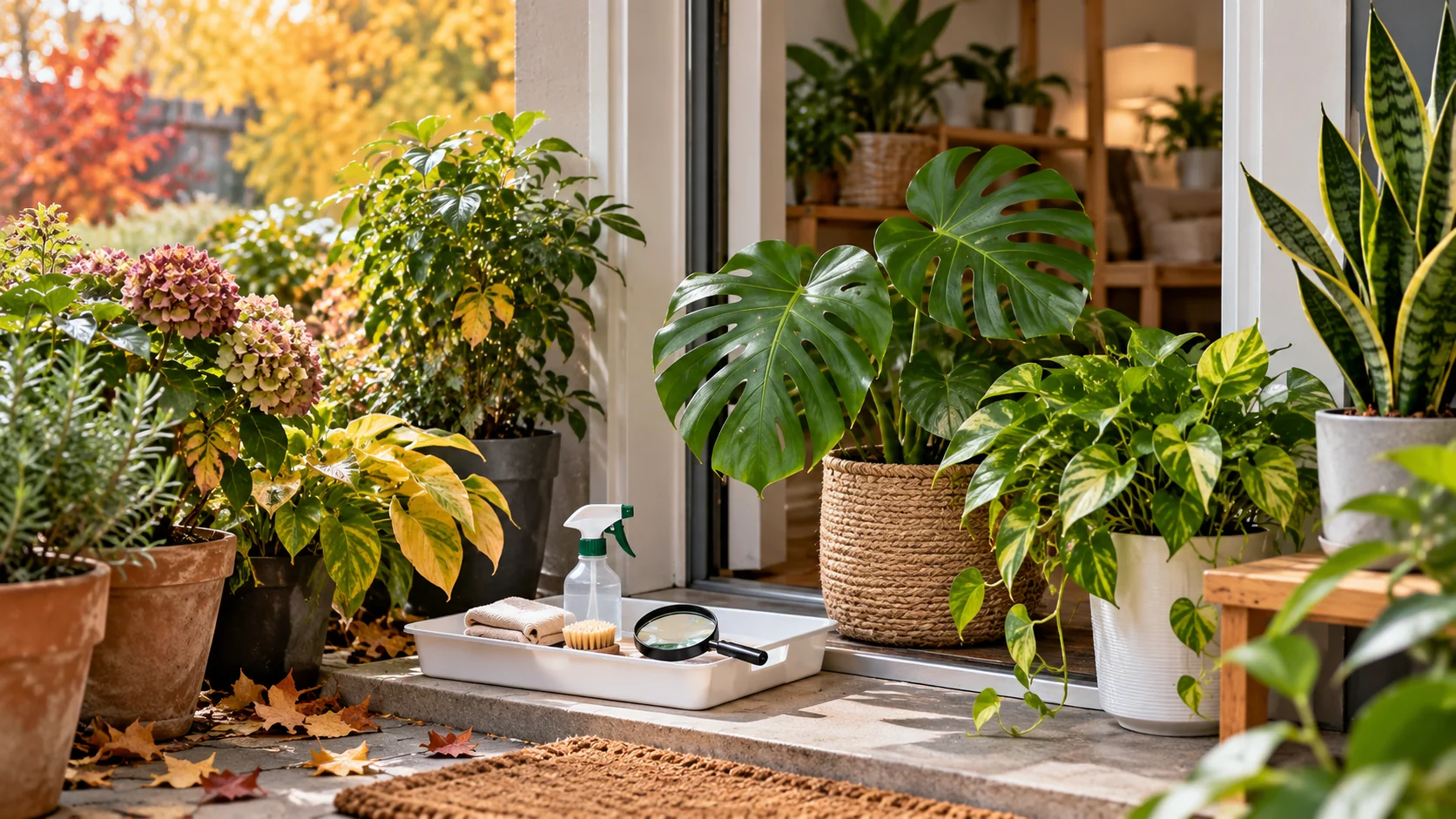
3. Bring Outdoor Plants Inside
If your houseplants spent summer on a balcony, patio, or porch, start preparing them for their return indoors before temperatures become too cold.
Many tropical houseplants can be damaged by temperatures around 50°F (10°C) or lower, although cold tolerance varies by species.
Before bringing a plant indoors:
- Check the leaves and stems for pests.
- Inspect the soil and pot.
- Remove dead or damaged growth.
- Clean the foliage.
- Place the plant somewhere suitable indoors.
Moving plants inside before cold weather arrives gives them time to adjust to lower light and different humidity.
4. Check for Pests
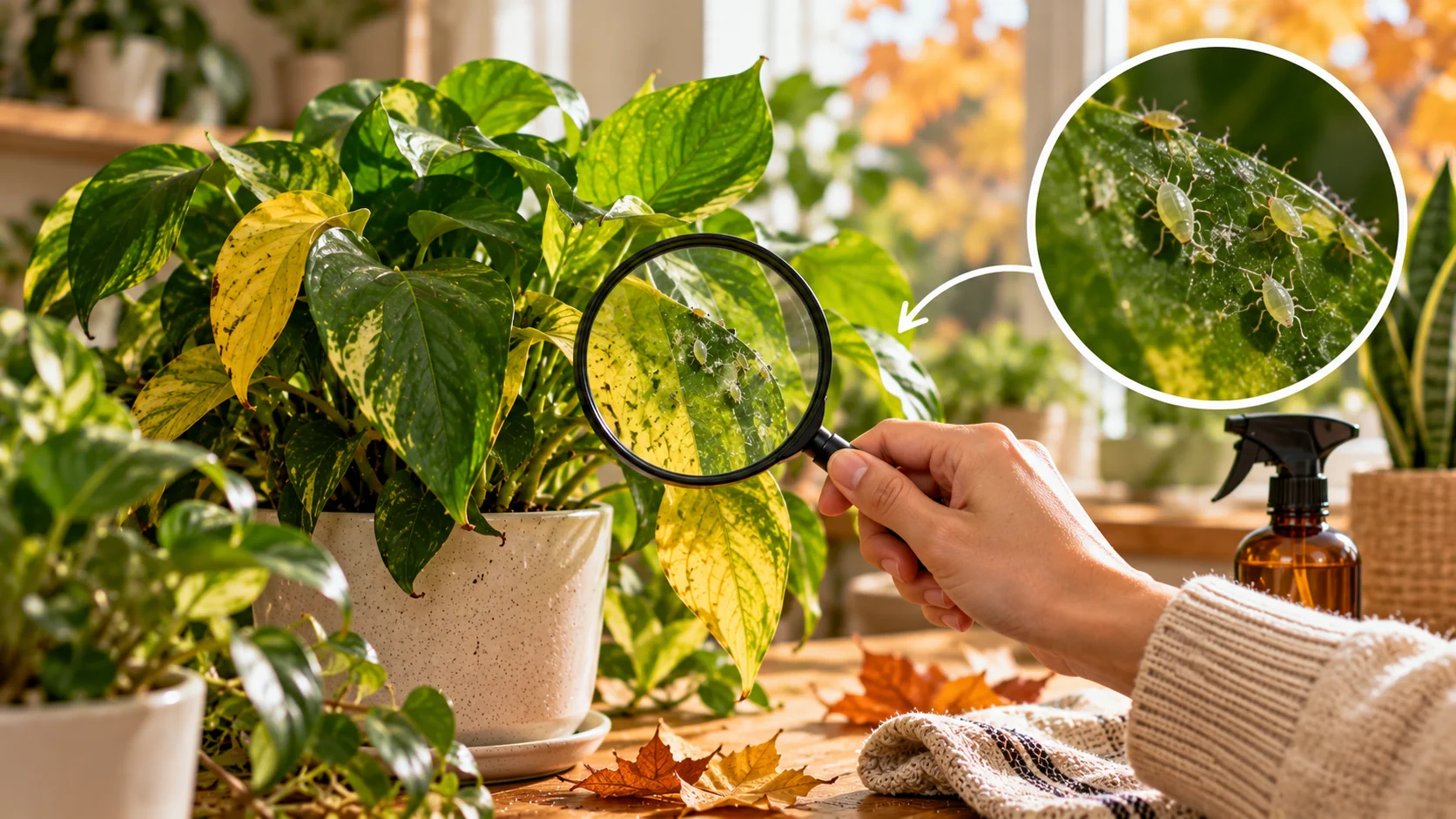
Outdoor plants can bring pests into your home if they aren't inspected carefully.
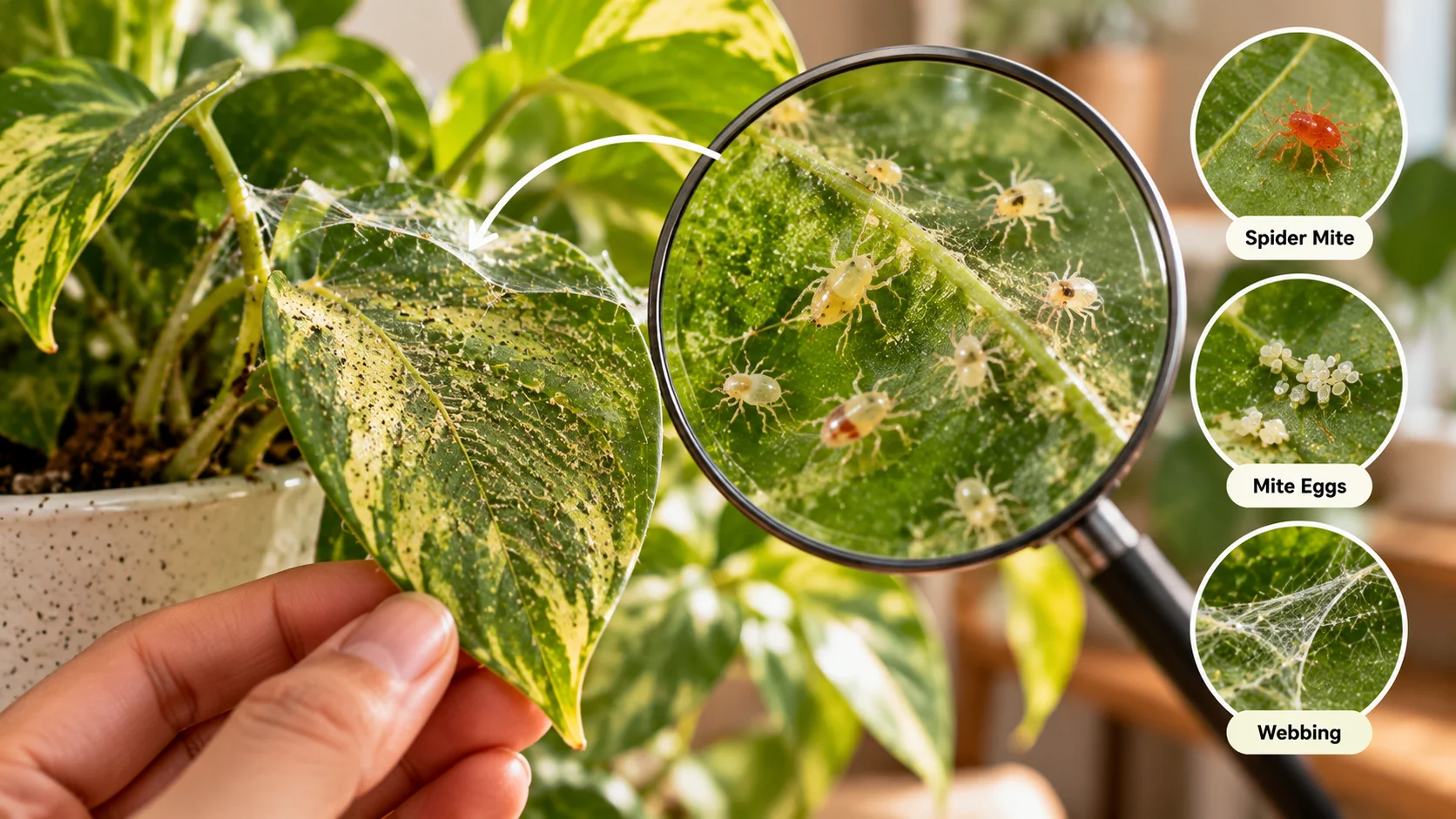
Common houseplant pests include:
- Spider mites
- Aphids
- Mealybugs
- Scale
- Whiteflies
- Thrips
- Fungus gnats
Check the underside of leaves, stems, leaf joints, and the surface of the potting soil.
Look for webbing, sticky residue, white insects, distorted leaves, or tiny spots.
If you find pests, isolate the plant before placing it near your other houseplants. Keeping returning plants separate for a few weeks can help prevent an infestation from spreading.
5. Clean Your Plant Leaves
Dust can accumulate on foliage and reduce the amount of light reaching the leaves.
Use a soft, damp cloth to gently clean smooth leaves. You can also rinse suitable plants with lukewarm water.
Avoid using household cleaning products or unnecessary leaf-shine products.
While cleaning, inspect the foliage for pests, brown spots, yellow leaves, or other signs of stress.
Fall is also a good time to remove dead leaves and damaged stems using clean pruning shears.
6. Protect Plants From Temperature Changes
Houseplants generally prefer stable temperatures.
During fall, keep plants away from:
- Cold drafts
- Open exterior doors
- Cold windows
- Radiators
- Heating vents
- Space heaters
Cold air can damage tropical plants, while hot, dry air from heating systems can cause brown leaf edges and moisture loss.
Choose a location that provides suitable light, temperature, and humidity without exposing the plant to sudden temperature changes.
7. Increase Humidity When Needed
Indoor air can become drier when heating systems start running. Tropical houseplants such as calatheas, ferns, peace lilies, and some philodendrons may benefit from additional humidity.
You can increase humidity by:
- Using a humidifier
- Grouping plants together
- Placing suitable plants in naturally humid rooms
- Using a pebble tray
A humidifier is generally more consistent than occasional misting.
Don't assume every plant needs high humidity. Succulents and many drought-tolerant plants prefer drier conditions.
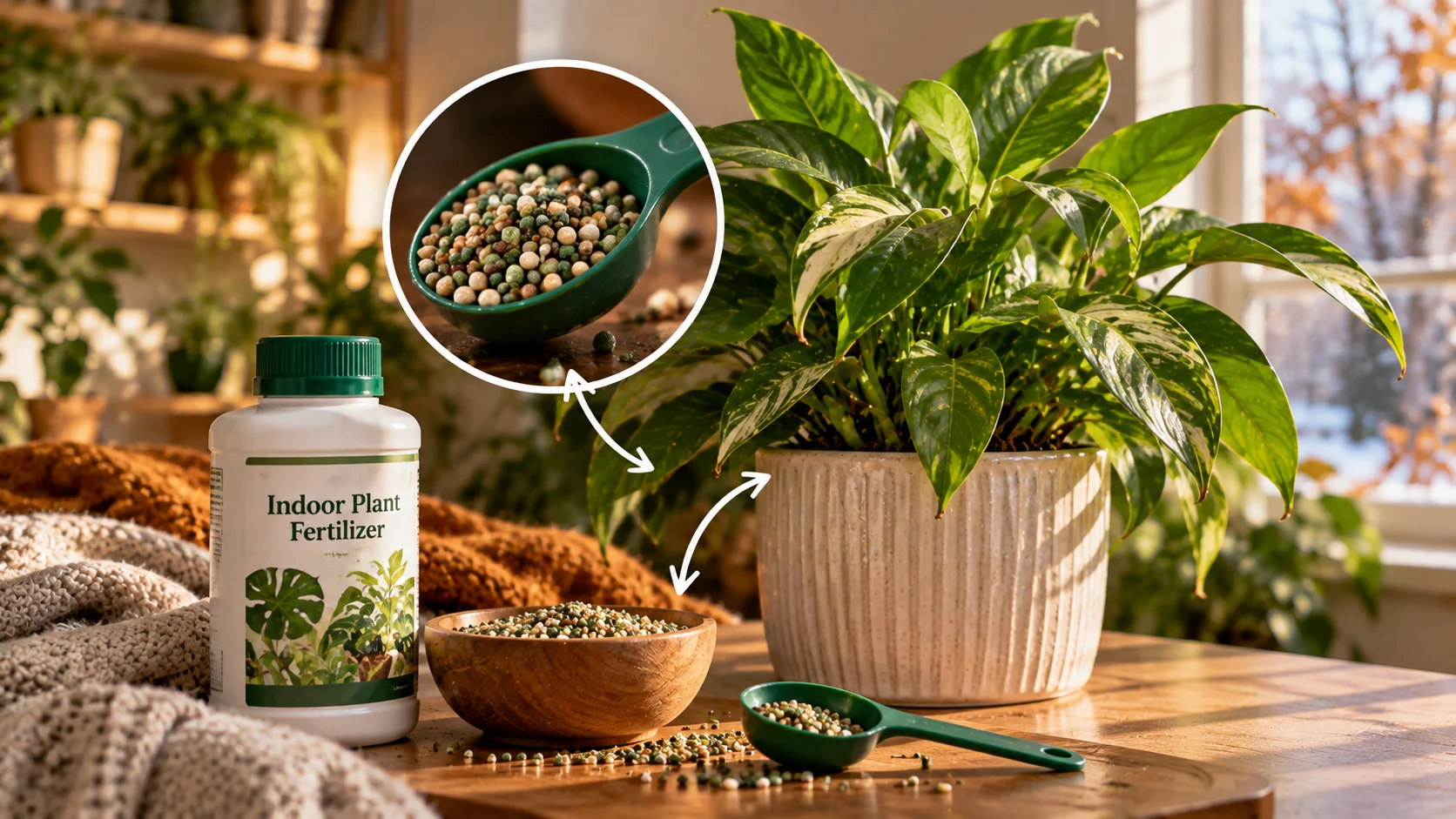
8. Reduce Fertilizer as Growth Slows
Plants usually need the most nutrients during active growth.
As fall brings lower light and slower growth, many houseplants need less fertilizer. Continuing a heavy summer feeding schedule can lead to fertilizer buildup in the soil.
If your plant has stopped producing new growth, reduce or pause fertilizing.
However, plants that continue actively growing under strong natural or artificial light may still require nutrients.
The best approach is to base fertilizing on plant growth and environmental conditions, not simply the season.
9. Avoid Unnecessary Repotting
Fall isn't necessarily the best time to repot every houseplant.
If a plant is healthy, growing normally, and draining well, there may be no reason to disturb its roots.
Consider repotting if:
- Roots are severely crowded
- The pot has poor drainage
- The potting mix has broken down
- The container is damaged
- The plant has clearly outgrown its pot
For many houseplants, major repotting is better timed with active growth in spring.
10. Prepare Plants for Winter
Think of fall as a transition period rather than a separate growing season.
Before winter arrives, check that your plants have:
- Adequate light
- Appropriate watering
- Good drainage
- Stable temperatures
- Suitable humidity
- Protection from pests
- The right amount of fertilizer
Don't worry if some plants grow more slowly during fall and winter. Reduced growth is normal for many houseplants when light levels decrease.
The goal is to keep plants healthy and stable, rather than forcing them to grow at summer speed.
Fall Houseplant Care Checklist
Use this quick checklist before winter:
- Check light levels and move plants if necessary.
- Reduce watering when soil stays wet longer.
- Bring outdoor plants inside before temperatures become too cold.
- Inspect plants carefully for pests.
- Clean leaves and remove dead growth.
- Keep plants away from drafts and heating vents.
- Increase humidity for plants that need it.
- Reduce fertilizer as growth slows.
- Avoid unnecessary repotting.
- Monitor plants regularly throughout fall and winter.
Common Fall Houseplant Problems
Why are my houseplant leaves turning yellow in fall?
Yellow leaves can result from overwatering, low light, natural aging, temperature stress, pests, or root problems. Check the soil moisture, light, temperature, and foliage before changing your care routine.
Should I water houseplants less in fall?
Often, yes. Many plants use less water as light and temperatures decrease. However, watering needs depend on the plant, pot size, soil, and indoor conditions.
When should I bring houseplants indoors?
Bring cold-sensitive plants indoors before nighttime temperatures fall too low. Many tropical houseplants should be moved inside before temperatures approach 50°F (10°C).
Do houseplants need fertilizer in fall?
Many plants need less fertilizer as growth slows. If a plant is actively growing under strong light, however, it may still benefit from feeding.
Why are my plants dropping leaves after coming indoors?
A sudden change in light, temperature, humidity, and airflow can cause temporary leaf drop. Give the plant stable conditions and time to adjust.
Final Thoughts
Preparing houseplants for fall is mainly about adjusting your routine to changing conditions.
Give plants enough light, check the soil before watering, protect them from temperature extremes, inspect for pests, maintain appropriate humidity, and reduce fertilizer as growth slows.
If your plants spent summer outdoors, bring them inside before temperatures become too cold and inspect them carefully before introducing them to your indoor collection.
With a few simple changes, your houseplants can make a smooth transition from summer into fall and remain healthy throughout winter.