01
Yellow Leaves
Could be watering, roots, light, pests, or natural aging.
 Plant Care Guides
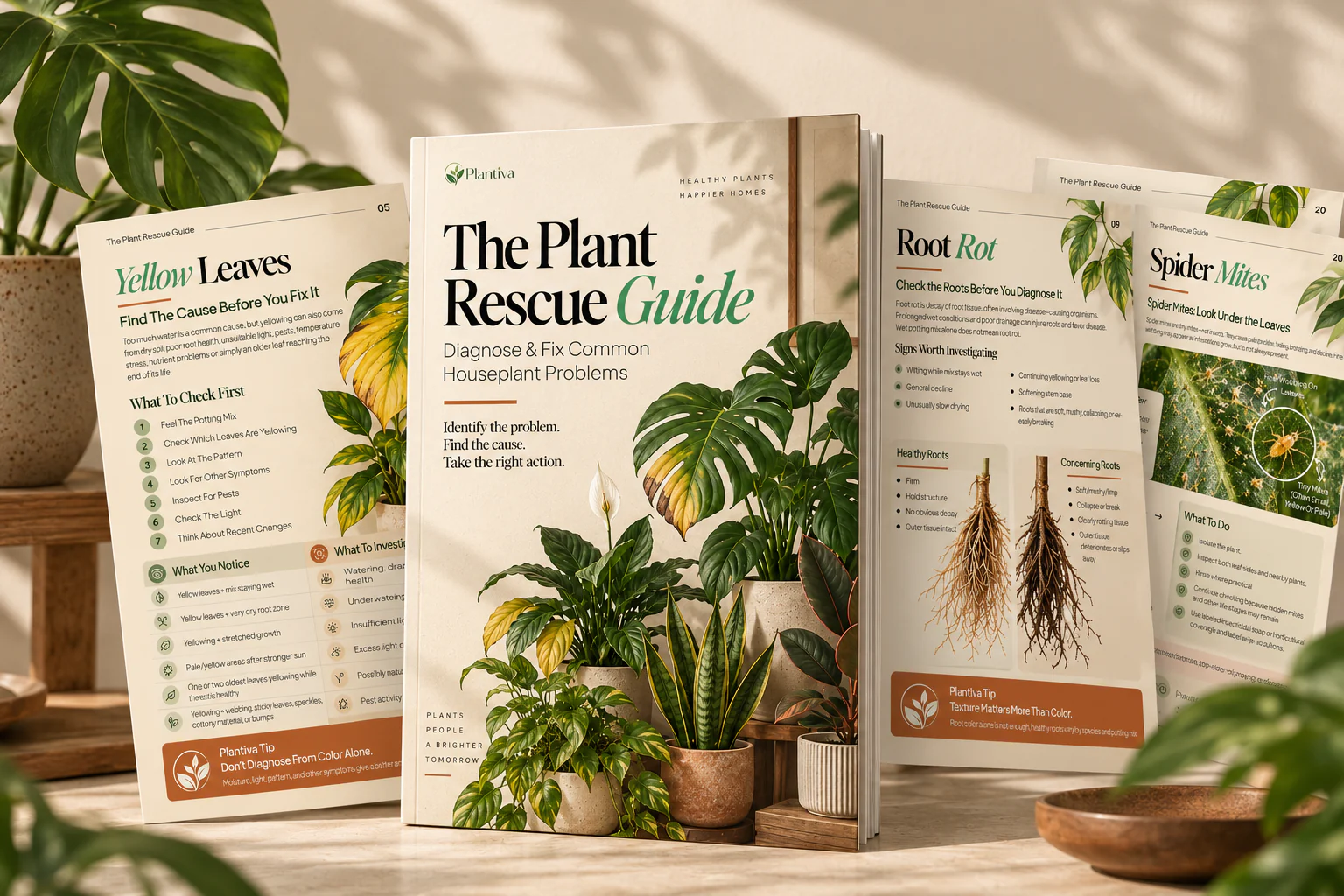
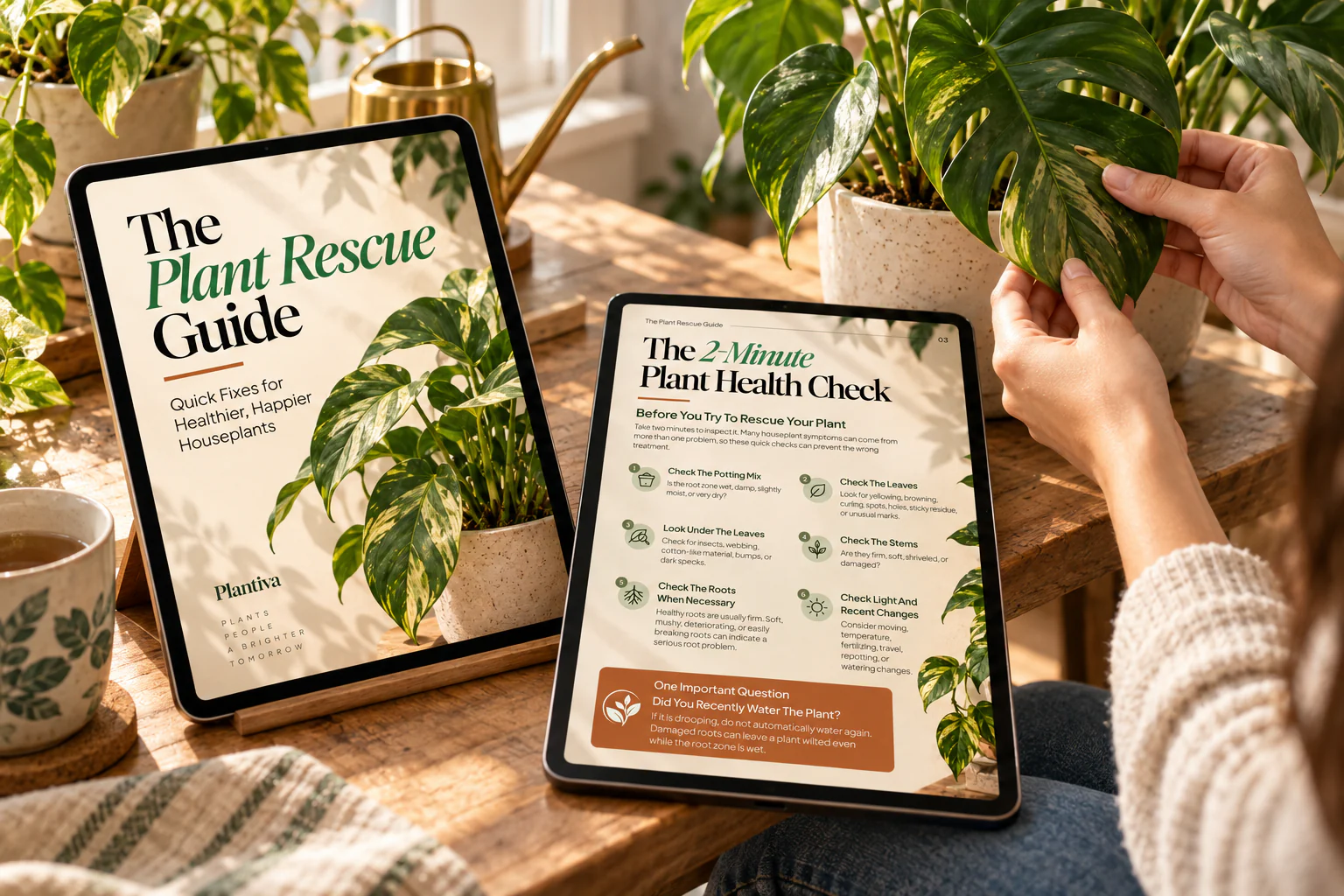
 FREE 25-PAGE HOUSEPLANT RESCUE GUIDE
Yellow leaves, drooping stems, brown tips, wet soil, tiny flies, pests—Plantiva’s free Plant Rescue Guide helps you understand what to check first and what to do next.
Built around a simple symptom-first approach, so you can investigate the cause before watering, fertilizing, or treating the wrong problem.
Free PDF • Delivered to your inbox • Unsubscribe anytime
START WITH THE CLUES
A struggling plant rarely gives you a written diagnosis.
It gives you clues.
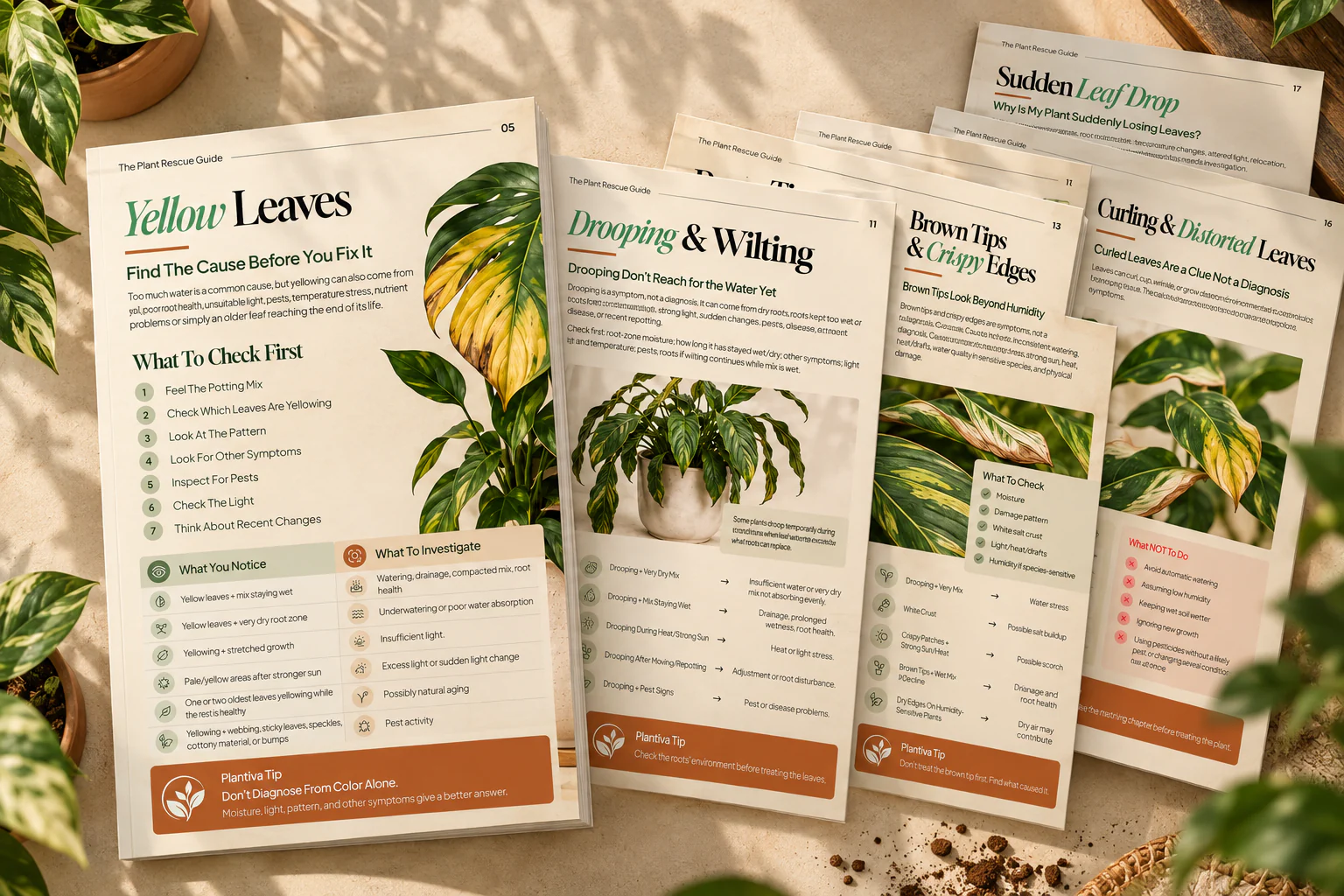
Could be watering, roots, light, pests, or natural aging.
Too dry and too wet can both cause wilting.
Moisture, salts, light, humidity, or root stress may be involved.
Persistent wetness deserves investigation before adding more water.
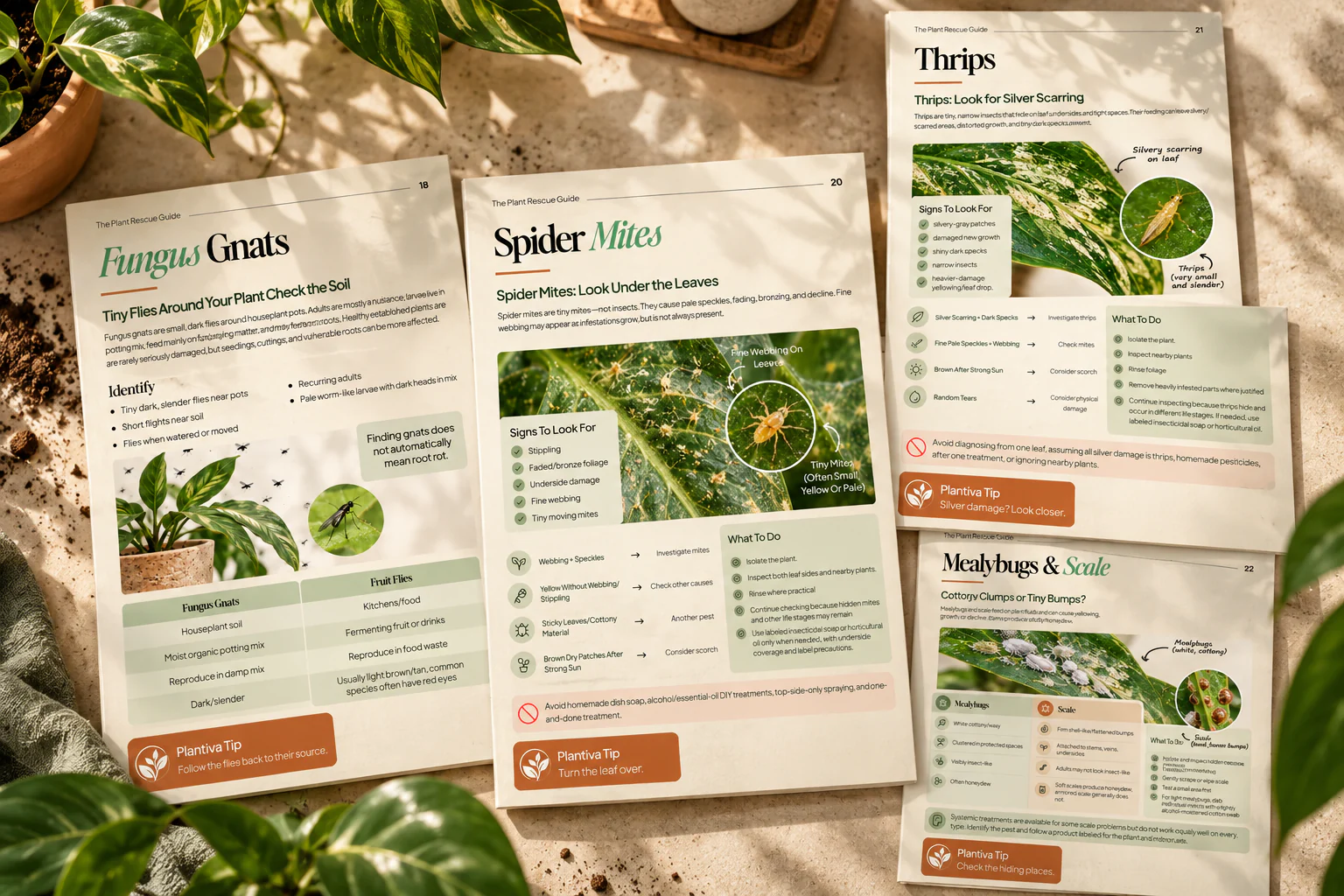
Learn how to recognize fungus gnats and break their life cycle.
Identify common houseplant pests before choosing a treatment.
INSIDE THE GUIDE
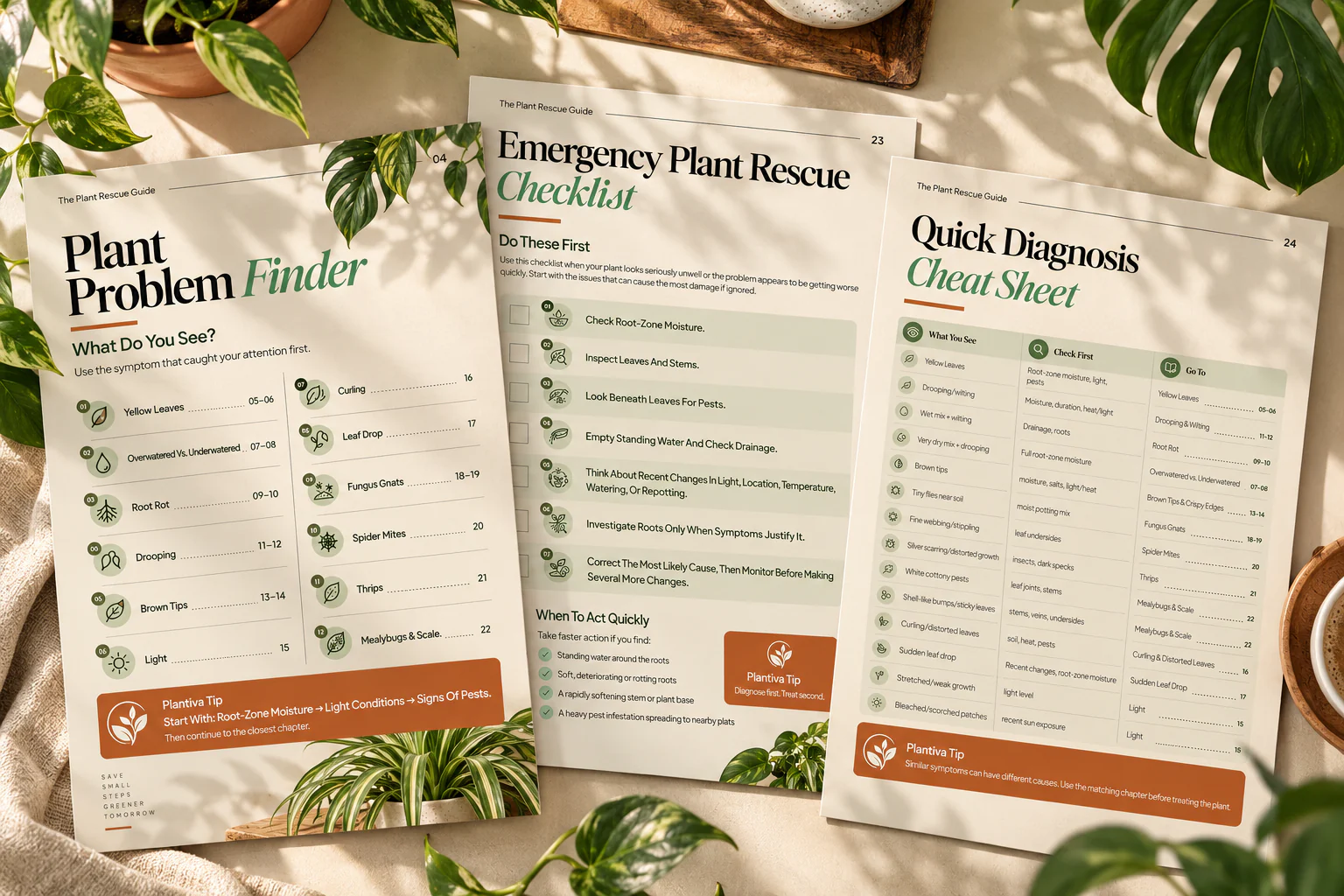
A simple inspection routine before trying a fix.
Learn what patterns to look for and which causes to investigate.
Compare the clues side by side instead of guessing from drooping alone.
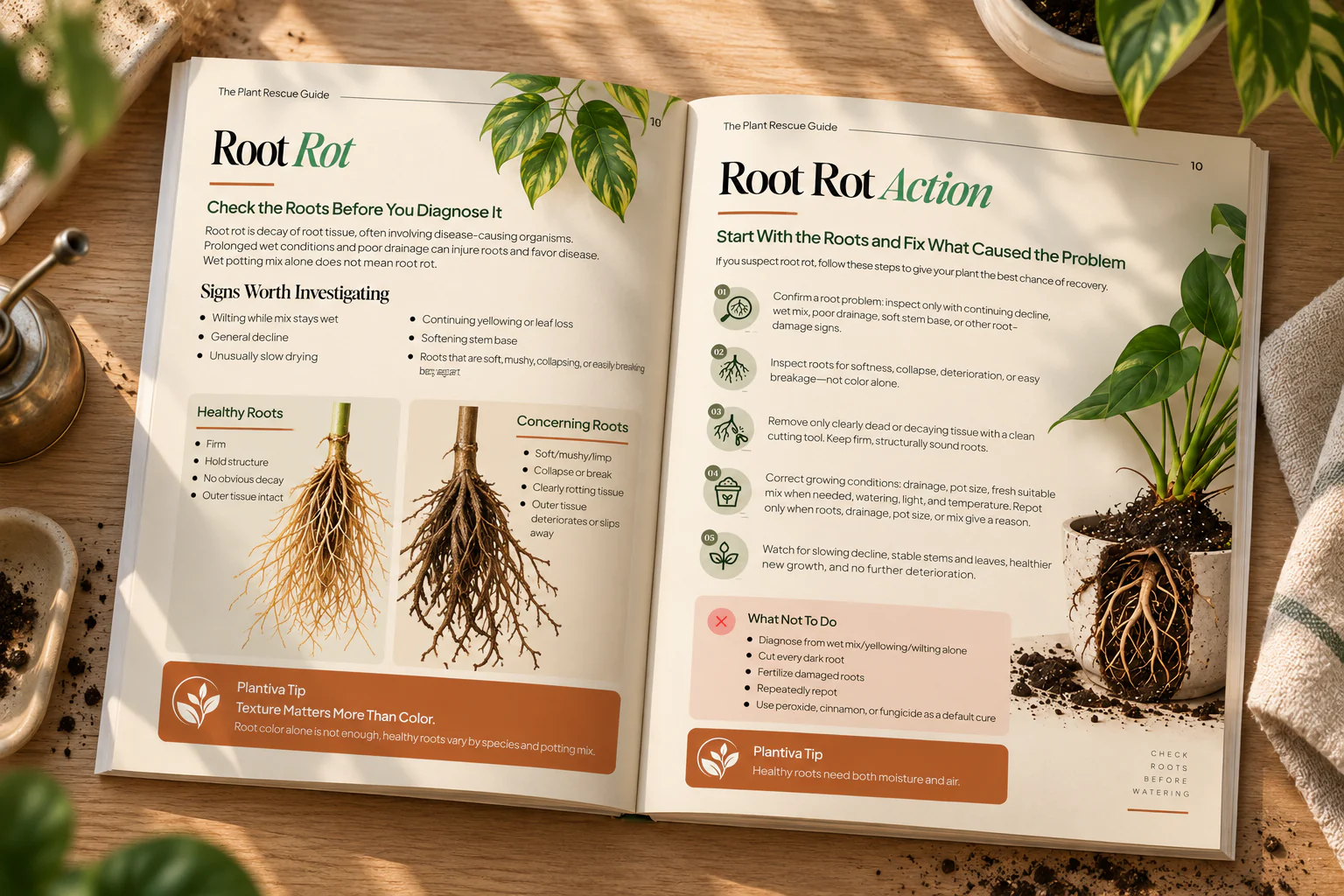
Understand when root inspection is actually justified.
Separate moisture problems from heat, light, root, and environmental stress.
Investigate watering, salts, humidity, light, and root health.
Recognize clues from too little light and excessive direct exposure.
Fungus gnats, spider mites, thrips, mealybugs, and scale.
Know what deserves attention first when a plant looks seriously unwell.
See the symptom, check the likely clues, then jump to the right chapter.
THE PLANTIVA APPROACH
A drooping plant does not automatically need water.
A yellow leaf does not automatically mean overwatering.
Wet potting mix does not automatically mean root rot.
The same symptom can appear for very different reasons. That’s why The Plant Rescue Guide follows a simple process:
Start with what the plant is actually showing you.
Built using reliable horticultural guidance, including university extension resources, UC IPM, and RHS.
Different plants and growing conditions need different care.
The guide focuses on identifying and correcting the underlying problem.
HOUSEPLANT TROUBLESHOOTING
Before treating a struggling plant, check the conditions around it.
Start by feeling the potting mix. If it is unusually dry, the plant may not be receiving enough water. If it stays wet for a long time, investigate watering habits, drainage, pot size, light, and root health.
A wilted plant can occur at either extreme, which is why drooping alone is not enough to tell you what to do. Read Plantiva’s guide to watering houseplants correctly.
One yellow older leaf can mean something very different from widespread yellowing. Brown tips, curling, bleached patches, sticky leaves, silver scars, or fine webbing can each point you toward different things to investigate.
Look at the whole plant—not just one damaged leaf.
Plants often react to changes in their environment. Consider:
The timing of a symptom can be one of your best clues. Explore Plantiva’s indoor plant care tips and guide to understanding low light.
Inspect leaf undersides, new growth, stems, leaf joints, and the surface of the potting mix.
Look for webbing, sticky residue, cottony material, shell-like bumps, tiny insects, dark specks, or unusual scarring. Correct identification matters because different pests require different controls.
FREE PLANT RESCUE GUIDE
Get the complete 25-page PDF with symptom guides, watering comparisons, root-health checks, pest identification, rescue steps, and a quick diagnosis cheat sheet.
No payment required. We’ll email the download link directly to you.
WHO IT’S FOR
This guide is for you if:
CALM, PRACTICAL GUIDANCE
The goal of Plantiva is not to make plant care sound complicated. It is to help you make better decisions with clearer information.
The guide was developed using guidance from reliable horticultural sources and designed to avoid common oversimplifications such as:
“Yellow = overwatered”
“Drooping = needs water”
“Brown tips = low humidity”
Instead, you’ll learn what else to check before choosing a fix.
COMMON QUESTIONS
Yes. The current edition is completely free.
Enter your email address and we’ll send you a confirmation email. After you confirm, your PDF download will be delivered.
No. The guide is designed to be delivered by email.
It covers yellow leaves, watering problems, root rot, drooping, brown tips, light stress, curling leaves, leaf drop, fungus gnats, spider mites, thrips, mealybugs, and scale.
Yes. The guide is written for beginner and intermediate houseplant owners and uses simple diagnostic steps.
It helps you narrow down likely causes based on symptoms and growing conditions. Individual species can still have different care requirements.
You may receive occasional practical plant-care emails from Plantiva. You can unsubscribe at any time.
YOUR NEXT STEP
Learn what to check, understand the clues, and choose the next step with more confidence.
Get The Plant Rescue Guide free.25 pages • Free PDF • Delivered to your inbox