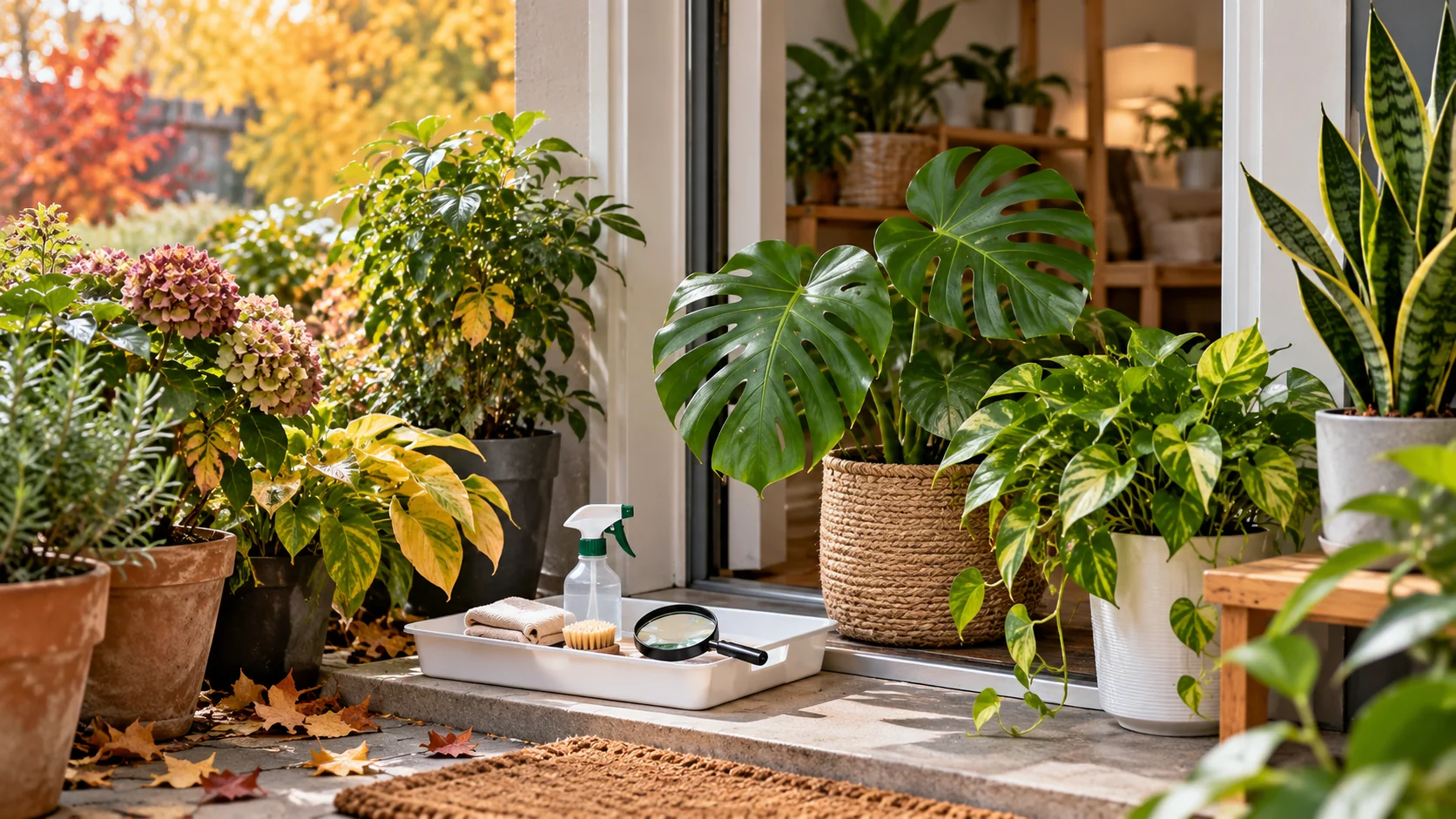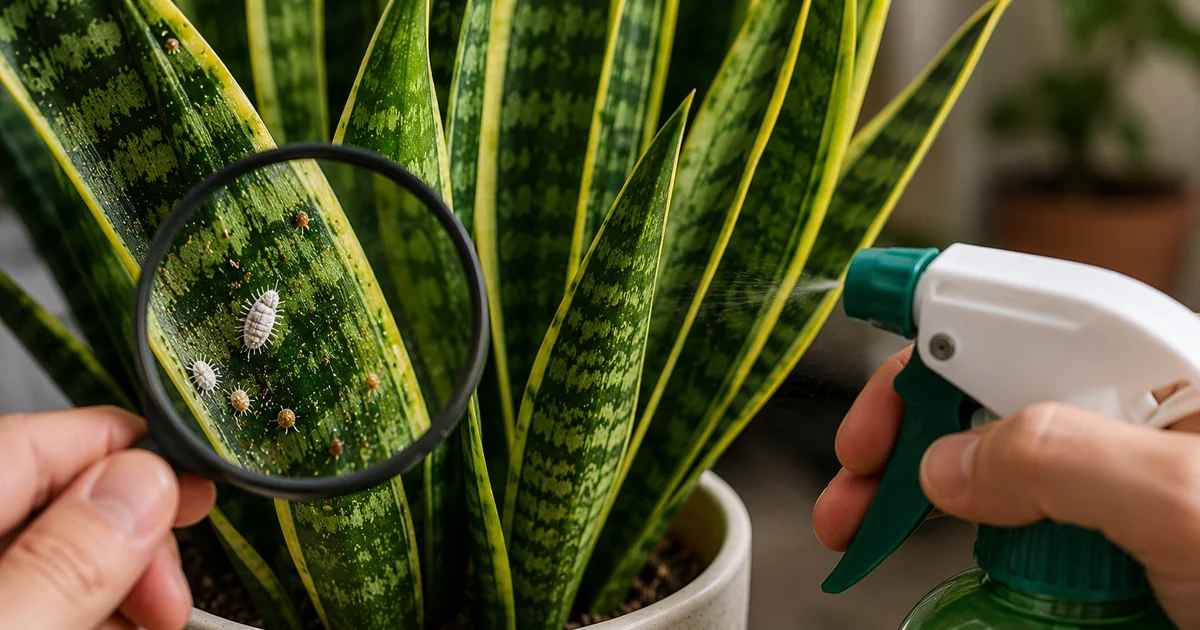
If you notice tiny bugs crawling on your houseplants in fall, you’re not alone. As temperatures drop and outdoor conditions change, many houseplants are moved indoors or exposed to warmer, drier indoor air. These changes can create ideal conditions for common houseplant pests such as fungus gnats, spider mites, mealybugs, aphids, and scale insects.
The good news is that most houseplant pests can be managed when you catch them early. Understanding why houseplants get bugs in fall can help you prevent an infestation before it spreads.
Why Do Houseplants Get Bugs in Fall?
Fall brings several environmental changes that can stress houseplants and make pest problems more noticeable.
1. Plants Come Back Indoors
One of the biggest reasons for fall pest problems is bringing outdoor plants inside. A plant may look completely healthy but still have pests, eggs, or larvae hiding in the soil, under leaves, or around stems.
Before bringing plants indoors, carefully inspect:
- The undersides of leaves
- Leaf joints and stems
- The surface of the potting soil
- Around drainage holes
- New growth
- The edges of the plant pot
Quarantining newly moved plants for a couple of weeks can also prevent pests from spreading to your other houseplants.
2. Indoor Air Becomes Drier
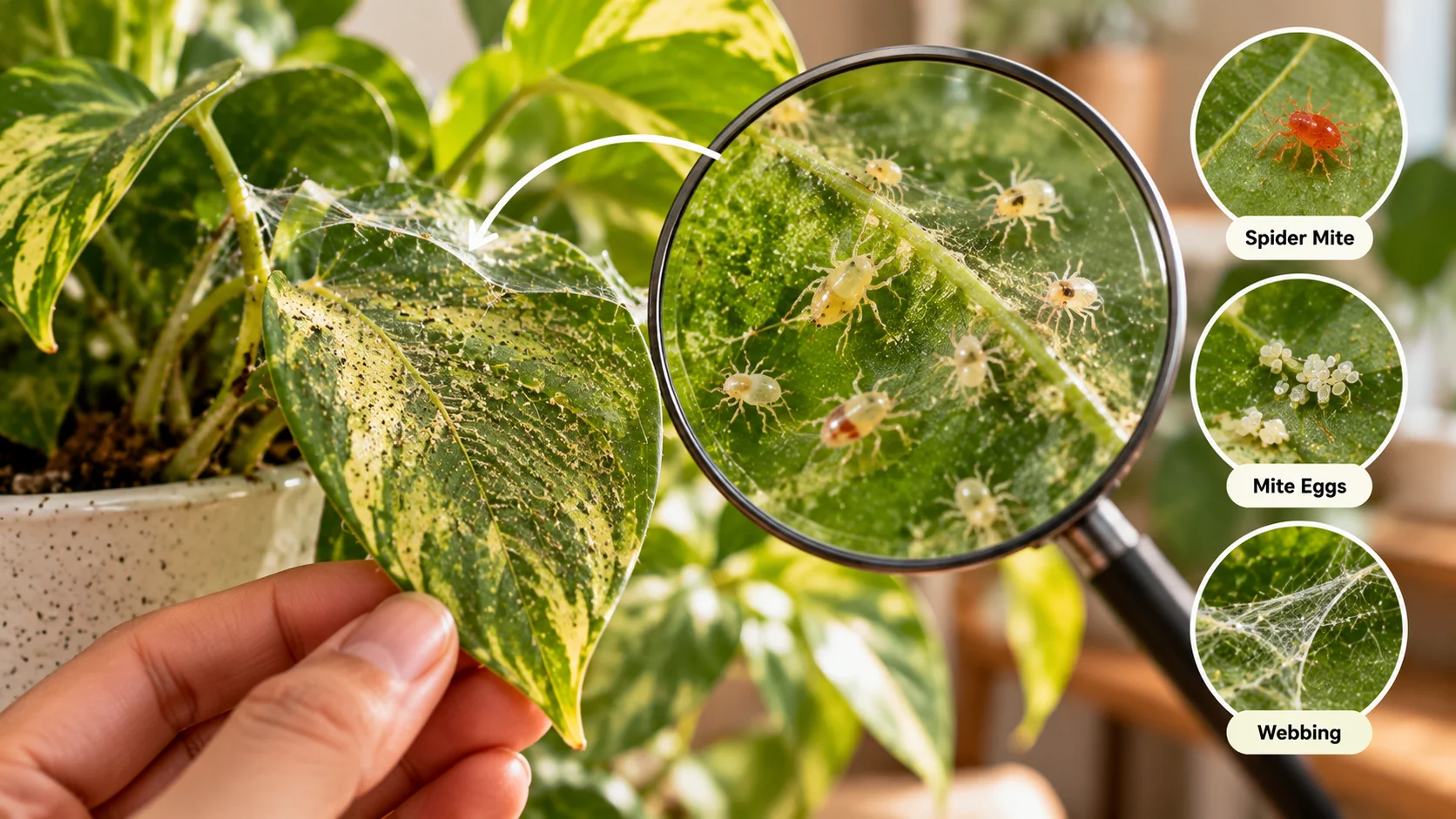
Heating systems can reduce indoor humidity during fall and winter. Spider mites, in particular, tend to become more problematic in warm, dry conditions.
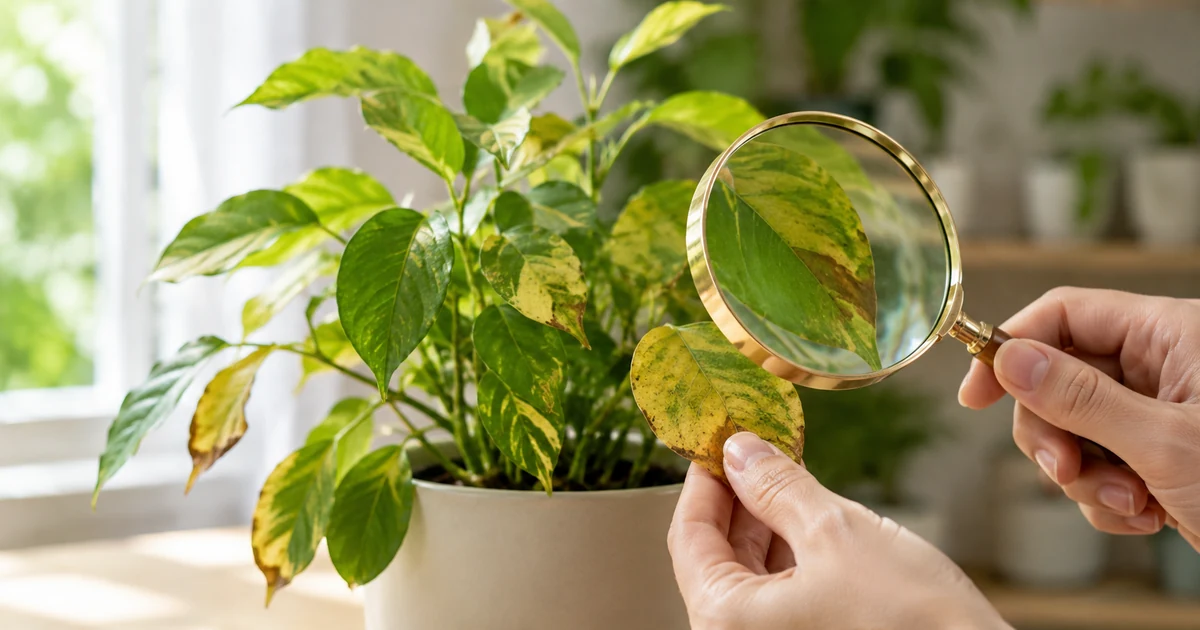
If you notice tiny webs, stippling, yellowing leaves, or small moving dots on your plants, check closely for spider mites.
Avoid assuming that every yellow leaf means a nutrient deficiency. Pest damage can also cause discoloration.
3. Overwatering Creates Fungus Gnat Problems
When temperatures become cooler, plants generally use water more slowly. If you continue watering on your summer schedule, the potting mix may stay wet for too long.
Persistently moist soil creates a favorable environment for fungus gnats.
Adult fungus gnats look like tiny black flies and often fly around the plant when you disturb the soil. Their larvae live in moist potting mix.
Allowing the appropriate amount of the soil surface to dry between waterings can help reduce their numbers.
Common Houseplant Bugs You May See in Fall
Different pests leave different clues.
| Pest | What They Look Like | Common Signs |
|---|---|---|
| Fungus gnats | Tiny black flying insects | Small flies around moist soil |
| Spider mites | Extremely tiny mites | Fine webbing, speckled leaves |
| Mealybugs | White, cotton-like insects | White clusters around stems and leaf joints |
| Aphids | Small soft-bodied insects | Curled or distorted new growth |
| Scale | Small bumps on stems/leaves | Sticky residue and weakened growth |
| Thrips | Tiny slender insects | Silvery streaks or distorted leaves |
How to Get Rid of Bugs on Houseplants
The first step is identification. Treating a plant without knowing the pest can waste time and may damage the plant.
Start by isolating the affected plant from your other houseplants. Then inspect the entire plant carefully.
For minor infestations, you can often:
- Remove heavily infested leaves.
- Rinse the foliage with water when appropriate for the plant.
- Wipe visible pests from leaves and stems.
- Improve airflow around the plant.
- Adjust watering if the soil is staying excessively wet.
- Use an appropriate insecticidal soap or other labeled treatment when necessary.
- Repeat treatment as directed because eggs or immature pests may survive the first application.
Always follow the product label and make sure the treatment is suitable for your particular plant.
How to Prevent Fall Houseplant Pests
Prevention is easier than dealing with a large infestation.
Before bringing plants indoors for fall, inspect them thoroughly and clean the foliage. Keep newly introduced plants separated from your existing collection for a short quarantine period.
You should also avoid overwatering simply because the weather is cooler. Check the plant's actual moisture needs instead of following a fixed watering schedule.
Regularly checking the undersides of leaves and new growth can help you catch pests before they spread.
Final Thoughts
So, why are your houseplants getting bugs in fall? In many cases, it’s a combination of plants moving indoors, changing humidity, reduced airflow, and watering habits that no longer match the plant's needs.
A thorough inspection, proper watering, good airflow, and early treatment can go a long way toward keeping your indoor garden healthy throughout fall and winter.