Fall is one of the most important seasons for orchid care. As daylight becomes shorter and temperatures begin to change, many orchids naturally slow their growth and prepare for their next flowering cycle.
If you want healthy orchids and beautiful winter blooms, fall is the time to adjust your care routine rather than continuing exactly what you did during summer.
The most important changes involve light, temperature, watering, humidity, fertilizing, airflow, and nighttime conditions. For many orchids, especially Phalaenopsis, the cooler nights of fall can help trigger flower spike development. However, different orchid types have different temperature and dormancy requirements, so your orchid's genus matters.
Why Fall Is Important for Orchid Care
During summer, orchids generally receive longer days, warmer temperatures, and faster-growing conditions. As fall arrives, the combination of shorter daylight and cooler nights changes how quickly orchids grow and use water.
This means your summer watering and fertilizing routine may become too much as growth slows.
Fall is also important because seasonal temperature changes can signal flowering in certain orchids. For example, Phalaenopsis can benefit from several weeks of cooler nighttime temperatures in fall to encourage flower spike initiation.
However, this doesn't mean every orchid should be exposed to cold.
Some orchids are warm-growing and cold-sensitive, while others actually require a cooler period or winter rest to flower properly.
1. Identify Your Orchid Before Changing Its Fall Care
The first step in preparing an orchid for winter is knowing what type you have.
Common household orchids include:
- Phalaenopsis (moth orchids)
- Dendrobium
- Cattleya
- Oncidium
- Cymbidium
- Paphiopedilum
- Vanda
These orchids don't all respond to fall conditions in the same way.
For example, most Phalaenopsis are relatively warm-growing and should be protected from cold temperatures, while Cymbidiums are considerably more cold-tolerant. Some deciduous Dendrobiums require a cooler, drier winter rest.
So before moving an orchid outside, reducing water dramatically, or giving it a cool night treatment, identify the orchid first.
General rule: fall care should be based on the orchid's natural growth cycle, not simply the calendar.
2. Give Orchids the Right Fall Light
As autumn progresses, daylight becomes weaker and shorter.
This can be particularly important for indoor orchids because a plant that received plenty of light during summer may suddenly receive much less light in fall.
Light affects:
- Photosynthesis
- Leaf growth
- Root growth
- Flower spike development
- Bud development
- Overall plant strength
For Phalaenopsis, a bright window with little or no harsh direct sun is generally suitable. An east-facing window is often ideal, while shaded south- or west-facing windows can also work.
What to do in fall
Move your orchid to the brightest suitable location available without exposing it to damaging direct sunlight.
If the orchid was outside under shade during summer, don't suddenly place it in intense direct sun.
Instead, gradually adjust its exposure.
Signs your orchid isn't receiving enough light
Watch for:
- Very dark green leaves
- Weak or stretched growth
- Little new growth
- Failure to produce flower spikes
- Poor flowering
- Leaves becoming increasingly thin or weak
If natural light becomes insufficient, supplemental grow lighting can help indoor orchids maintain adequate light during shorter days. The American Orchid Society notes that many Phalaenopsis grow successfully under artificial light.
3. Use Cooler Fall Nights to Encourage Flower Spikes—But Only for Suitable Orchids
One of the most important fall orchid-care techniques involves temperature differences between day and night.
For many Phalaenopsis, a period of cooler autumn nights can help initiate flower spikes.
The American Orchid Society recommends allowing suitable Phalaenopsis to experience nighttime temperatures around 55°F (13°C) for several weeks in autumn while daytime temperatures remain warmer.
You don't need to make the plant extremely cold.
The goal is a moderate seasonal temperature change, not cold stress.
Important:
Do not assume that every orchid needs a cold treatment.
Most Phalaenopsis are relatively cold-sensitive, and many should not be exposed to prolonged temperatures below about 60°F (16°C). Other orchid groups have completely different requirements.
This is why identifying your orchid is so important.
4. Bring Outdoor Orchids Inside Before Temperatures Drop Too Far
If your orchids spent summer outdoors, fall is the time to prepare them for their indoor winter environment.
Don't wait until the first severe cold night.
Before bringing orchids indoors:
- Inspect the leaves.
- Check the undersides for pests.
- Examine the pot and growing medium.
- Remove dead leaves and debris.
- Check the roots for obvious problems.
- Clean the growing area.
- Move the plants indoors before temperatures become unsafe for their particular species.
The American Orchid Society recommends preparing the indoor growing area and cleaning around plants as part of fall preparation because accumulated dust, dead leaves, and debris can contribute to pest problems.
Don't forget pests
Outdoor orchids can bring unwanted visitors indoors, including:
- Scale
- Mealybugs
- Spider mites
- Aphids
- Slugs and snails
- Fungus gnats
A careful inspection before moving the plant indoors can prevent an infestation from spreading throughout your houseplant collection.
5. Adjust Your Orchid Watering Routine
One of the biggest fall-care mistakes is continuing a summer watering schedule throughout the cooler season.
As temperatures and light levels decrease, many orchids grow more slowly and use water more slowly.
That means the potting medium may remain wet for longer.
Overwatering can lead to root loss, and damaged roots eventually affect the orchid's ability to absorb water and nutrients. The American Orchid Society emphasizes that orchid overwatering is essentially a situation where the plant isn't drying out quickly enough.
Don't water by calendar
Instead of saying:
“I water every Sunday.”
Check the plant.
Consider:
- Pot weight
- Moisture in the growing medium
- Root color and condition
- Temperature
- Humidity
- Light level
- Orchid type
Phalaenopsis should generally be watered thoroughly and then allowed to approach dryness before being watered again. They should not be allowed to remain completely dry for extended periods because they don't have large water-storage organs like some other orchids.
Fall watering rule
As growth slows, watering often needs to become less frequent—but don't stop watering automatically.
Some orchids have a true winter dormancy, while others continue growing indoors.
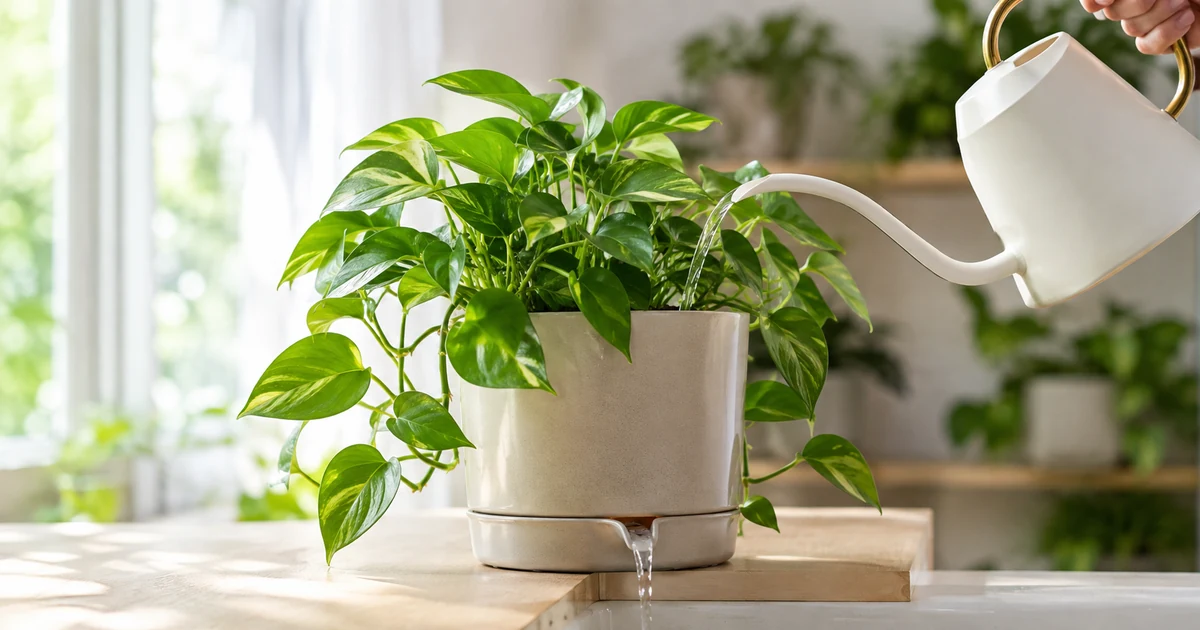
6. Always Water Orchids in the Morning
Morning watering is particularly useful for Phalaenopsis.
The American Orchid Society recommends watering in the morning so leaves have time to dry and advises keeping water out of the crown. Water trapped in the crown can encourage crown rot.
When watering:
- Thoroughly wet the growing medium.
- Allow excess water to drain.
- Empty any decorative container holding standing water.
- Keep water from sitting in the crown.
- Allow the plant to dry appropriately before watering again.
Don't leave the orchid sitting in water.
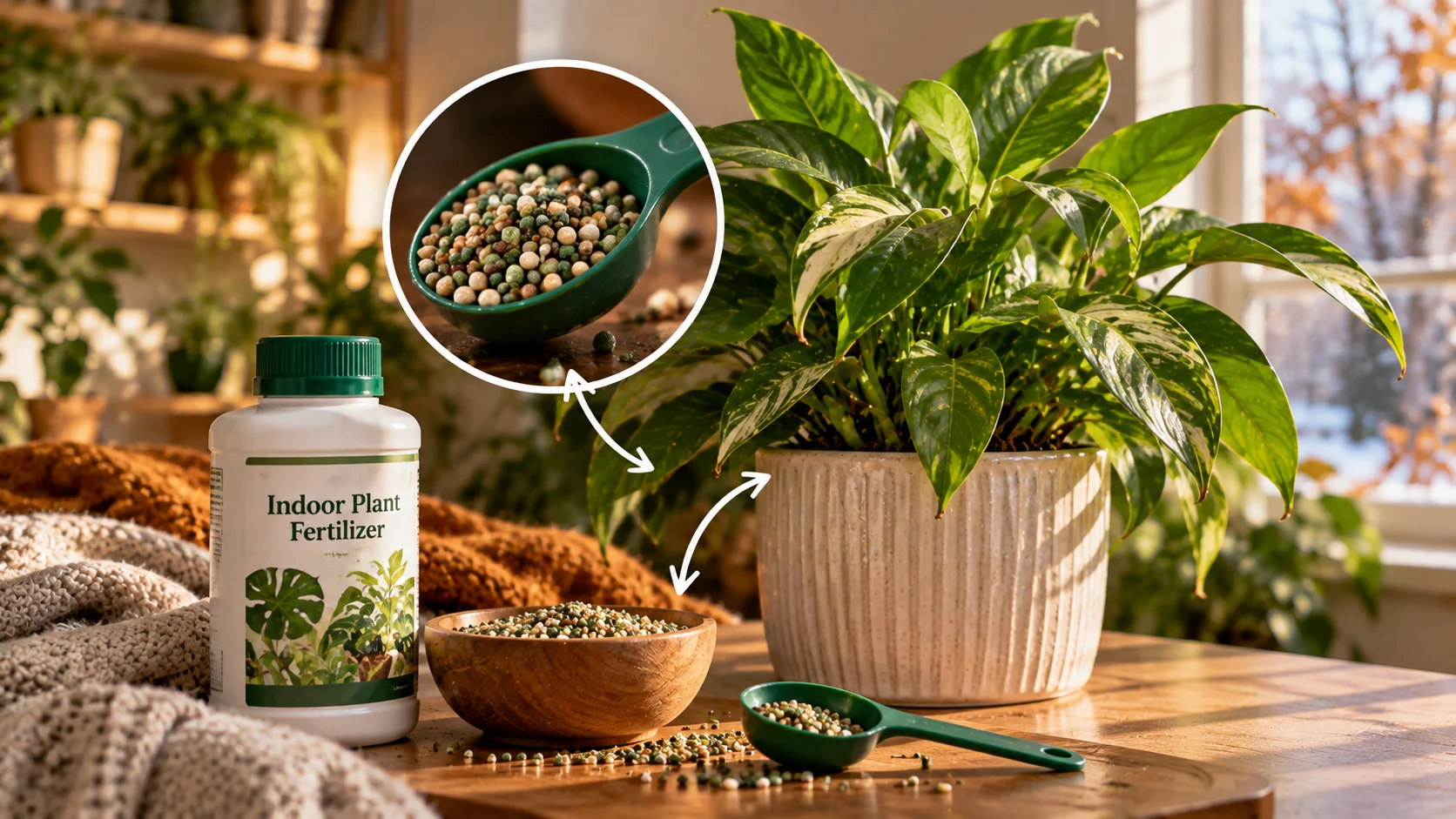
7. Reduce Fertilizer as Growth Slows
Orchids generally need fewer nutrients when growth slows during fall and winter.
Continuing a heavy summer fertilizing routine can result in fertilizer salts accumulating in the growing medium.
The American Orchid Society recommends reducing fertilization as temperatures and light levels decline, while recognizing that winter-blooming orchids may still require feeding.
For many orchids, a weaker and less frequent feeding schedule is more appropriate during the cooler season.
Should you use bloom fertilizer?
You may see products marketed as “bloom boosters,” but fertilizer alone doesn't make an orchid bloom.
Flowering depends on the combination of:
- Appropriate light
- Temperature
- Plant maturity
- Healthy roots
- Adequate nutrition
- Correct seasonal conditions
For Phalaenopsis, the American Orchid Society describes reduced fall fertilization and notes that some growers use bloom-promoting fertilizer around the time flower spikes are initiated.
Don't compensate for poor light by adding more fertilizer.
8. Don't Stop Watering Every Orchid in Winter
This is an important distinction.
Some orchids have a genuine winter dormancy, while others continue growing throughout the colder months.
For example, certain Catasetinae can enter a pronounced dry dormancy, while indoor Phalaenopsis should continue receiving water, simply at a frequency appropriate for their conditions.
Therefore:
Winter does not automatically mean “no water.”
Know your orchid.
If your orchid is a typical Phalaenopsis houseplant, continue monitoring its roots and potting medium rather than putting it into artificial dormancy.
9. Maintain Humidity Without Creating a Wet, Stagnant Environment
Indoor heating can make the air considerably drier during fall and winter.
Orchids generally appreciate humidity, but high humidity without airflow can encourage fungal and bacterial problems.
For Phalaenopsis, the American Orchid Society gives a general humidity range of about 50–80% and emphasizes air movement, particularly when humidity is high or temperatures are cool.
Ways to increase humidity
You can use:
- A humidifier
- A humidity tray
- Grouping plants together
- A naturally humid room
If you use a humidity tray, keep the orchid pot above the water rather than sitting directly in it.
Air movement matters
Don't create a humid environment with stagnant air.
Gentle air circulation helps moisture evaporate from foliage and reduces conditions favorable to fungal and bacterial problems.
10. Protect Orchids From Cold Drafts
A cool fall night can sometimes help initiate flowering, but a cold draft is a different matter.
Avoid placing orchids directly beside:
- Open windows
- Exterior doors
- Air-conditioning vents
- Cold glass
- Heating vents
- Strong drafts
The American Orchid Society specifically warns that cold moving air can be damaging to many orchids, even when a cooler ambient temperature itself might be tolerated.
For cold-sensitive orchids such as many Phalaenopsis, protect the plant when nighttime temperatures become too low.
11. Keep Orchids Away From Heating Vents
As indoor temperatures begin to drop, you may turn on heating systems.
Don't compensate by placing your orchid directly beside a radiator, heater, or hot-air vent.
Hot, dry airflow can cause:
- Rapid moisture loss
- Dry roots
- Brown leaf tips
- Bud problems
- Sudden temperature fluctuations
Instead, maintain a stable location with indirect light and gentle air circulation.
12. Don't Repot Just Because Fall Has Arrived
Fall isn't automatically repotting season.
If your orchid is healthy and flowering well, there may be no reason to disturb the roots immediately before winter.
The American Orchid Society generally recommends postponing nonessential repotting until spring, particularly as growth slows.
Repot if there is a real reason
Consider repotting when:
- The potting medium has broken down.
- Roots are severely damaged.
- The container is no longer appropriate.
- The plant has significant root problems.
- The orchid has outgrown its container.
Otherwise, allowing the plant to remain stable can be less stressful.
13. Check Orchid Roots Before Winter
Healthy roots are essential for successful winter care.
For orchids grown in transparent pots, inspect the roots regularly.
Healthy Phalaenopsis roots are typically firm rather than mushy or collapsing.
Root problems can develop when the growing medium stays wet for too long.
Warning signs
Look for:
- Mushy roots
- Brown or black roots
- Bad odor
- Rapid leaf yellowing
- Persistent wet medium
- Poor new growth
Remember that overwatering doesn't simply mean giving too much water at one time.
It often means the orchid is not drying quickly enough between waterings.
14. Watch for Developing Flower Spikes
Fall is the time to start looking carefully for new orchid flower spikes.
For many orchids, seasonal changes trigger reproductive growth.
In Phalaenopsis, a new spike may initially look like a small pointed structure emerging from between the leaves.
Don't confuse it with a root.
Flower spike vs. root
A developing flower spike tends to be:
- More pointed
- Flatter or slightly angular
- Emerging from the leaf axil
- Directed upward or sideways
A root tends to be:
- Rounder
- Smooth
- Often green or silvery
- More cylindrical
- Growing in a different direction
Once a flower spike becomes established, provide stable conditions rather than constantly moving the plant.
15. Stake Flower Spikes Carefully
If a Phalaenopsis produces a flower spike in fall, don't wait until it becomes very long and difficult to manage.
The American Orchid Society recommends beginning to stake developing spikes once they reach around 6–8 inches.
Use a support clip or soft tie.
Avoid tying the spike too tightly because it continues growing.
Once buds develop, try not to repeatedly rotate or relocate the orchid.
16. Keep Conditions Stable Once Buds Appear
This is one of the most important steps for protecting future winter flowers.
Once an orchid has developing buds, avoid major environmental changes.
Sudden changes in:
- Temperature
- Humidity
- Watering
- Light
- Location
can stress the plant.
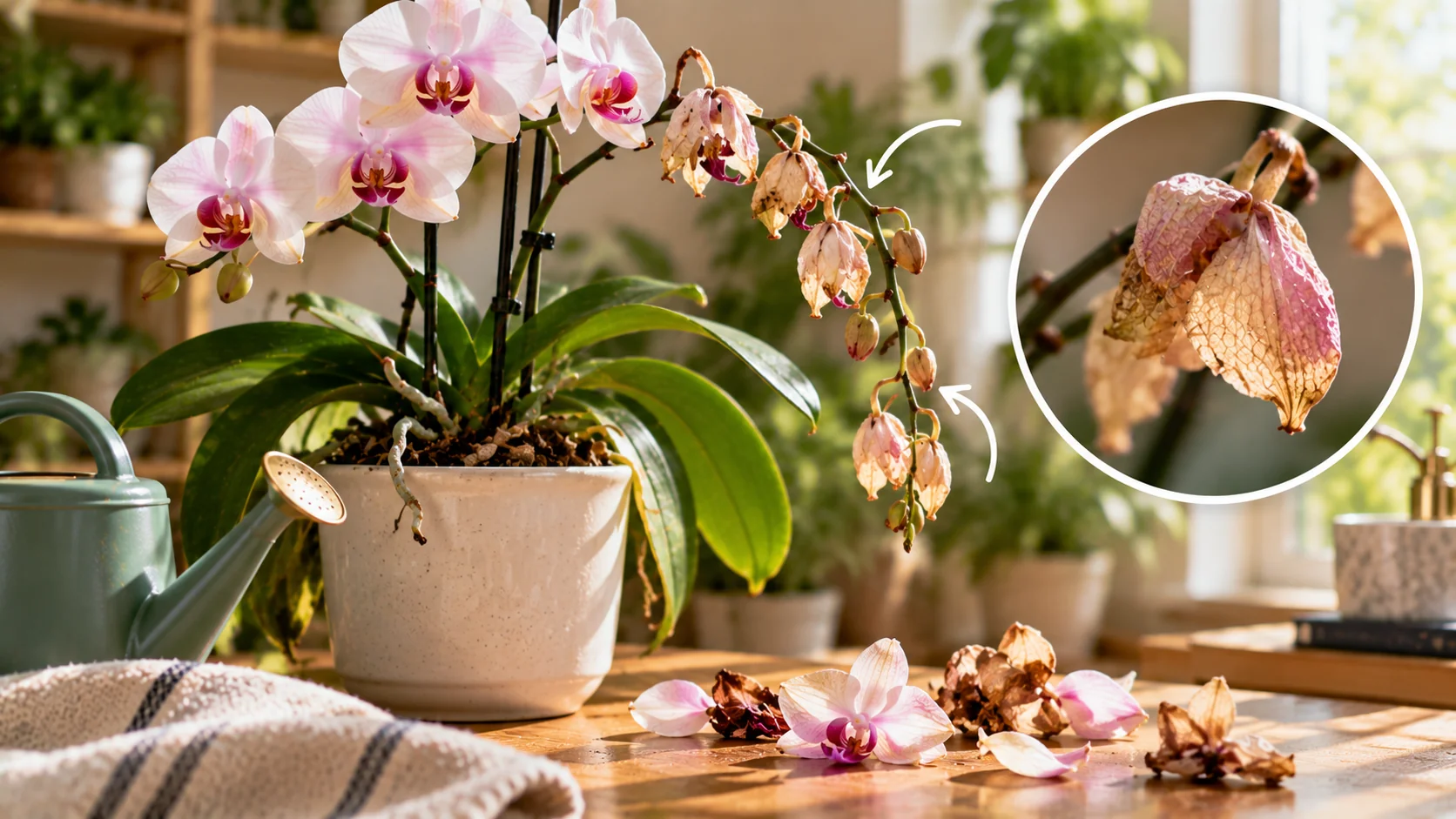
Phalaenopsis with developing buds are particularly sensitive to temperature fluctuations, which can contribute to bud drop or bud blast.
If your orchid is finally producing buds, this is not the time to experiment with a completely different care routine.
17. Clean Your Orchid Growing Area Before Winter
Fall is an excellent time to clean the area around your orchids.
Remove:
- Dead leaves
- Fallen flowers
- Old potting material
- Dust
- Algae buildup
- Debris
- Dead roots
Clean shelves and windowsills as well.
This simple step can help reduce pest and disease problems before you bring outdoor orchids indoors.
The American Orchid Society specifically recommends cleaning the indoor growing area as part of fall orchid preparation.
18. Don't Assume Yellow Leaves Always Mean a Problem
A yellow orchid leaf can have several explanations.
One old lower leaf gradually yellowing may simply be natural aging.
However, rapidly yellowing multiple leaves can indicate:
- Root problems
- Overwatering
- Poor light
- Temperature stress
- Nutritional problems
- Disease
Look at the whole plant, not just one leaf.
If the roots are healthy, new growth is developing, and only one old leaf is declining, the situation may be normal.
Fall Orchid Care Checklist
Before winter arrives, check each orchid.
Light
- Is the plant receiving enough bright light?
- Has the seasonal change reduced light?
- Does it need supplemental lighting?
Temperature
- Is the orchid warm enough for its type?
- Does it benefit from cooler fall nights?
- Is it exposed to cold drafts?
Watering
- Is the potting medium drying appropriately?
- Have you reduced watering as growth slows?
- Are you accidentally keeping the roots constantly wet?
Humidity
- Is indoor air becoming too dry?
- Is there adequate air circulation?
Fertilizer
- Have you reduced feeding as growth slows?
- Does this particular orchid continue growing or blooming during winter?
Roots
- Are the roots firm and healthy?
- Is the potting medium breaking down?
Pests
- Did you inspect the plant before bringing it indoors?
- Are there signs of scale, mealybugs, or mites?
Flowering
- Is a new flower spike developing?
- Does it need staking?
- Are buds developing?
Fall Orchid Care by Common Orchid Type
| Orchid | Fall/Winter Consideration |
|---|---|
| Phalaenopsis | Bright indirect light, careful watering, protection from cold; several weeks of cooler fall nights can help initiate spikes |
| Cattleya | Many appreciate a cooler, somewhat drier winter period, but requirements vary |
| Dendrobium | Requirements vary widely; some need a pronounced cool/dry rest |
| Cymbidium | Much more cold-tolerant than Phalaenopsis and often benefits from cool conditions |
| Oncidium | Temperature and watering requirements vary across the group |
| Paphiopedilum | Generally should not be treated as a dry-dormant orchid; keep conditions appropriate to the type |
| Vanda | Many require warmth, strong light, and protection from cold temperatures |
The differences are significant enough that genus-specific care is preferable to applying one universal winter routine.
How to Prepare a Phalaenopsis Orchid for Winter Blooms
If you have the common moth orchid (Phalaenopsis), fall is particularly important.
A practical routine is:
1. Give it bright indirect light
An east-facing window is often excellent.
2. Allow a modest fall temperature drop
Suitable Phalaenopsis can benefit from cooler nights around 55°F (13°C) for several weeks while daytime temperatures remain warmer.
3. Keep watering based on dryness
Water thoroughly, then allow the growing medium to approach dryness before watering again.
4. Keep water out of the crown
This helps reduce the risk of crown rot.
5. Reduce fertilizer as growth slows
Don't continue heavy summer feeding indefinitely.
6. Watch for a flower spike
Once a spike begins developing, provide stable conditions.
7. Protect developing buds
Avoid sudden temperature changes and unnecessary relocation.
With appropriate fall conditions, Phalaenopsis can develop flower spikes that eventually produce winter or early-spring flowers.
Common Fall Orchid-Care Mistakes
Watering on the same schedule as summer
As growth and evaporation slow, the orchid may need less frequent watering.
Putting every orchid in a cold room
Different orchids have dramatically different temperature tolerances.
Fertilizing heavily to force flowers
Flowering isn't simply a fertilizer problem.
Keeping orchids constantly wet
Healthy orchid roots need appropriate air and moisture balance.
Ignoring humidity
Indoor heating can significantly change the environment.
Putting orchids directly beside a heater
Hot, dry airflow can stress foliage and roots.
Bringing outdoor orchids inside without checking pests
This can introduce pests to your entire collection.
Repotting healthy orchids unnecessarily
Avoid disturbing healthy roots immediately before winter unless there is a genuine reason.
Moving a blooming orchid repeatedly
Once buds are developing, stable conditions are especially important.
Frequently Asked Questions
Should I change my orchid care routine in fall?
Usually, yes. Shorter days and cooler temperatures often slow orchid growth, so watering and fertilizing may need to be reduced. However, the exact changes depend on the orchid type.
How do I prepare my orchid for winter?
Give it appropriate light, adjust watering to the slower growth rate, reduce fertilizer when appropriate, maintain suitable humidity and airflow, protect it from unsuitable cold temperatures, and inspect it for pests and root problems.
Do orchids need less water in fall?
Many orchids do, because cooler temperatures and lower light can slow growth and drying. But not every orchid enters dormancy. Phalaenopsis, for example, should still be watered when its growing medium approaches dryness.
Should I fertilize orchids in fall?
Fertilization is generally reduced as growth slows. Winter-blooming orchids may still benefit from appropriate feeding, while some orchids that enter dormancy should receive little or no fertilizer during their rest period.
Do orchids need cooler temperatures to bloom?
Some orchids use seasonal temperature changes as a flowering signal. Phalaenopsis, in particular, can benefit from several weeks of cooler autumn nights to initiate flower spikes. Other orchids have different requirements.
Should I move my orchid indoors for winter?
If the orchid has been outdoors and temperatures are becoming unsuitable for its type, yes. Bring cold-sensitive orchids indoors before damaging temperatures arrive and inspect them for pests first.
Why isn't my orchid blooming in winter?
Possible reasons include insufficient light, immature plants, inappropriate temperatures, poor root health, inadequate seasonal changes, incorrect watering, or simply the orchid's natural flowering cycle. Not every orchid naturally blooms during winter.
Should I repot my orchid in fall?
Generally, avoid unnecessary repotting in fall. The American Orchid Society recommends postponing nonessential repotting until spring for many orchids. Repot sooner when there is a genuine problem such as severe root damage or badly degraded potting material.
Final Thoughts
Fall orchid care is about preparing the plant for a change in conditions—not forcing it to bloom.
As daylight decreases and temperatures change, adjust your routine accordingly. Give orchids enough light, allow the growing medium to dry at an appropriate rate, reduce fertilizer when growth slows, maintain useful humidity and airflow, and protect cold-sensitive orchids from damaging temperatures.
For many Phalaenopsis, the cooler nights of fall can actually be beneficial because they provide the seasonal signal needed to initiate flower spikes. But the same temperature treatment isn't appropriate for every orchid.
The best approach is to care for the orchid according to its type and growth cycle.
Prepare it properly in fall, keep conditions stable through winter, and you give your orchid the foundation it needs for healthy roots, strong flower spikes, and beautiful blooms.