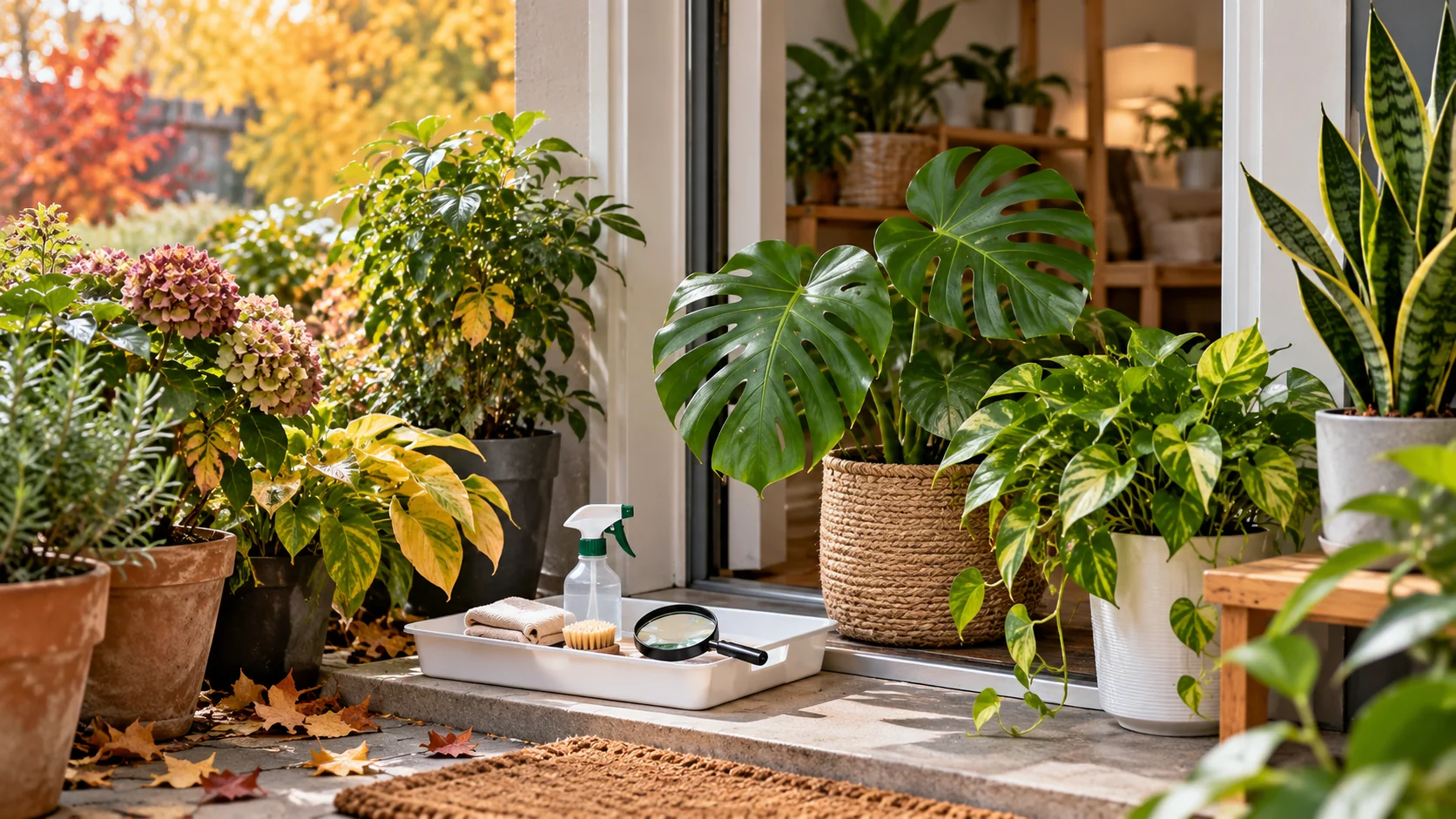
Bringing houseplants indoors for fall protects them from cold temperatures, but it can also bring unwanted pests into your home. Aphids, spider mites, whiteflies, mealybugs, scale insects, fungus gnats, ants, and other pests can hide on leaves, stems, pots, or in potting soil.
The good news is that you can greatly reduce the risk by inspecting, cleaning, treating, and quarantining your plants before moving them indoors.
When Should You Bring Houseplants Indoors?
Start preparing houseplants before nighttime temperatures become too cold. Many common houseplants can be damaged when temperatures fall into the 40s or 50s°F, although the exact temperature depends on the plant.
Don't wait for the first frost. Moving plants indoors early also gives them time to adjust to lower indoor light, different humidity, and changes in watering.
1. Inspect Every Plant for Bugs
Before bringing a plant inside, carefully inspect the entire plant.
Check:
- The tops and undersides of leaves
- Leaf joints and stems
- New growth
- Soil surface
- Pot rims and drainage holes
- The bottom of the pot and saucer
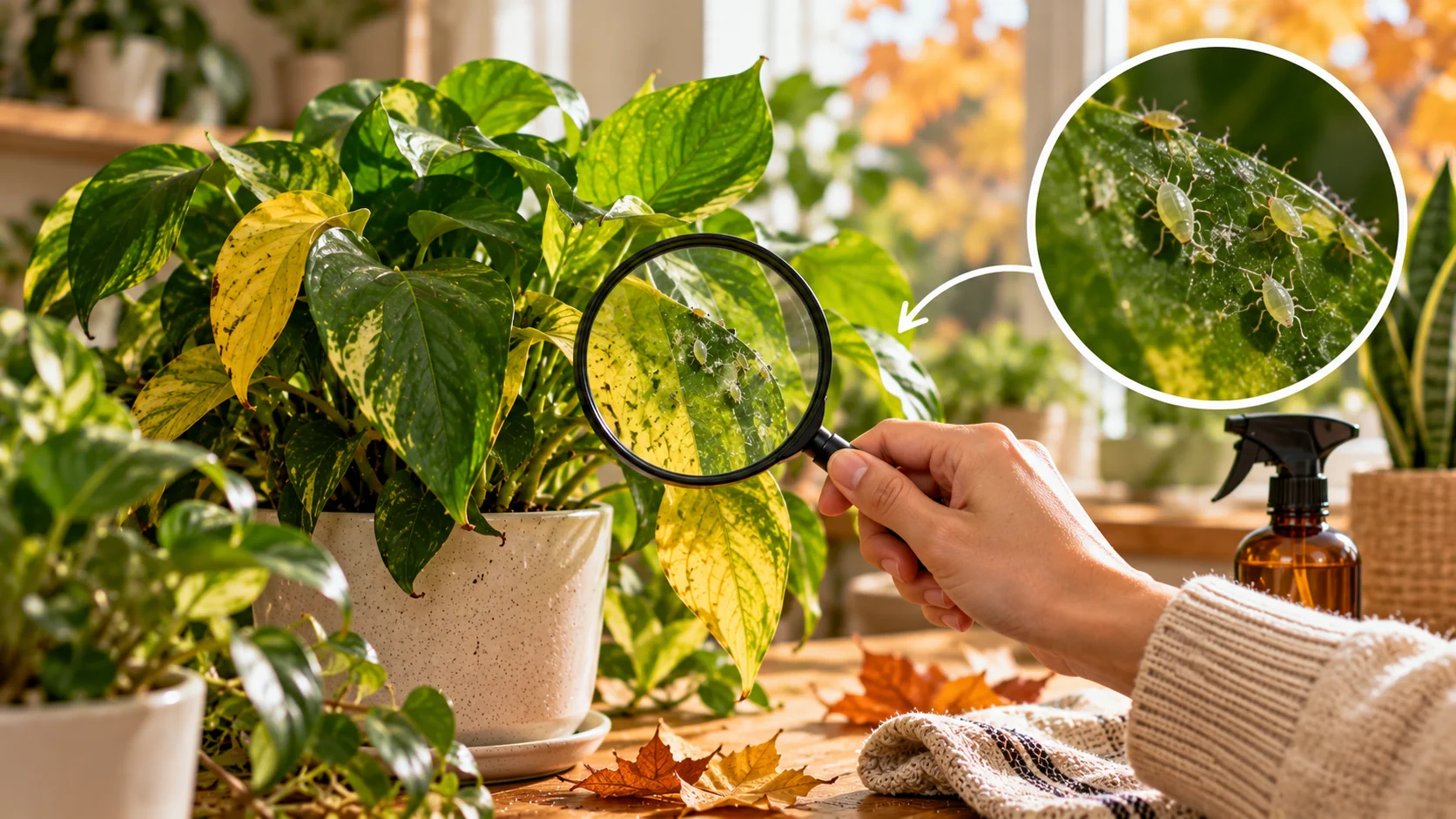
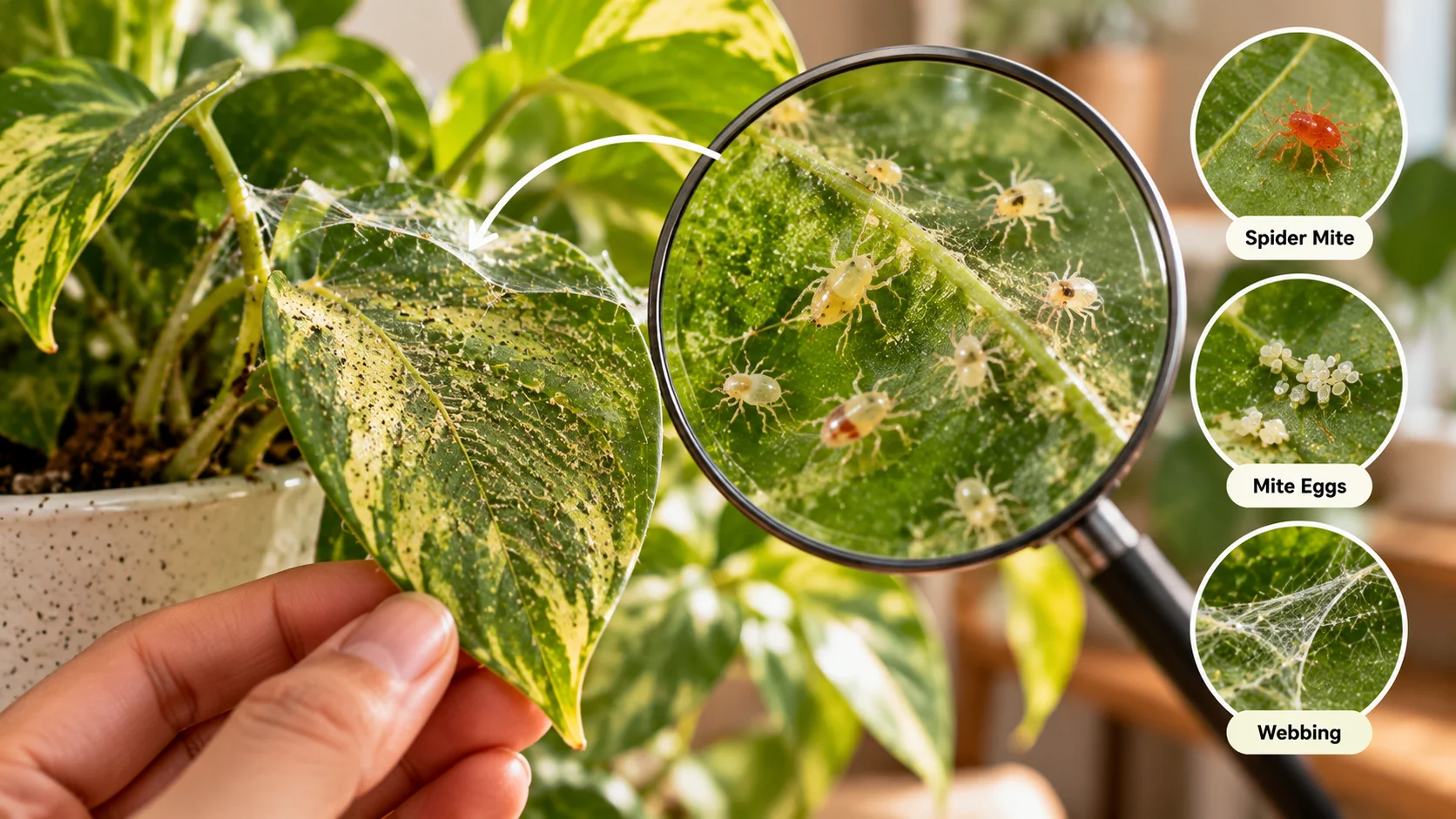
Look for webbing, sticky residue, tiny insects, eggs, holes, yellowing leaves, or white cotton-like spots. Spider mites, aphids, mealybugs, scale, and whiteflies are common pests to watch for.
A magnifying glass can help because some houseplant pests are extremely small.
2. Remove Dead and Damaged Leaves
Remove dead leaves, spent flowers, and badly damaged foliage before bringing the plant inside.
This makes the plant easier to inspect and removes hiding places for insects and other pests. Place the removed material in the trash rather than leaving it around your indoor plants.
3. Rinse the Plant Thoroughly
One of the simplest ways to remove outdoor pests is to rinse the plant while it is still outside.
Use a gentle but steady stream of water and pay particular attention to:
- Leaf undersides
- Stems
- Leaf joints
- New growth
Water can physically dislodge many insects from the foliage. Allow the plant to dry before bringing it indoors.
For delicate plants, use a softer stream to avoid damaging leaves.
4. Check the Potting Soil for Bugs
Don't inspect only the leaves. Pests can also hide in potting soil.
Ants, earwigs, fungus gnats, and other small insects may live around or inside the growing medium. Check the soil surface, pot edges, drainage holes, and saucer.
If you suspect insects in the soil, flushing the pot with water may help remove some pests. Plants with serious soil infestations may require repotting with fresh, clean potting mix.
5. Treat Visible Pest Problems Before Moving Plants Inside
If you find insects, deal with the problem before the plant joins your indoor collection.
For minor infestations, washing the plant with water may be enough. Depending on the pest and plant, insecticidal soap or horticultural oil may also be appropriate.
Always check the product label to make sure it is suitable for your plant and intended for the pest you're treating.
If a plant has a severe infestation or disease, discarding it may be safer than risking the spread of pests to your other houseplants.
6. Quarantine Plants After Bringing Them Indoors
Even after cleaning and treating your plants, don't immediately place them next to your established houseplants.
Keep returning outdoor plants in a separate area for about 3–4 weeks and inspect them regularly. Some pests or eggs may not be obvious during the initial inspection.
Quarantine is one of the most important steps because it gives you time to detect and manage a hidden infestation before it spreads.
7. Gradually Adjust Plants to Indoor Light
Outdoor plants receive much stronger light than they usually get inside a home. Moving them directly from bright outdoor conditions to lower indoor light can cause stress and leaf drop.
If possible, move plants into increasingly shadier locations for about a week or two before bringing them inside permanently. Once indoors, place each plant according to its light requirements.
Plants that need strong light may benefit from a bright window or supplemental grow light.
8. Adjust Watering After Moving Plants Indoors
Your plant's watering needs can change once it moves indoors.
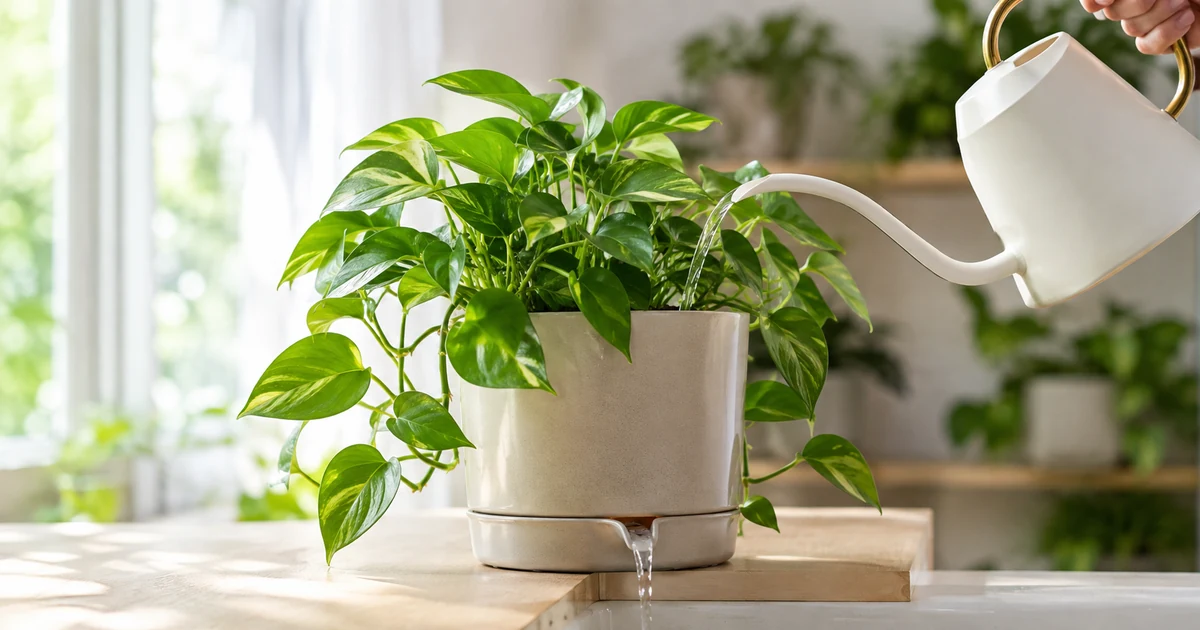
Indoor conditions usually mean less light, slower growth, and different temperature and humidity levels, so avoid automatically following your summer watering schedule.
Instead, check the potting soil and water according to the plant's needs. Overwatering can also encourage problems such as fungus gnats and root issues.
9. Keep Plants Clean During Fall and Winter
Bringing plants indoors isn't the end of pest prevention.
Continue checking them regularly for:
- Spider mites
- Aphids
- Mealybugs
- Scale
- Whiteflies
- Fungus gnats
- Sticky honeydew
- Webbing
- Leaf damage
Early detection makes pest problems much easier to control. Keeping leaves clean and removing dead plant material also helps maintain healthier houseplants.
Quick Fall Houseplant Pest Checklist
Before bringing your plants inside, make sure you:
- ✓ Check leaves, stems, and new growth
- ✓ Inspect the undersides of leaves
- ✓ Check the soil and drainage holes
- ✓ Look around the pot and saucer
- ✓ Remove dead or damaged foliage
- ✓ Rinse the plant thoroughly
- ✓ Treat visible pests
- ✓ Let foliage dry
- ✓ Quarantine plants for several weeks
- ✓ Gradually reduce outdoor light exposure
- ✓ Adjust watering for indoor conditions
- ✓ Continue monitoring after the plants come inside
Frequently Asked Questions
How do I make sure my houseplants don't bring bugs inside?
Inspect the entire plant, rinse the foliage, check the soil and pot, treat any visible pests, and quarantine the plant before placing it near other houseplants.
Should I spray my houseplants before bringing them inside?
Not necessarily. First inspect the plant and physically remove pests with water when appropriate. If pests are present, an insecticidal soap or horticultural oil labeled for that plant and pest may be useful. Always follow the product label.
How long should I quarantine plants before bringing them near other houseplants?
A quarantine period of about 3–4 weeks is commonly recommended for plants returning from outdoors. Continue inspecting them during this period.
What bugs are commonly brought indoors with plants?
Common pests include aphids, spider mites, whiteflies, mealybugs, scale insects, fungus gnats, ants, and earwigs.
Should I repot a plant before bringing it indoors?
Not every plant needs repotting. Consider repotting when there is a significant soil pest problem, contaminated or poor-quality potting mix, or another clear reason to replace the growing medium.
Final Thoughts
The safest way to bring houseplants indoors for fall is to inspect, clean, treat, quarantine, and monitor. Don't focus only on visible insects—check the leaves, stems, soil, pot, and drainage areas as well.
Taking these few preventative steps before moving plants indoors can help protect your entire houseplant collection from an unexpected fall pest infestation.