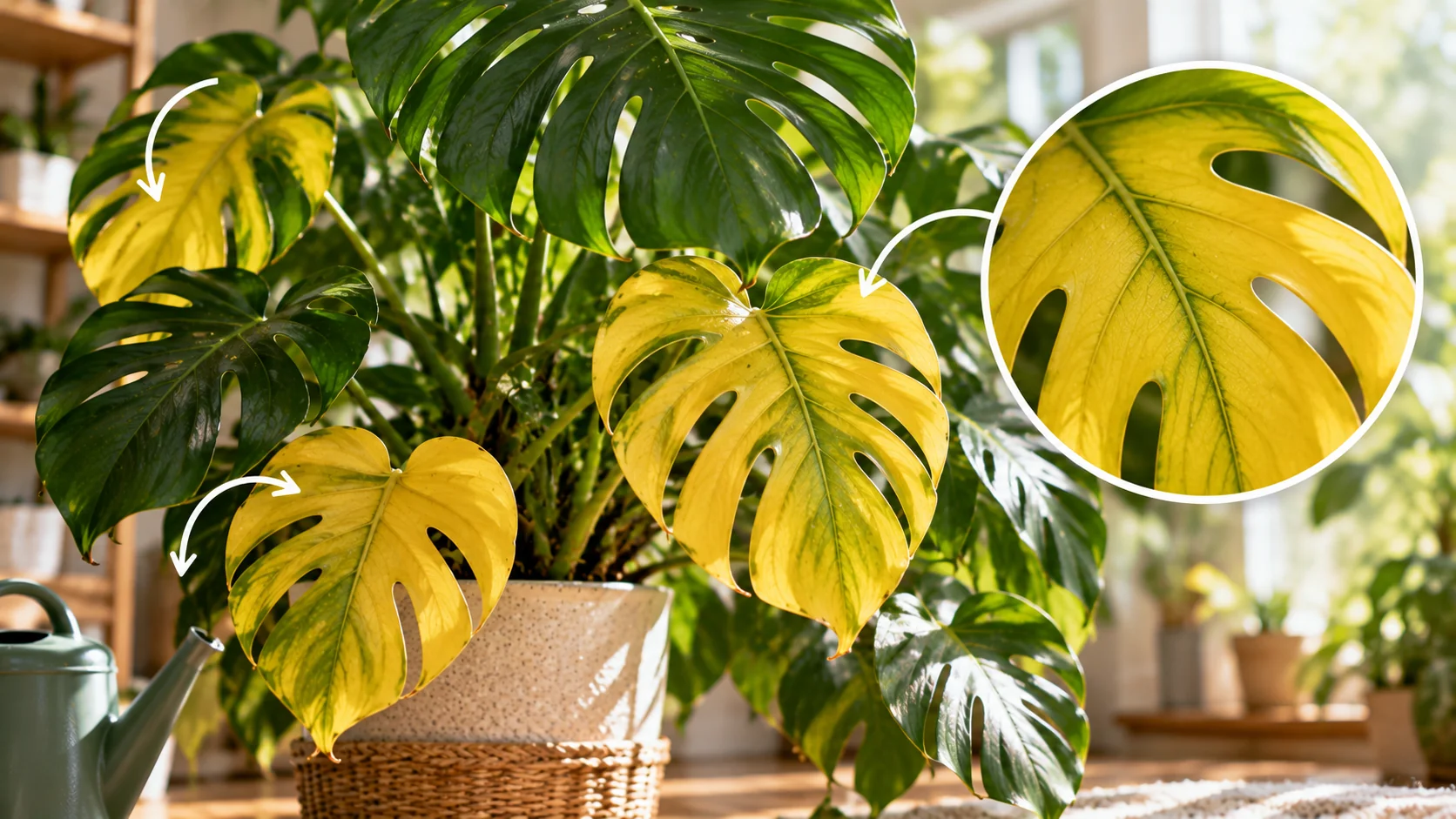
Seeing Monstera leaves turning yellow can be alarming, especially when your plant has previously looked healthy and green. But a yellow leaf doesn't automatically mean your Monstera is dying.
Yellowing is a symptom that tells you something about the plant's growing conditions. The real cause may be overwatering, underwatering, poor drainage, low light, excessive sunlight, low humidity, root problems, pests, nutrient deficiencies, temperature stress, or simply the natural aging of an older leaf.
The most important thing is not to water or fertilize your Monstera immediately. First, check the soil moisture, location of the yellow leaves, roots, light, and recent changes in care. Bloomscape identifies improper soil moisture, particularly overwatering, as the most common cause of yellowing Monstera leaves.
Why Is My Monstera Turning Yellow?
If you're asking “why is my Monstera turning yellow?”, start with the soil.
A Monstera prefers moisture but does not like to remain in constantly saturated soil. When the potting mix stays wet for too long, roots can lose access to oxygen and become damaged. The plant may then develop yellow leaves even though there is plenty of water in the pot.
On the other hand, a completely dry root ball can also cause yellowing.
The most common causes are:
- Overwatering
- Poor drainage
- Root rot
- Underwatering
- Low light
- Excessive direct sunlight
- Low humidity
- Nutrient deficiency
- Pests
- Natural aging
- Temperature stress
- Rootbound conditions
- Recent repotting or environmental changes
The trick is learning how to tell these problems apart.
1. Overwatering: The First Thing to Check
Overwatering is one of the most common reasons Monstera leaves turn yellow.
However, overwatering doesn't necessarily mean you poured too much water into the pot once. More often, it means the soil is staying wet for too long between waterings.
A large pot, dense soil, poor drainage, low light, or a saucer holding excess water can all keep the roots wet longer than they should be.
When roots remain surrounded by saturated soil, oxygen becomes limited. Damaged roots can't function normally, which can lead to yellowing, wilting, and poor growth.
Signs of an overwatered Monstera
Look for several symptoms together:
- Multiple yellow leaves
- Yellowing beginning on older lower leaves
- Soft or limp foliage
- Soil remaining wet for days
- A heavy pot
- Slow growth
- Brown or black roots
- Mushy roots
- A musty or sour smell
- Yellow leaves dropping from the plant
If your Monstera is yellowing and the soil is still wet, don't respond by watering again.
That can make the problem worse.
How to fix overwatering
First, allow the soil to dry appropriately.
Then check whether:
- The pot has drainage holes.
- Water can escape freely.
- The saucer is emptied after watering.
- The soil is loose and well draining.
- The pot isn't excessively large for the root system.
Bloomscape recommends watering when the top 2–3 inches of soil are dry and emphasizes removing excess water from the saucer.
2. Poor Drainage Can Keep Causing Yellow Leaves
You may be watering your Monstera correctly but still have yellow leaves because the pot isn't draining properly.
A container without a drainage hole can trap water around the roots. A decorative pot can create the same problem if water collects underneath the nursery pot.
Dense, compacted soil can also prevent excess water from moving away from the root zone.
Check your container
Your Monstera should be in a container where:
- Excess water can escape.
- The drainage hole isn't blocked.
- The plant isn't sitting in standing water.
- The soil doesn't remain saturated indefinitely.
If your plant is in a decorative cachepot, remove the inner pot after watering and empty any accumulated water.
3. Root Rot Can Make a Monstera Yellow Even When It's Wet
One of the most confusing situations is a Monstera that is drooping and yellow while sitting in wet soil.
You may think the plant needs more water, but damaged roots may be the actual problem.
When roots rot, they lose their ability to absorb water and nutrients efficiently. This is why a plant with too much water can sometimes look like a plant that doesn't have enough water.
Signs of Monstera root rot
Check the roots if:
- Yellowing is spreading quickly.
- The soil stays wet for many days.
- The plant smells unpleasant.
- Stems are becoming soft.
- Leaves are yellow and limp.
- Growth has stopped.
Healthy roots should generally be firm. Rotten roots are often brown, black, soft, or mushy.
How to treat root rot
If you find significant root damage:
- Remove the Monstera from its pot.
- Gently remove excess soil.
- Inspect the entire root system.
- Cut away severely damaged roots with clean scissors.
- Repot the healthy roots in fresh, well-draining soil.
- Use a pot with proper drainage.
- Avoid keeping the new soil constantly saturated.
Don't try to solve root rot by simply reducing the amount of water poured into the same waterlogged soil.
4. Underwatering Can Also Cause Monstera Yellow Leaves
Not every yellow Monstera is overwatered.
If the soil has become extremely dry, the plant may be experiencing drought stress.
Signs of underwatering
Look for:
- Very dry soil
- Soil pulling away from the pot
- Drooping leaves
- Curling leaves
- Crispy brown edges
- A noticeably lightweight pot
- Water running quickly through the pot without soaking the root ball
A severely dry Monstera should be watered thoroughly so the root ball is properly rehydrated, with excess water allowed to drain away.
The goal is not to keep the soil bone dry. Monstera does best when moisture is managed consistently rather than cycling between extreme dryness and saturation.
5. Your Monstera May Not Be Getting Enough Light
Light has a major effect on how quickly your Monstera uses water.
A Monstera in a very dark room may use water much more slowly. If you continue watering on the same schedule, the soil can remain wet for too long.
Low light can also slow photosynthesis and growth and contribute to pale or yellow foliage. Bloomscape recommends low to bright indirect light but notes that insufficient light can cause yellowing and slower growth.
Signs of low light
Your Monstera may have:
- Slow growth
- Small new leaves
- Long spaces between leaves
- Weak stems
- Pale foliage
- Loss of vigor
- Soil that stays wet for a long time
Move it gradually toward a brighter location with bright, indirect light.
6. Too Much Direct Sunlight Can Damage the Leaves
Monsteras need light, but intense direct sunlight can cause another problem.
Strong sunlight can bleach or scorch foliage, particularly when a plant that has been growing in lower light is suddenly placed beside a bright window.
Sun-stressed leaves may show:
- Pale yellow patches
- Bleached areas
- Brown crispy spots
- Damage concentrated on the window-facing side
- Dry or scorched sections
If this pattern matches your plant, move it slightly farther from the window or filter the strongest sunlight with a sheer curtain.
The goal is bright indirect light, not hours of harsh direct afternoon sun.
7. Low Humidity Can Cause Yellowing and Brown Edges
Monsteras are tropical plants and generally appreciate humid conditions.
When indoor air becomes very dry, especially when combined with dry soil, the leaves can develop brown, crispy edges and tips. Continued stress can eventually contribute to yellowing. Bloomscape specifically identifies low humidity and dry soil as factors that can lead to browning and later yellowing.
Signs of dry air
Look for:
- Brown leaf tips
- Crispy edges
- Curling leaves
- Dry-looking foliage
- Faster moisture loss
A humidifier is generally more reliable than occasional misting if your indoor air is consistently dry.
8. Nutrient Deficiency May Cause Yellow Leaves
If your Monstera has been growing in the same potting mix for a long time, nutrient availability can decline.
A nutrient deficiency can cause pale or yellow foliage, but don't immediately assume fertilizer is the answer.
Watering and root problems can produce very similar symptoms.
Before fertilizing, check:
- Soil moisture
- Drainage
- Root health
- Light exposure
- Pest activity
- Recent repotting
If everything else looks appropriate and the plant is actively growing, a balanced houseplant fertilizer used according to its label may help.
Don't overfertilize
Adding extra fertilizer to a stressed Monstera can create another problem. Excess fertilizer salts can accumulate in the soil and damage roots.
More fertilizer does not automatically mean greener leaves.
9. Pests Can Cause Monstera Leaves to Turn Yellow
If the yellowing looks unusual or is accompanied by tiny spots, inspect your Monstera for pests.
Common pests include:
- Spider mites
- Scale insects
- Mealybugs
- Aphids
Sap-sucking pests feed on plant tissue and can weaken leaves, contributing to yellowing and discoloration. Bloomscape specifically notes spider mites, scale, and mealybugs as pests that can contribute to yellowing.
Where to look
Inspect:
- Undersides of leaves
- Leaf joints
- Petioles
- New growth
- Stems
- Areas around leaf nodes
Look for:
- Fine webbing
- Sticky residue
- Cotton-like material
- Small bumps
- Tiny insects
- Speckled or stippled leaves
If you find pests, isolate the Monstera before treating it so the infestation doesn't spread to nearby plants.
10. One Old Yellow Leaf May Be Completely Normal
This is an important distinction.
If your Monstera is producing healthy new growth while only one of its oldest bottom leaves gradually turns yellow, the plant may simply be shedding an old leaf.
Monsteras don't keep every leaf forever. As new growth develops, older foliage can naturally decline.
Natural aging is more likely when:
- Only one old leaf is yellow.
- The yellow leaf is near the bottom.
- New leaves look healthy.
- Stems remain firm.
- Soil moisture is normal.
- There are no visible pests.
- The plant continues growing.
In this situation, you don't need to panic or dramatically change your watering routine. Bloomscape also identifies yellowing of older lower leaves as a normal part of the Monstera's growth cycle when new growth is healthy.
11. Temperature Stress Can Turn Monstera Leaves Yellow
Monsteras prefer relatively stable indoor temperatures.
Sudden exposure to cold air or strong drafts can stress the plant.
Keep your Monstera away from:
- Air-conditioning vents
- Cold drafts
- Exterior doors
- Very cold windows
- Heating vents
- Sudden temperature changes
If yellowing began shortly after moving the plant to a different room, consider whether its temperature or airflow changed.
12. A Rootbound Monstera May Struggle With Water and Nutrients
As Monsteras grow, their root systems can eventually fill the container.
A severely rootbound plant may dry out unusually quickly because there is very little potting mix left to retain moisture.
Signs of a rootbound Monstera
Check for:
- Roots growing from drainage holes
- Roots circling around the pot
- Soil drying unusually quickly
- Water immediately running through the container
- Little new growth
- Drooping soon after watering
If the roots have completely filled the container, repot the plant into a container only moderately larger than the previous one.
Don't move a small root system into an enormous pot because excess soil can retain too much moisture.
13. Recent Repotting Can Temporarily Stress a Monstera
If your Monstera leaf started turning yellow after repotting, consider transplant stress.
Repotting can disturb roots and temporarily change:
- Moisture levels
- Root-to-soil ratio
- Light exposure
- Airflow
- Humidity
- Watering requirements
An oversized pot can be particularly problematic because it contains much more soil than the root system can use, allowing the mix to stay wet longer.
After repotting, give the plant stable conditions rather than constantly changing its location or watering routine.
How to Diagnose Monstera Yellow Leaves by Pattern
The pattern of yellowing can tell you much more than the color alone.
| What you see | What to investigate first |
|---|---|
| One old bottom leaf slowly turns yellow | Natural aging |
| Several lower leaves turn soft yellow | Overwatering or root problems |
| Yellow leaves + wet soil | Overwatering / poor drainage |
| Yellow leaves + mushy roots | Root rot |
| Yellow leaves + bone-dry soil | Underwatering |
| Yellow patches facing the window | Excessive direct sunlight |
| Pale leaves + slow, stretched growth | Low light |
| Yellowing + crispy brown edges | Dry soil / low humidity |
| Yellowing + fine webbing | Spider mites |
| Yellowing after repotting | Root disturbance / oversized pot |
| Yellowing + roots filling the pot | Rootbound stress |
Remember that more than one issue can occur at the same time. For example, low light can make the soil dry more slowly, which can turn an otherwise reasonable watering routine into overwatering.
What to Do When Your Monstera Has Yellow Leaves
If you're trying to figure out why is my Monstera leaf turning yellow, don't start by removing the leaf.
Use this diagnostic sequence instead.
Step 1: Feel the soil
Check several inches below the surface.
Wet: Investigate overwatering and drainage.
Dry: Consider underwatering.
Step 2: Look at the yellow leaf
Is it:
- Old or new?
- Soft or crispy?
- Uniformly yellow or patchy?
- Near the bottom or throughout the plant?
Step 3: Check the pot
Make sure it has drainage holes and isn't holding standing water.
Step 4: Check the roots
If the soil remains wet and yellowing is spreading, inspect the roots.
Step 5: Evaluate the light
Aim for bright, indirect light.
Step 6: Inspect for pests
Look underneath leaves and around stems.
Step 7: Think about recent changes
Ask yourself:
- Did I repot it recently?
- Did I move it?
- Did I change the watering routine?
- Did I place it near an AC or heater?
- Did I fertilize recently?
- Did the season change?
This approach is much more useful than blindly watering or fertilizing the plant.
Should You Cut Off Yellow Monstera Leaves?
You can remove a completely yellow or severely damaged leaf, but pruning is not the treatment.
If overwatering caused the yellowing, changing the watering conditions is what matters.
If pests caused it, treat the pests.
If low light caused it, improve the light.
If the leaf is still partly green, you may want to leave it on the plant because it can still contribute to photosynthesis.
Once a leaf is completely yellow, it generally won't return to its original green color.
How to Prevent Monstera Leaves From Turning Yellow
The best prevention is consistent care rather than a rigid watering schedule.
Water based on soil moisture
Don't water because it's “watering day.” Check the soil first. Bloomscape recommends allowing the top 2–3 inches to dry before watering.
Give it bright indirect light
Enough light supports healthy growth without exposing foliage to prolonged harsh direct sun.
Use a draining pot
Always allow excess water to escape.
Don't leave water in the saucer
“Wet feet” can contribute to root problems.
Maintain reasonable humidity
Especially if indoor air is very dry.
Inspect regularly for pests
Early detection makes pest problems easier to manage.
Fertilize carefully
Use a balanced houseplant fertilizer when appropriate rather than feeding a stressed pla