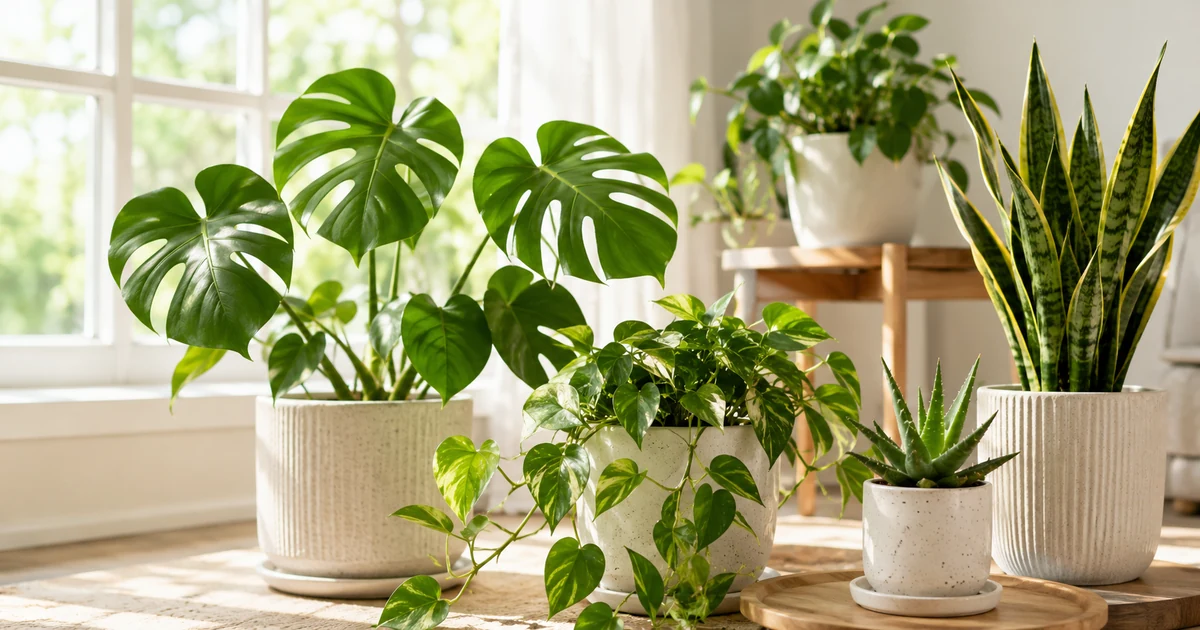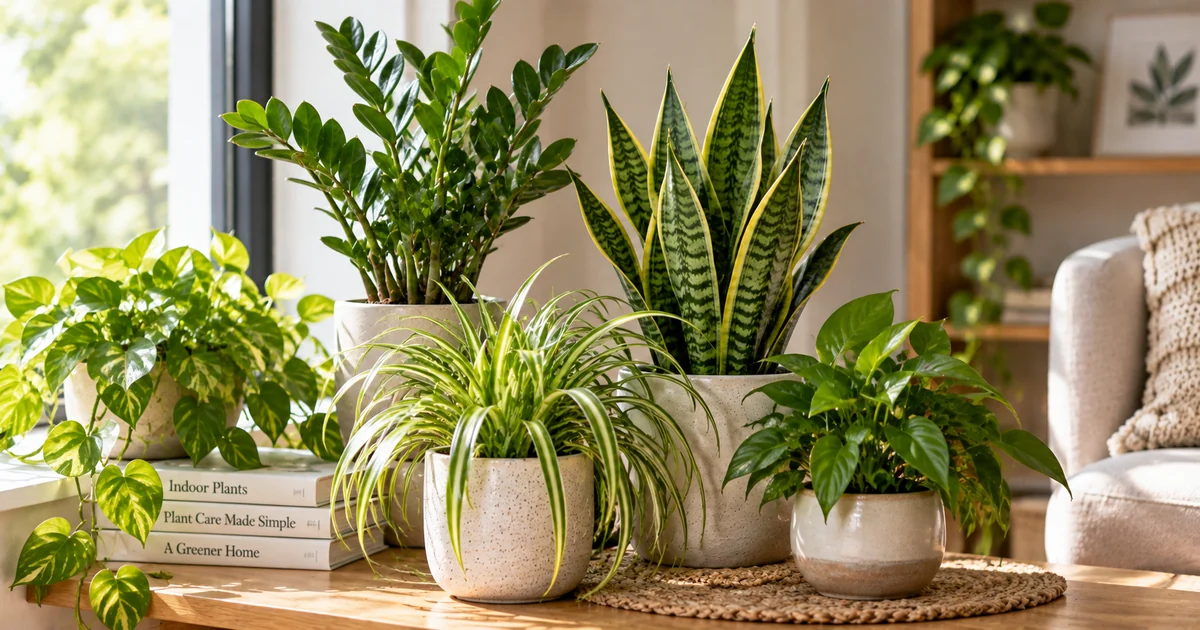
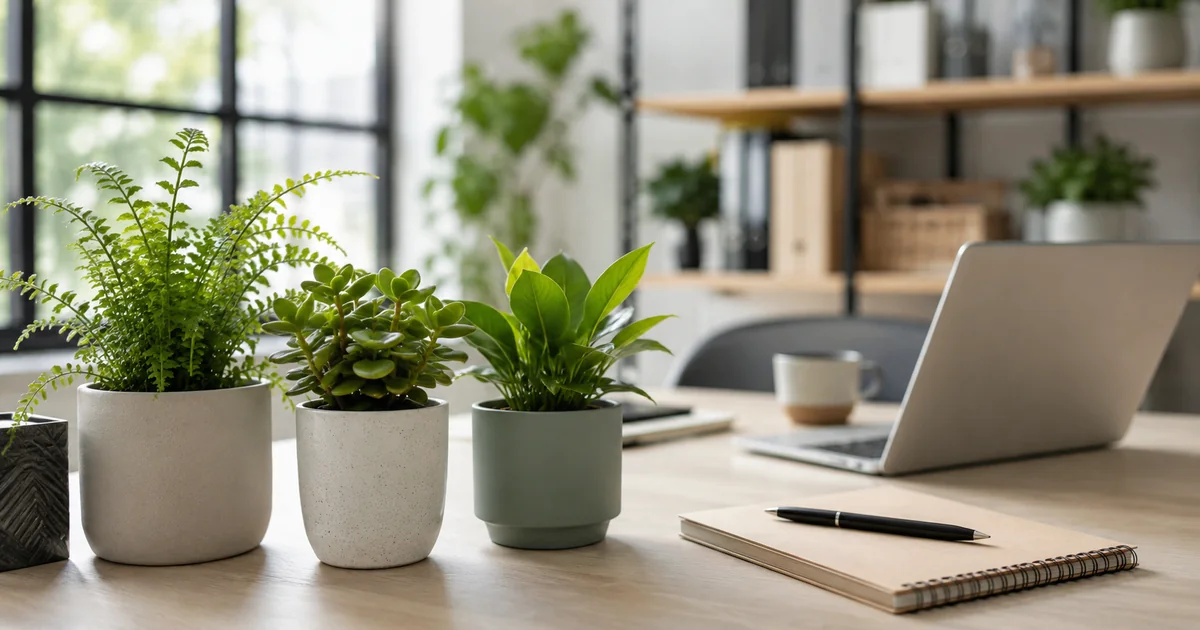
The best office desk plant is not simply the toughest plant at the store. It must fit the light that actually reaches the desk, the available footprint, your watering habits, weekends away, air-conditioning, and any pets that can access the workspace. A compact plant in the right position is more useful than a “low-light” recommendation slowly declining under ordinary ceiling lights.
Start With the Office, Not the Plant List
Measure meaningful light
A desk beside an unobstructed window and a desk in the center of a windowless floor are different growing environments. Human vision adjusts to dim rooms, so a space can feel bright while providing little energy for photosynthesis.
Observe the desk over a full workday or compare positions with a light-meter app at leaf height. University of Minnesota Extension places low light around 50–250 foot-candles, but that is a broad category, not a universal target for every species. Read what low light means for plants before relying on labels such as “office plant.”
Ordinary artificial lighting may sustain certain tolerant foliage plants if it is bright and operates consistently. A dim windowless office needs a suitable plant light; darkness plus occasional overhead light is not a viable growing condition.
Measure the mature footprint
A plant sold in a 4-inch pot may not remain small. Consider mature width, leaf arch, trailing stems, and whether the chair, keyboard, monitor, or walkway will damage it. Spider plants can spread 1–2 feet and make long plantlet-bearing stems; standard ZZ and snake plants can outgrow a desktop. Compact cultivars are often better than choosing a species and assuming it will stay miniature.
Match absence and watering tolerance
If nobody checks the plant over weekends or holidays, choose a species that tolerates some drying and use a pot with drainage. Do not compensate for an upcoming absence by soaking a plant that is already wet. A colleague watering “just in case” is often a greater risk than a missed day.
Office Desk Plant Selection Matrix
| Plant | Light tolerance | Desk footprint | Watering tolerance | Maintenance | Pet consideration | Best for |
|---|---|---|---|---|---|---|
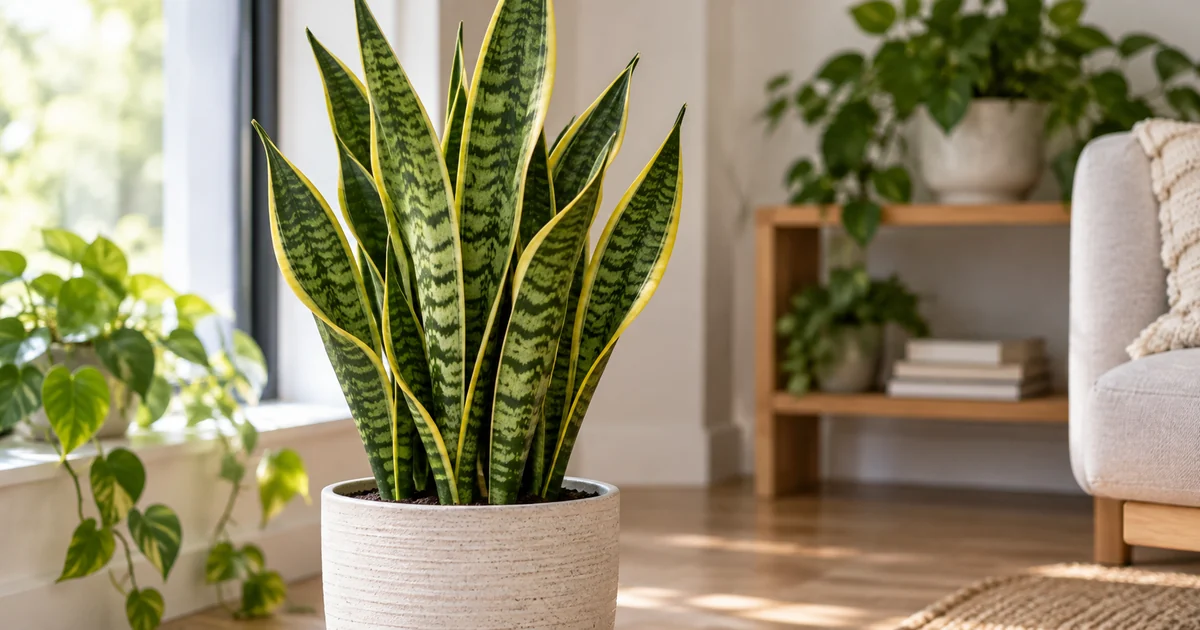
| Dwarf Snake Plant | Tolerates low light; grows better in brighter indirect light | Compact, upright rosette; verify cultivar size | Tolerates substantial drying; vulnerable to wet soil | Low | ASPCA lists snake plant as toxic to cats and dogs if eaten | Small desks where vertical form is useful and pets cannot chew it |
| Peperomia | Prefers bright indirect light; many types tolerate lower light | Usually compact, but size varies by species | Let the mix partly dry; avoid saturation | Low to moderate | Many commonly sold peperomias are listed as non-toxic by ASPCA, but verify the exact species | Desks near filtered light where a small leafy plant is wanted |
| Haworthia or Haworthiopsis | Bright indirect light; some tolerance of gentler light | Often 2–12 inches wide depending on species | Drought tolerant; needs fast drainage | Low | Verify the exact species with a pet-toxicity database | Bright desks with very little surface area |
| Spider Plant | Prefers medium to bright indirect light; tolerates lower light | Arching leaves can reach 1–2 feet; better on a shelf edge | Tolerates some drying but not prolonged saturation | Moderate | ASPCA lists *Chlorophytum comosum* as non-toxic to cats and dogs | Larger desk, shelf, or cabinet with room for cascading growth |
| ZZ Plant | Tolerates very low light; best in bright indirect light | Standard plants mature around 2–4 feet wide; use a genuinely compact cultivar for a desk | Stores water in rhizomes; let mix dry between watering | Low | Toxic if chewed; NC State notes calcium oxalate and cat/dog risk | Floor beside a desk or a large surface, especially for infrequent watering |
| Small Pothos | Tolerates lower light; healthier growth in brighter indirect light | Compact initially but vines continuously | Some drying tolerated; avoid chronic wetness | Moderate because vines need trimming or support | Toxic to cats and dogs if chewed | Shelf or cabinet where trailing growth is welcome, not a crowded keyboard area |
Pet status is not a guarantee that chewing any plant is harmless, and common names can be ambiguous. Verify the botanical name before placing a plant where an animal has access.
Choosing by Workspace Condition
Bright desk near filtered window light
Peperomia, Haworthia, a compact spider plant, or a dwarf snake plant can work. Watch for hot direct sun through glass, especially after moving a plant from a shop. Acclimate gradually and protect shade-adapted foliage from midday scorch.
Low natural light but bright, consistent office lighting
A dwarf snake plant or compact ZZ cultivar is more tolerant than a succulent rosette. “Tolerant” still means you should watch new growth. If stems lean, leaves become progressively smaller, or the mix stays wet for a long time, compare the desk with a brighter position.
Windowless or lights-off office
Choose a suitable grow light or do not keep a living plant there. A timer can provide consistent illumination during the workweek and weekends. Fixture output and distance matter, so follow manufacturer coverage guidance and judge success by healthy new growth—not by how bright the lamp looks to people.
Tiny or shared desk
Use a small Peperomia or Haworthia in a stable pot with a saucer. Avoid a fast-growing vine that crosses another person’s workspace or a top-heavy pot likely to spill. Confirm that the plant’s mature size, not its retail size, fits.
Frequent travel or long holidays
A dwarf snake plant, Haworthia, or compact ZZ can tolerate more drying than a peace lily. Still, no plant should be abandoned indefinitely. Arrange a moisture check for extended absences and give the caretaker a condition-based instruction rather than “water every Friday.”
Air-Conditioning and Desk Microclimates
Cold air blowing directly from a vent can chill foliage and accelerate local drying. A sealed office may also have low humidity, while a sunny window can heat one side of the pot. Move the plant out of the direct airflow rather than trying to solve every symptom with more water.
Computers and desk lamps do not normally provide useful plant light unless the lamp was designed and positioned for plants. Keep foliage away from hot equipment and maintain access to emergency routes, outlets, and ventilation controls.
A Five-Minute Selection Check
- Record whether the desk receives window light, artificial plant light, or only general room lighting.
- Measure the free width and height, including space for mature leaves.
- Decide who checks moisture during weekends and holidays.
- Note direct vents, hot glass, and the risk of the pot being knocked over.
- Check the plant’s botanical name and pet toxicity.
- Choose a draining container and a place where runoff cannot reach electronics.
Keeping a Desk Plant Healthy
Check moisture rather than following a universal weekly schedule. Lower light usually means slower water use. Empty water from decorative outer pots, wipe dust from broad leaves, and inspect leaf undersides when cleaning. Rotate only to balance exposure; rotation cannot compensate for inadequate total light.
If a plant declines, review light, moisture, drainage, pests, and temperature instead of assuming it “doesn’t like offices.” Our plant-problem diagnosis guide provides a cause-first process. Species-specific help is available in the Snake Plant care guide and Spider Plant care guide.
Sources
- University of Minnesota Extension: Lighting for Indoor Plants and Starting Seeds — office lighting, light measurement, and water use under lower light.
- North Carolina Extension: ZZ Plant — mature size, light, drought tolerance, growth habit, and toxicity.
- North Carolina Extension: Spider Plant — mature footprint, light, watering tolerance, and cascading habit.
- North Carolina Extension: Peperomia — compact growth, indirect-light preference, and care.
- North Carolina Extension: Haworthia — size range, light, drainage, and drought tolerance.
- ASPCA: Toxic and Non-Toxic Plants — species-level pet-safety verification.