A spider plant is more than a fountain of striped leaves. Chlorophytum comosum develops thick, fleshy roots and short rhizomes that store reserves, then sends out long flowering stems that can carry young plantlets. Care should support both parts of that growth habit: an aerated root zone that is allowed to dry slightly, and enough light and moderate nutrition for mature plants to produce their characteristic “spiderettes.”
Read the Plant’s Growth Habit
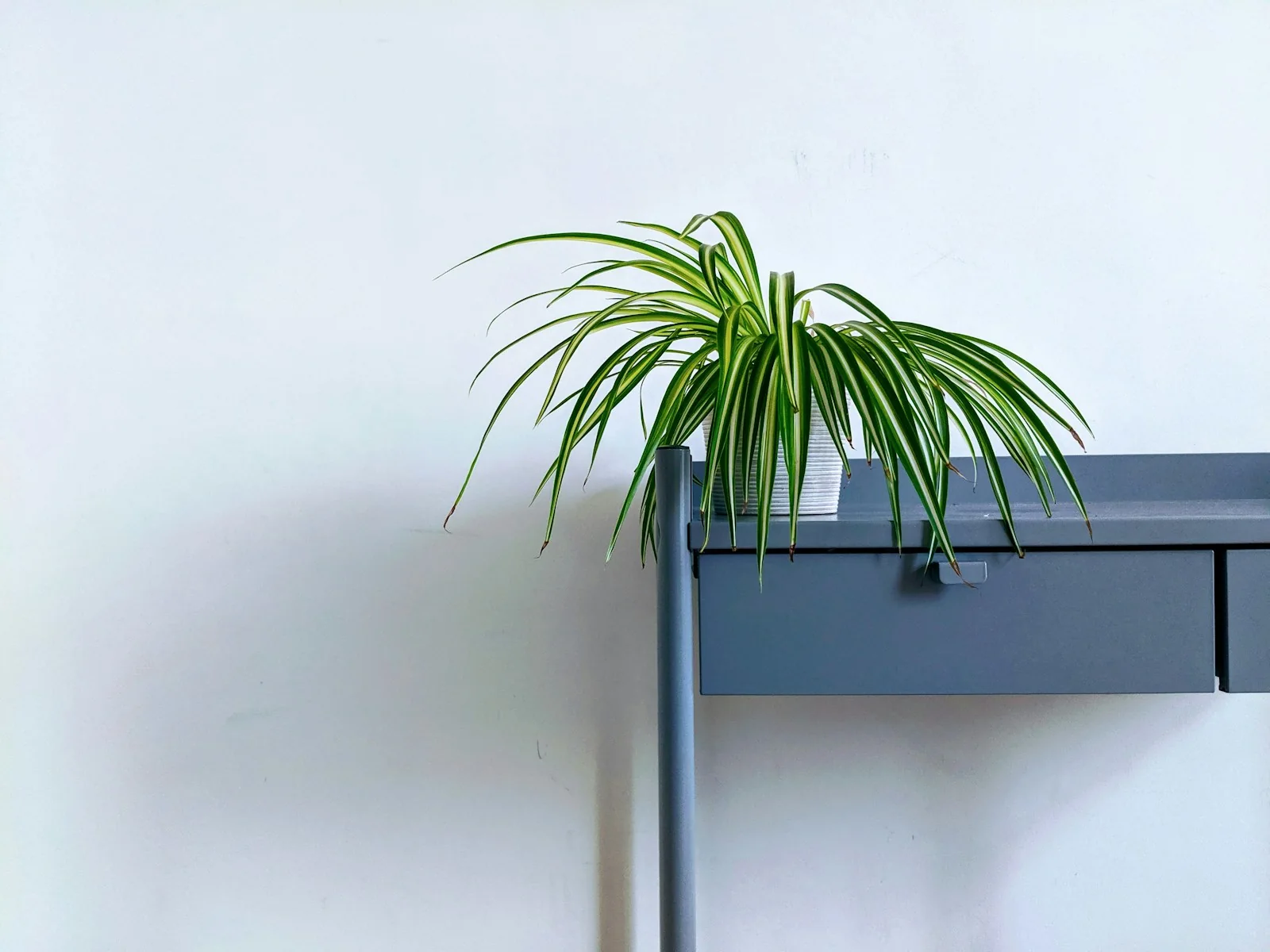
Leaves emerge from a central crown and arch outward. Mature plants can form dense clumps, while their long stems place flowers and plantlets beyond the foliage. Hanging baskets and raised shelves display this habit well, but a normal pot works if the stems have room to extend without being crushed.
The pale, swollen roots of a healthy spider plant can look unusually thick. That is normal water- and reserve-storage tissue, not automatically a sign that the plant needs a larger pot. Judge crowding by how the root ball, medium, and watering behave rather than by root thickness alone.
Variegated cultivars differ. ‘Vittatum’ has a light central stripe, while ‘Variegatum’ has light margins; all-green and curly forms also exist. A cultivar’s natural color pattern should not be confused with bleaching or nutrient deficiency.
Light for Leaves and Spiderettes
Bright, indirect or dappled light supports dense growth, clearer variegation, flowers, and plantlets. Spider plants tolerate lower light, but growth and plantlet production may slow. Intense direct summer sun can bleach or scorch foliage, especially after a plant has grown in a dimmer location.
Move a plant gradually when increasing light. If it produces long, pale, weak leaves or loses vigor, assess the actual window direction, distance, season, and obstructions before fertilizing. The separate guide on spider plants in low light covers that question in depth.
Watering with Fleshy Roots in Mind
Water thoroughly when the upper layer has dried and the pot feels lighter, then let excess drain. The goal is an evenly rewetted root ball followed by partial drying—not permanently soggy mix and not repeated severe drought.
Thick roots help the plant survive an occasional missed watering, but they do not eliminate water stress. A very dry root ball can shrink from the pot, causing water to race around the edge. If that happens, rewet slowly and confirm that the center of the root ball absorbs moisture.
Do not water by a fixed weekly rule. Light, temperature, air movement, root density, pot size, and season change drying time. Reduce frequency when growth and light slow, but continue checking the root zone rather than declaring the plant dormant.
Potting Mix, Drainage, and Real Repotting Cues
Use a general-purpose indoor potting mix or soilless medium that holds some moisture while draining freely and retaining air. A container must have a working drainage hole, and water should not remain trapped inside a decorative outer pot.
Spider plants can grow and produce plantlets while somewhat snug, but that does not mean extreme crowding is beneficial. Repot when:
- Water runs around the root ball without wetting it evenly.
- The medium has broken down or contains little usable volume.
- Roots force the plant upward, block drainage, split the pot, or make watering unmanageable.
- Growth remains poor after light, water, temperature, pests, and nutrition have been assessed.
Move to a container only modestly larger. A very large pot surrounds the root system with extra mix that may stay wet too long. Division is an option when several crowns have formed and a smaller plant is preferred.
Brown Tips Need Investigation, Not One Automatic Fix
Brown tips are common and have several possible causes. University extension guidance identifies irregular moisture, accumulated fertilizer salts, low humidity, and water constituents including fluoride or chlorine among the possibilities. Direct sun, heat, cold, and physical rubbing can also damage tips.
Start with history. Did browning begin after a fertilizer application, a move to a sunnier window, a period of drought, or a change in water source? Is the damage limited to old tips, or is it continuing on every new leaf?
If other evidence points to water quality, try rainwater or distilled water for several irrigation cycles and monitor new foliage. Do not assume every brown tip proves fluoride toxicity. Let tap water stand only if that advice fits the disinfectant used locally; standing may reduce free chlorine but does not remove fluoride and may not remove chloramine.
Trim brown tissue for appearance with clean scissors, following the leaf’s shape and leaving a narrow dry margin. Trimming does not cure the cause, and the old tip will not regrow.
A Spider Plant Decision Table
Use symptoms to choose the first check, not to jump directly to a diagnosis.
| What you see | Check first | Possibilities to compare | Useful next step |
|---|---|---|---|
| Brown tips | Watering history, fertilizer, water source, sun, and drafts | Irregular moisture, soluble salts, fluoride or chlorine sensitivity, dry air, scorch, physical injury | Change only the best-supported factor and judge new leaves |
| Pale or bleached leaves | Light intensity and orientation | Excess sun, very low light, cultivar color, root stress, nutrition | Compare exposed and shaded foliage; adjust light gradually |
| Drooping foliage | Root-zone moisture and root condition | Extended dryness, persistent wetness, heat, damaged roots | Check below the surface before watering again |
| Few or no spiderettes | Plant maturity, light, feeding, and cultivar | Young plant, insufficient light, excess fertilizer, seasonal slowdown, cultivar tendency | Stabilize care; do not force production with heavy feeding |
| Yellowing leaves | Leaf age, moisture, drainage, and pests | Normal old-leaf loss, persistent wetness, drought, root stress, pests | Map which leaves yellow and inspect roots only when evidence warrants it |
| Dense roots or lifted crown | How water moves through the root ball | Manageable snug growth or genuine loss of usable medium | Repot only when crowding interferes with water, stability, or growth |
| Slow growth | Season, light, temperature, and root-zone health | Normal winter slowdown, low light, root restriction, nutrient issue | Correct the strongest supported limitation before adding fertilizer |
Feeding Without Trading Plantlets for Salt Stress
Spider plants need nutrients during active growth, but heavy or repeated feeding can contribute to tip browning and may reduce plantlet production. Check whether fresh potting mix already contains fertilizer. If feeding is appropriate, use a houseplant product at its labeled rate and account for every product already in the pot.
Do not feed because one leaf is yellow or because a plant has no spiderettes. First assess maturity, usable light, roots, and season. Reduce or pause feeding when growth slows; fall and winter fertilizing guidance explains how to make that decision without using a rigid calendar.
From Flowers to Plantlets
Long stems first carry small flowers and then plantlets. Wait until a plantlet has several leaves and visible root nubs before separating it. A very small spiderette without developing roots can establish, but it has fewer reserves and needs more careful moisture control.
The lowest-risk method keeps the plantlet attached to the parent while it roots:
- Place a small pot of moist, airy medium beside the parent.
- Rest the base of the plantlet on the surface and secure it gently.
- Keep the medium lightly moist, not saturated, while roots establish.
- Cut the connecting stem only after the plantlet resists a gentle tug and is growing independently.
A plantlet that already has roots can be detached and potted directly. Mature multi-crown plants can also be divided. Water-rooting works, but roots formed in water must adjust after transfer to potting mix, so direct rooting is often simpler.
Temperature, Humidity, and Leaf Care
Typical indoor temperatures are suitable. Protect the plant from frost, cold drafts, hot vents, and abrupt temperature changes. Average household humidity is often adequate when watering and roots are healthy.
Routine misting is not a reliable way to correct low room humidity, and wet foliage can complicate spotting when air movement is poor. If air is unusually dry and other causes of tip burn have been excluded, use a room humidifier or group plants with spacing for airflow rather than relying on occasional mist.
Wipe or rinse dusty leaves gently so they can intercept light. Support the crown and avoid pulling the long leaves. Remove fully dead leaves at the base with clean tools rather than tearing healthy tissue.
Pests and Pet Safety
Mealybugs and scale can hide at leaf bases and along stems; inspect both sides of leaves and the plantlet stalks. Sticky residue, cottony material, bumps, or declining new growth deserve closer inspection. Isolate a confirmed infestation and choose a treatment labeled for the pest and indoor plant.
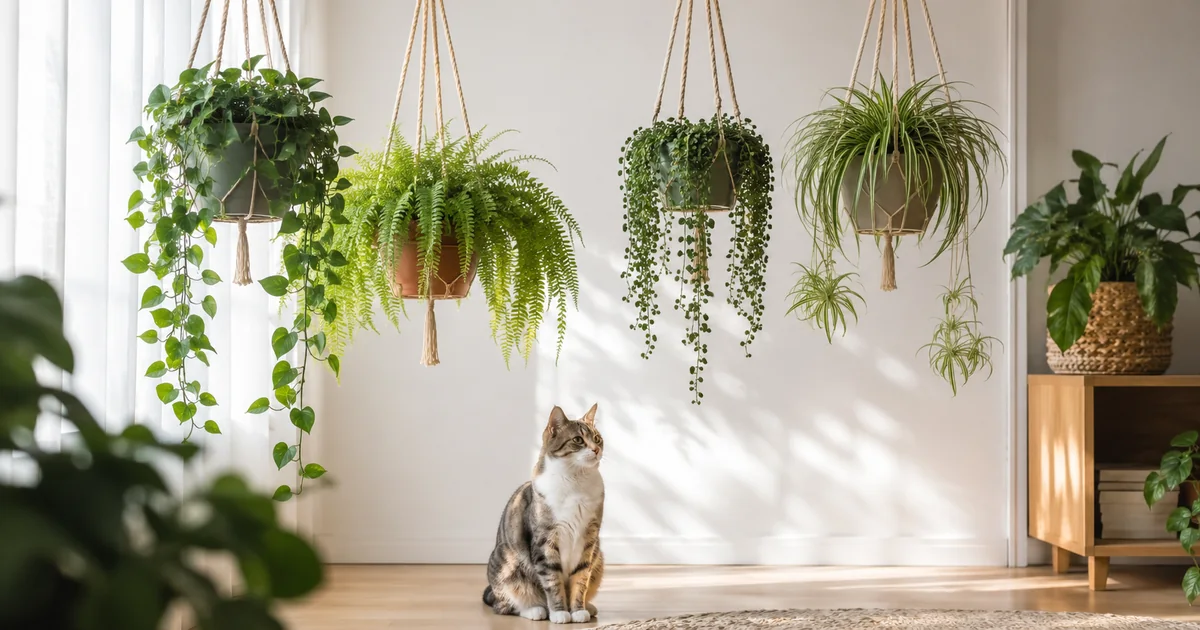
The ASPCA plant database lists Chlorophytum comosum as non-toxic to cats and dogs. “Non-toxic” does not make the plant food, and chewing any plant material can still cause stomach upset or damage the plant. Place it where repeated chewing is unlikely and contact a veterinarian if a pet becomes unwell.
The Care Pattern to Maintain
Give a spider plant bright filtered light, water thoroughly after partial drying, preserve an airy root zone, and feed moderately during real growth. Use new leaves to judge whether a correction worked. Brown tips, sparse spiderettes, and crowded roots are prompts to investigate—not instructions to water, fertilize, or repot automatically.
Sources
- University of Wisconsin–Madison Extension — Spider Plant, Chlorophytum comosum
- RHS — How to Grow Spider Plants
- Kansas State University Research and Extension — Spider Plant
- University of Missouri Extension — Caring for Houseplants
- ASPCA — Spider Plant Toxicity Listing