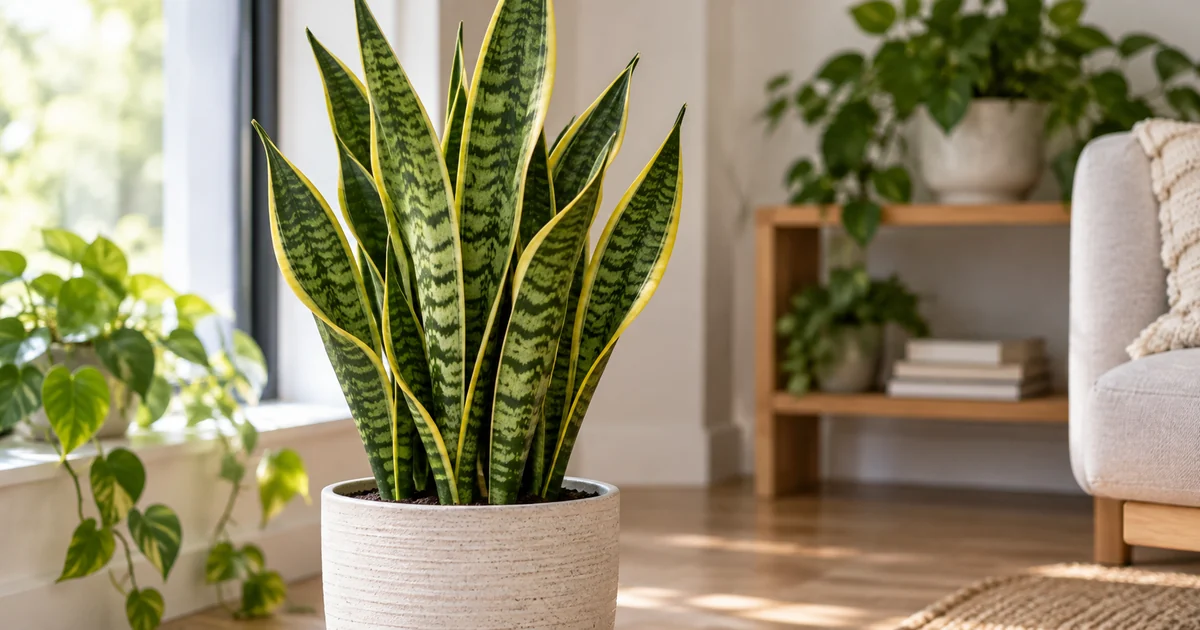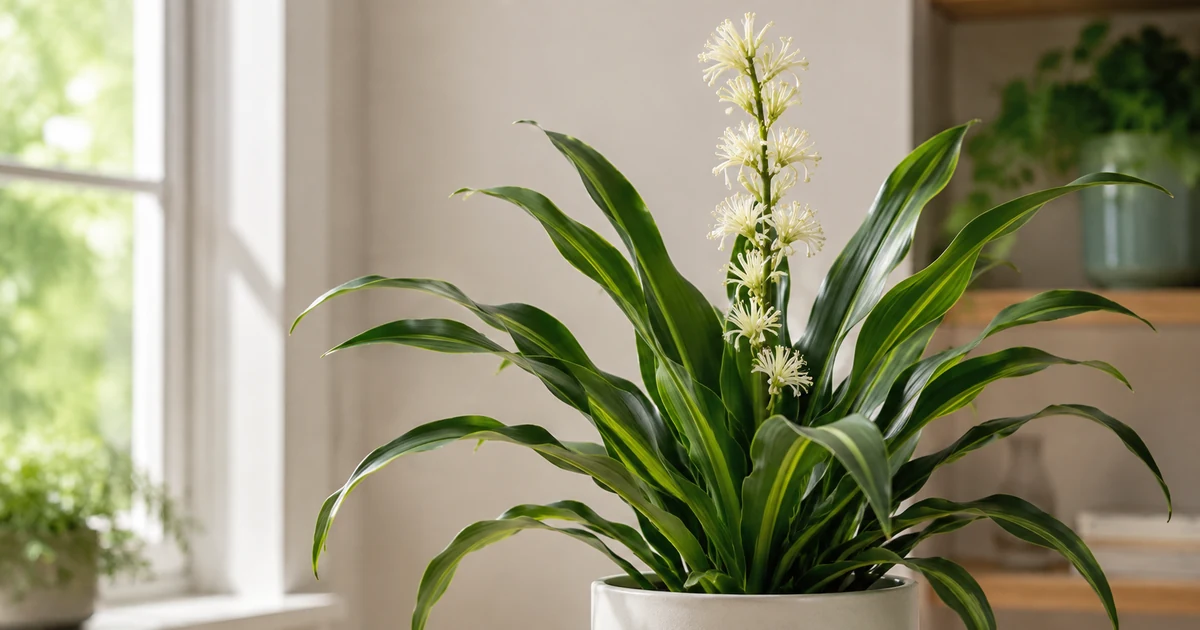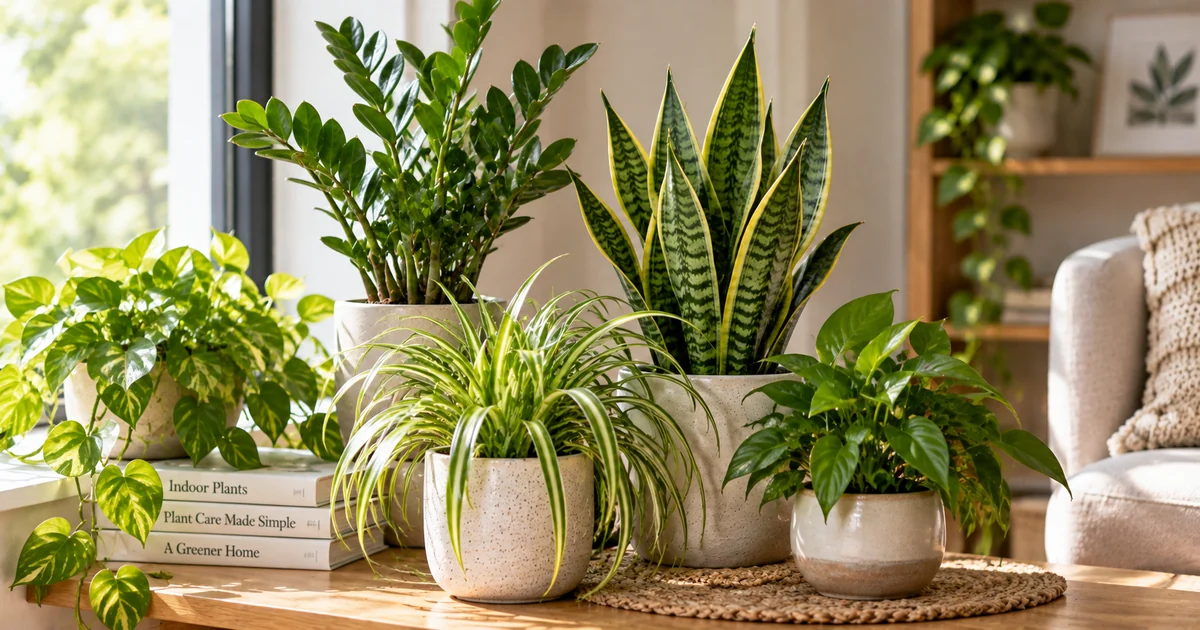
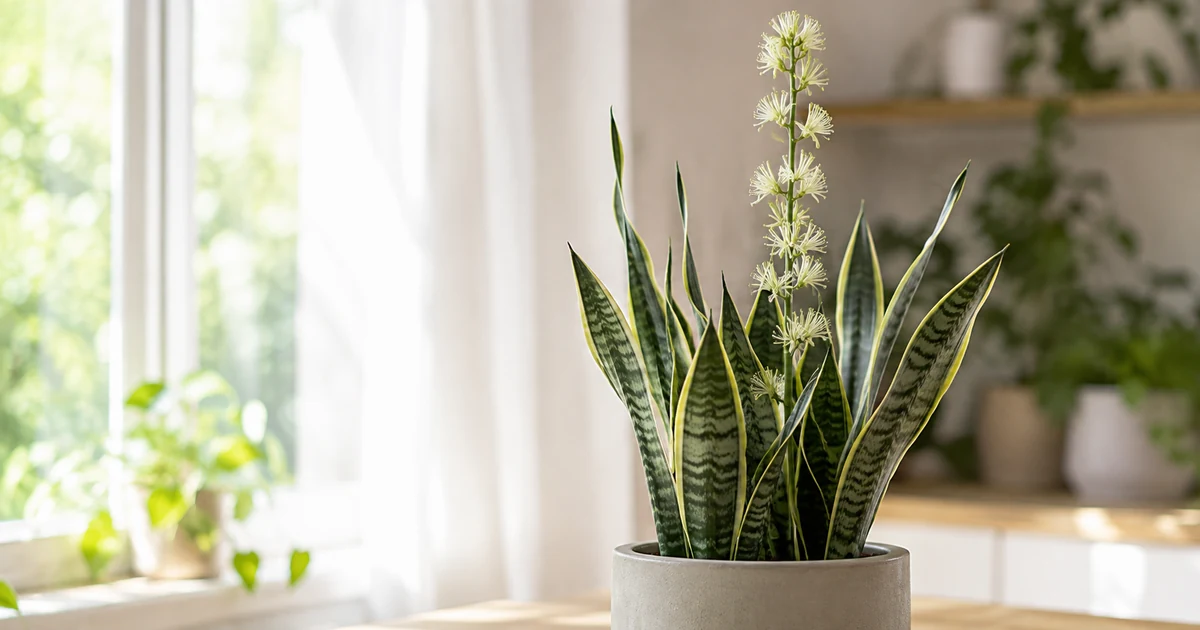
A snake plant can flower, although it rarely does so indoors. *Dracaena trifasciata*—still widely sold under its former name *Sansevieria trifasciata*—produces a raceme: a slender stalk carrying small greenish-white to cream flowers. The flowers can be sticky and fragrant. Blooming is a normal reproductive event, not evidence that the plant is dying.
What caused a particular houseplant to bloom is harder to answer. Plant maturity is necessary, but confident internet explanations about root stress, neglect, or a crowded pot are mostly grower anecdotes rather than established triggers.
What a Snake Plant Flower Stalk Looks Like
The stalk rises separately from the rosette of stiff leaves and carries multiple small buds along its length. NC State Extension describes the flowers as greenish-white to cream, sticky, and fragrant. RHS describes snake plant flowers as fragrant, starry, and white.
A new leaf is thicker, pointed, and develops the plant’s normal banding. A flower stalk is narrower and holds distinct buds. Sticky droplets near open flowers may be nectar. If stickiness also appears on distant leaves or stems, inspect for sap-feeding pests before deciding it came from the bloom.
What Is Actually Known About Indoor Flowering
Verified horticultural sources support three useful points:
- snake plants are capable of flowering;
- flowers are rarely seen on indoor plants;
- mature plants may bloom without being harmed by the event.
Those sources do not establish a dependable indoor flowering formula. They also do not prove the common claim that becoming root-bound or water-stressed makes a snake plant flower. A crowded or intermittently dry specimen may happen to bloom, but observation is not a controlled test of cause.
Do not intentionally withhold water, damage roots, or leave a plant dangerously pot-bound. If roots are circling densely, the pot is cracking, water cannot penetrate, or growth is declining, repot because the root system needs it—not because flowering should be encouraged or prevented.
Snake Plant Flowering: Evidence Versus Anecdote
| Statement | Evidence status | Practical interpretation |
|---|---|---|
| Snake plants can make fragrant, pale flowers | Documented horticultural fact | A flower stalk is a legitimate part of the species’ biology |
| Indoor flowering is uncommon | Supported by NC State and RHS | Enjoy it, but do not expect a regular annual display |
| Only mature plants flower | Biologically reasonable and consistent with flowering plants | A young offset is less likely to bloom, but age alone does not predict timing |
| A root-bound plant flowers from stress | Common grower anecdote; not established by the cited sources | Do not crowd roots deliberately or postpone necessary repotting |
| Drought stress forces flowering | Anecdotal and potentially harmful as advice | Water according to the root zone; do not manufacture severe stress |
| Flowering proves perfect care | Not established | Check the plant’s leaves and roots on their own merits |
What You See and What to Do
| What you see | Likely explanation | Check | Action |
|---|---|---|---|
| Tall, narrow stalk separate from the leaves | Developing inflorescence | Look for buds arranged along the stalk | Keep normal care; do not rotate or repot solely because of the stalk |
| Small pale or greenish-white flowers | Normal snake plant bloom | Confirm the plant otherwise looks stable | Leave them or remove the stalk if preferred |
| Sticky droplets around the flowers | Floral nectar may be present | Inspect other plant parts for scale or mealybugs | Protect furniture; treat only a confirmed pest |
| Noticeable fragrance, often strongest nearby | Normal floral scent | Whether the scent is uncomfortable | Improve ventilation or cut the stalk if necessary |
| Stalk dries after flowering | Normal completion of the bloom | Ensure the leaves and crown remain firm | Cut the dry stalk near the base with clean pruners |
| Leaves soften, yellow, or collapse during bloom | Usually a separate problem, especially excess moisture or root damage | Root-zone moisture, drainage, cold exposure, and pests | Diagnose immediately; do not assume flowering caused the decline |
Care During Bloom
Continue the same fundamentals used for a non-flowering snake plant. Provide suitable indirect light and allow the root zone to dry appropriately before watering again. Use a draining pot and mix. Do not increase fertilizer to “feed the flowers,” and do not water more frequently because a stalk appeared.
Snake plants tolerate low light, but tolerance does not guarantee active growth. For placement and routine care, see the complete Snake Plant care guide. For watering decisions, use How Often to Water a Snake Plant rather than a calendar interval.
If the stalk makes the pot top-heavy, support the container rather than tying the stalk tightly. The individual flowers may open over time. Removing them is optional and does not damage a healthy plant when clean tools are used.
After the Flowers Fade
The flower stalk will not turn into a normal leaf. When it browns, cut it close to the base without nicking the rhizome or surrounding leaves. Keep the plant in its established position unless another care issue requires change.
Flowering does not require immediate repotting. Examine the root system only when ordinary signs justify it: a deformed pot, displaced mix, blocked drainage, roots so dense that water cannot enter, or declining growth. A snug pot and a dangerously compromised root zone are not the same thing.
Does Flowering Harm a Snake Plant?
A normal bloom does not inherently harm the plant. It uses stored resources, as reproduction always does, but authoritative profiles do not characterize flowering as a terminal event. Concern is warranted when the leaves or roots show independent symptoms—not merely because a stalk is present.
Seeds or fruit are rarely seen indoors, and common cultivars are normally propagated by division, rhizome offsets, or leaf cuttings. If you want another plant, propagation is more dependable than waiting for seed.
Sources
- North Carolina Extension: *Dracaena trifasciata* — indoor flowering rarity, raceme form, flower color, stickiness, fragrance, and plant habit.
- Royal Horticultural Society: How to Grow Sansevierias — occasional flowering, normal care, plant forms, and safety.
- Kew Science: *Dracaena trifasciata* — accepted botanical name, synonym, origin, and growth form.
- North Carolina Extension: Dracaena — genus context, propagation, and indoor flowering information.