Snake plants are known for being easy to care for, but watering them correctly is essential for keeping them healthy. One of the most common questions among plant owners is: how often should you water a snake plant?
The short answer is that snake plants usually need watering every 2 to 4 weeks, but the exact schedule depends on factors such as light, temperature, soil, humidity, and pot size.
The most important rule is simple: allow the soil to dry out before watering your snake plant again.
In this guide, you will learn how often to water a snake plant, how to tell when it needs water, and how to avoid common watering mistakes.
How Often Should You Water a Snake Plant?
In general, you can follow these guidelines:
- Spring and summer: Water approximately every 2 to 4 weeks.
- Fall and winter: Water approximately every 4 to 6 weeks, or less often if the soil remains moist.
- Low-light conditions: Water less frequently because the soil dries more slowly.
- Bright, indirect light: The plant may need water more often, depending on how quickly the soil dries.
However, these are only general estimates. Instead of watering your snake plant on a fixed schedule, check the soil first.
A snake plant is drought tolerant and is generally more likely to develop problems from too much water than from being underwatered for a short period.
The Best Way to Know When to Water a Snake Plant
The easiest method is to check whether the soil has dried out.
Insert your finger a few inches into the soil. If it still feels moist, wait before watering.
If the soil feels dry, it may be time to water.
You can also use a wooden stick or moisture meter to check deeper into the pot, especially if you have a large snake plant.
The goal is to avoid keeping the roots in constantly wet soil.
Why Snake Plants Do Not Need Frequent Watering
Snake plants have thick leaves and underground structures that help them store water. This allows them to tolerate dry conditions better than many other common houseplants.
Because of this, they do not need frequent watering.
Too much water can create problems because the roots may remain in wet soil for too long. Poor drainage combined with frequent watering can lead to unhealthy roots and soft or damaged leaves.
For this reason, it is usually better to water thoroughly and then allow the soil to dry before watering again.
How to Water a Snake Plant Properly
Follow these simple steps:
1. Check the Soil
Before watering, make sure the soil has dried sufficiently.
Do not water simply because it has been one or two weeks since the last watering.
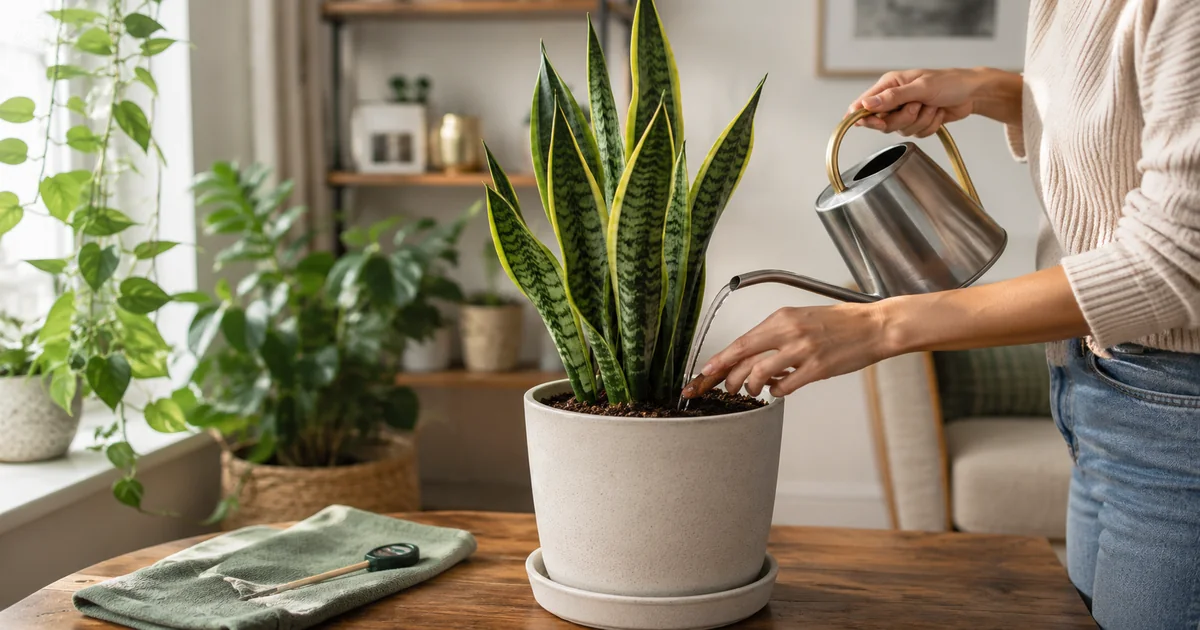
2. Water the Soil Thoroughly
Slowly pour water onto the soil until excess water begins to drain from the holes at the bottom of the pot.
Try to avoid repeatedly pouring small amounts of water onto only the surface of the soil.
3. Let Excess Water Drain Away
Allow the pot to drain completely.
If the plant sits on a saucer or decorative container, empty any standing water.
4. Wait Until the Soil Dries Again
Do not water again until the soil has dried out.
This watering cycle helps reduce the risk of overwatering.
Factors That Affect How Often You Should Water a Snake Plant
There is no single watering schedule that works for every snake plant. Several factors can affect how quickly the soil dries.
Light
Snake plants in brighter conditions may use water more quickly.
A plant kept in low light will generally grow more slowly and may need watering less often.
Temperature
Warm temperatures can cause the soil to dry faster.
Cool temperatures usually slow down growth and water usage.
Humidity
Higher humidity can slow down how quickly moisture evaporates from the soil.
In dry indoor environments, the soil may dry more quickly.
Pot Size
A large pot containing a small snake plant can hold moisture for a long time.
Smaller pots generally dry out more quickly.
Soil Type
Well-draining soil allows excess moisture to move through the pot more easily.
A dense soil mix can stay wet for too long and increase the risk of overwatering.
Type of Pot
The material of the pot can also make a difference.
For example, porous pots may allow moisture to evaporate more quickly than non-porous containers.
How Often to Water a Snake Plant in Summer
During warmer months, snake plants may grow more actively.
Depending on the growing conditions, watering may be needed approximately every 2 to 4 weeks.
However, always check the soil before watering.
A snake plant placed in bright indirect light may dry out faster than one kept in a darker area.
How Often to Water a Snake Plant in Winter
Snake plants usually grow more slowly during winter or cooler periods.
As a result, they generally need less water.
In many indoor environments, watering every 4 to 6 weeks may be enough, but some plants may need even less frequent watering.
Never increase watering simply because the calendar says it is time. Always check whether the soil has dried first.
Signs Your Snake Plant Needs Water
A snake plant may show signs that it has been dry for an extended period.
Possible signs include:
- Dry soil
- Slightly wrinkled leaves
- Leaves that appear less firm than usual
- Slow growth during an active growing period
These symptoms can also have other causes, so it is important to check the soil and overall condition of the plant before adding more water.
Signs You Are Overwatering Your Snake Plant
Overwatering is one of the most common snake plant care problems.
Possible signs include:
- Yellow leaves
- Soft or mushy leaves
- Drooping or collapsing leaves
- Soil that stays wet for a long time
- A soft or unhealthy base
- Root problems
If you notice these signs, stop watering and check the soil.
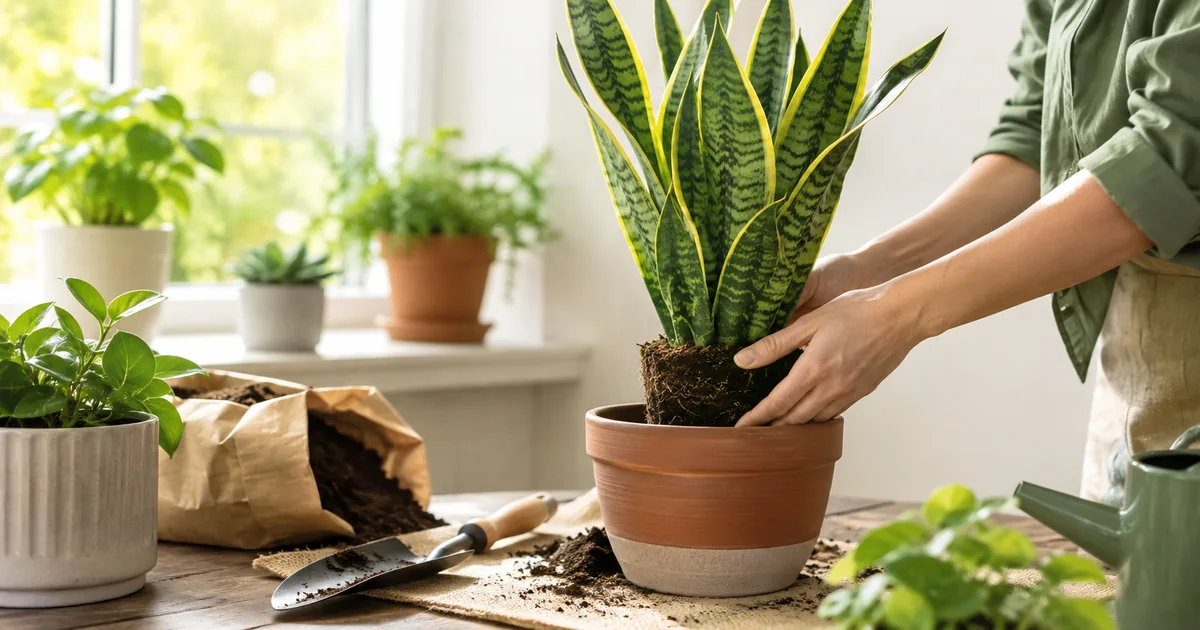
If the soil is constantly wet or the roots appear damaged, you may need to remove the plant from the pot, trim unhealthy roots, and repot it in fresh, well-draining soil.
Can You Underwater a Snake Plant?
Yes. Although snake plants are drought tolerant, they still need water to grow and remain healthy.
Leaving a snake plant dry for an extremely long time may lead to:
- Wrinkled leaves
- Dry leaf edges
- Slower growth
- Loss of firmness
The goal is not to avoid watering completely. Instead, water deeply when the soil has dried and allow the growing medium to dry before the next watering.
Should You Mist a Snake Plant?
Snake plants generally do not need regular misting.
Their watering needs are better managed through the soil.
Regular misting can also leave unnecessary moisture around the leaves. Instead, focus on:
- Proper soil drainage
- Appropriate watering
- Suitable light
- Stable indoor temperatures
If dust builds up on the leaves, gently wipe them with a soft, damp cloth.
What Is the Best Soil for a Snake Plant?
A well-draining soil mix is important because snake plants do not like sitting in excessive moisture.
A cactus or succulent potting mix is often suitable.
You can also use a regular houseplant mix improved with drainage-supporting materials such as:
- Perlite
- Pumice
- Coarse sand
The pot should also have drainage holes.
Even the best watering schedule can cause problems if excess water has nowhere to go.
Common Snake Plant Watering Mistakes
Watering on a Strict Weekly Schedule
Snake plants do not necessarily need water every week.
Always check the soil instead of following a fixed schedule.
Watering Before the Soil Has Dried
Frequent watering can leave the roots sitting in excessive moisture.
Wait until the soil has dried before watering again.
Using a Pot Without Drainage
Without drainage holes, excess water can collect at the bottom of the pot.
This increases the risk of root problems.
Leaving the Plant in Standing Water
After watering, empty excess water from the saucer or outer container.
The roots should not remain submerged in water.
Ignoring Seasonal Changes
Snake plants often need less water during cooler or lower-light periods.
Adjust your watering routine based on the growing conditions.
Frequently Asked Questions
Should I Water My Snake Plant Every Week?
Usually, no. Most snake plants do not need weekly watering.
Water only when the soil has dried out sufficiently.
Can a Snake Plant Go a Month Without Water?
In many conditions, a healthy snake plant can tolerate several weeks without watering because it stores water in its leaves and underground structures.
However, the exact amount of time depends on temperature, light, soil, and the size of the plant.
How Much Water Does a Snake Plant Need?
Water thoroughly enough to moisten the root zone and allow a small amount of excess water to drain from the bottom of the pot.
Avoid giving frequent small amounts of water while keeping the soil constantly damp.
Is It Better to Overwater or Underwater a Snake Plant?
If you are unsure, it is generally safer to wait and check the soil again rather than water an already moist snake plant.
Snake plants are relatively drought tolerant, while consistently wet soil can lead to serious problems.
Quick Answer: How Often Should You Water a Snake Plant?
For most indoor snake plants:
- Water every 2 to 4 weeks during warmer months.
- Water every 4 to 6 weeks or longer during cooler months.
- Always check the soil before watering.
- Allow excess water to drain completely.
- Use well-draining soil and a pot with drainage holes.
Final Thoughts
The best answer to how often to water a snake plant is not based on a strict calendar.
While many snake plants may need water every 2 to 4 weeks during warmer periods and every 4 to 6 weeks during cooler months, your plant's actual needs will depend on its environment.
The safest approach is to check the soil, water thoroughly when it has dried out, and allow excess water to drain away.
By avoiding frequent watering and using well-draining soil, you can help your snake plant develop healthy roots, strong leaves, and long-lasting growth.