Snake plants are known for being hardy and easy to care for, but that doesn't mean they are immune to problems. One of the most concerning issues is snake plant leaves rotting.
If your snake plant leaves are becoming soft, mushy, brown, yellow, or collapsing at the base, you may be dealing with excess moisture, root rot, poor drainage, or, less commonly, a bacterial leaf infection.
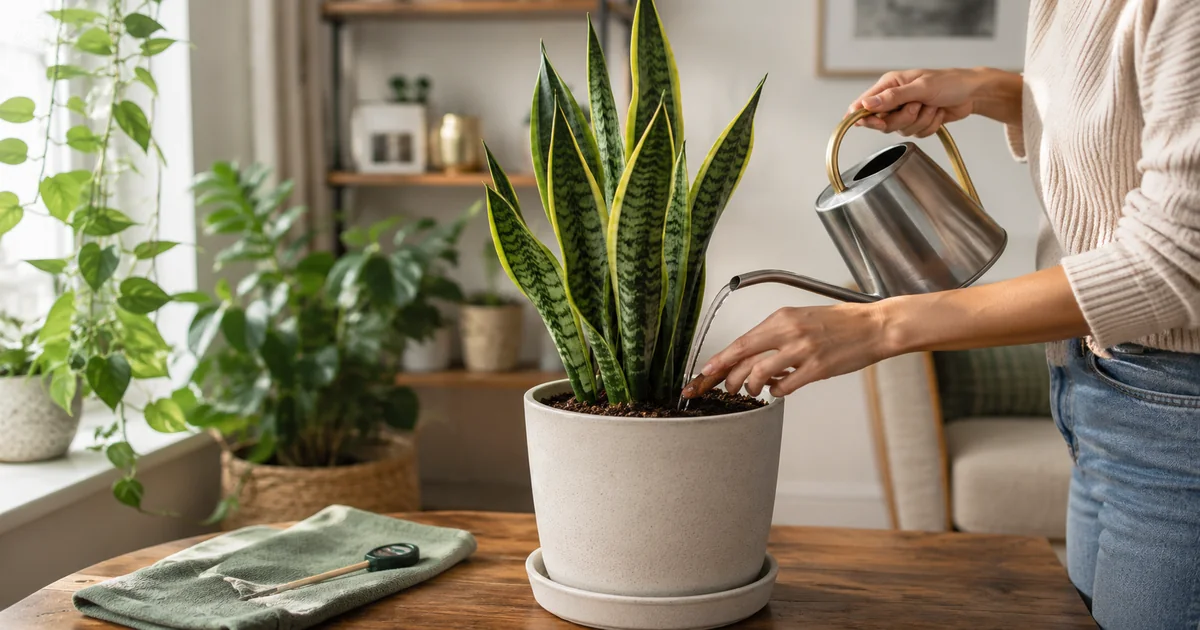
So, why are my snake plant leaves rotting? In most cases, the problem starts with too much moisture around the roots. Snake plants store water in their thick leaves and rhizomes, so they can be particularly vulnerable to overwatering and poorly draining soil.
The good news is that you may be able to save your plant if you identify the problem early.
Why Are My Snake Plant Leaves Rotting?
There are several possible reasons your snake plant leaves may be rotting.
The most common causes include:
- Overwatering
- Poor drainage
- Soil that retains too much moisture
- Root or rhizome rot
- Water sitting around the base of the leaves
- Bacterial leaf infection
- Damaged leaves
- Cold or unsuitable growing conditions
Let's look at each cause and what you can do about it.
1. Overwatering
Overwatering is one of the most common causes of snake plant leaf and root rot.
Snake plants are drought-tolerant and store water in their leaves and underground rhizomes. They don't need frequent watering. When the soil remains wet for extended periods, the roots can become deprived of oxygen and begin to decay.
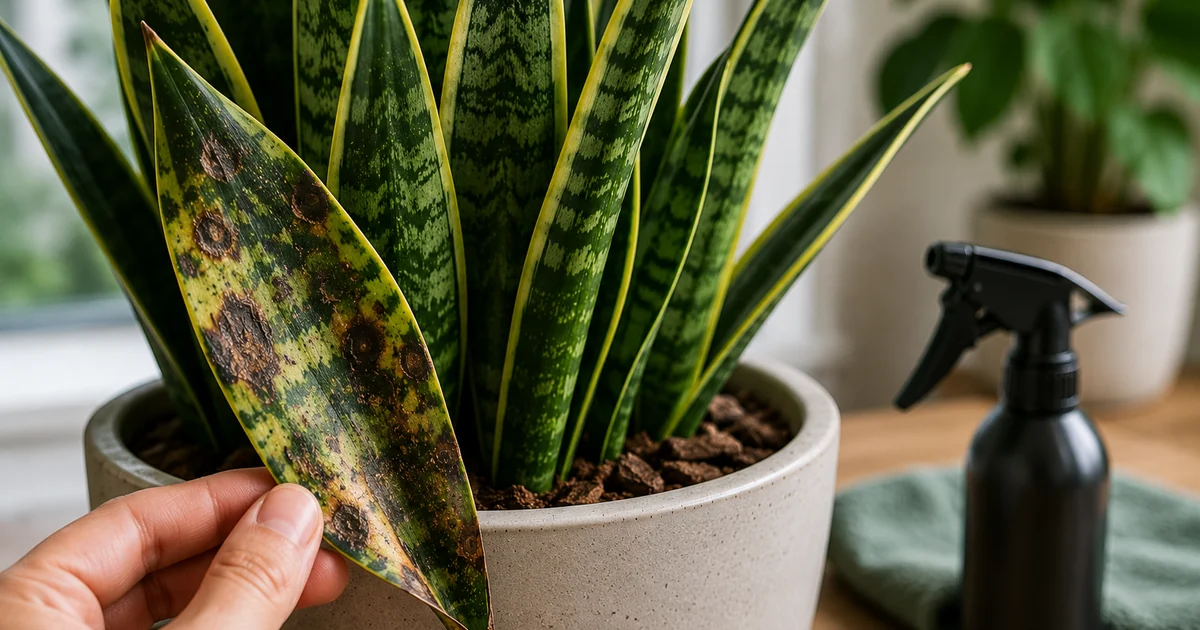
Signs of an overwatered snake plant
Look for:
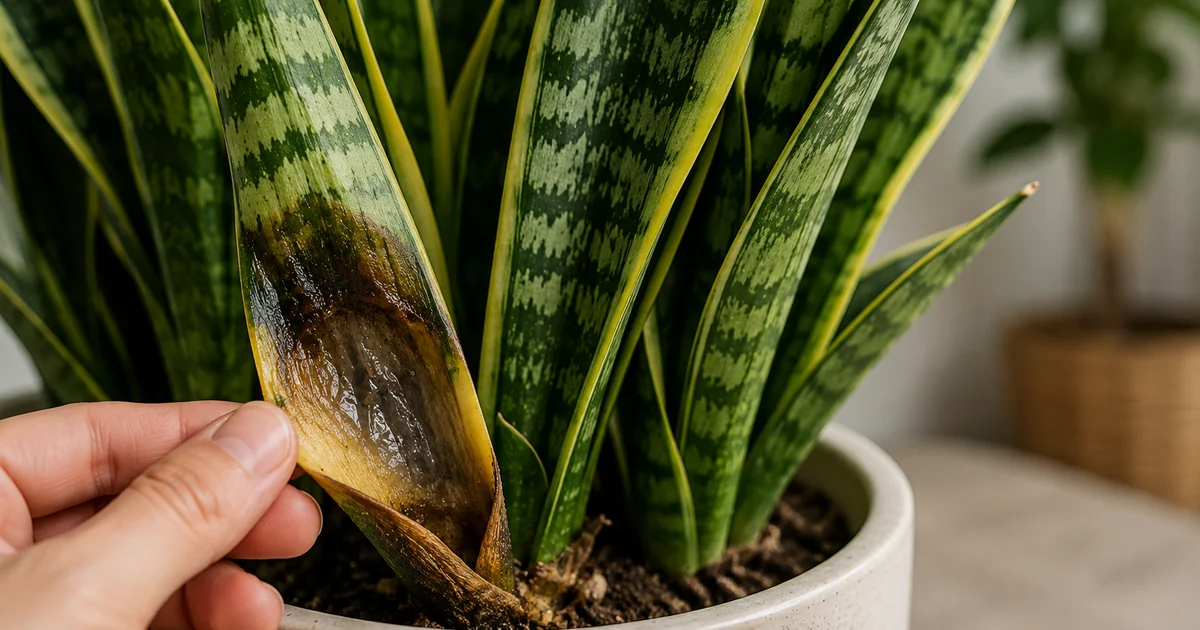
- Soft or mushy leaves
- Yellowing leaves
- Brown areas
- Leaves falling over
- A wet potting mix
- A musty or unpleasant smell
- Soft tissue around the base of the leaves
If the soil is still wet several days after watering, excessive moisture may be contributing to the problem.
How to fix it
Stop watering and allow the soil to dry. If the leaves are already becoming mushy or the plant is collapsing, don't simply wait for the soil to dry. Remove the plant from its pot and inspect the roots.
2. Poor Drainage
Even if you aren't watering frequently, your snake plant can still develop rot if excess water cannot escape.
A pot without drainage holes can trap water around the roots. Heavy soil can cause a similar problem by retaining moisture for too long.
Use a container with adequate drainage and a well-draining potting mix. Improving drainage can significantly reduce the risk of root rot.
3. Root Rot
Sometimes the leaves are only showing symptoms of a problem that started below the soil.
When roots remain in saturated soil for too long, they can rot. Once the root system is damaged, the plant may struggle to absorb water properly, and leaves can become yellow, soft, or mushy.
How to identify root rot
Carefully remove the plant from its pot and examine the roots.
Healthy roots should be relatively firm. Rotten roots may appear:
- Brown or black
- Soft
- Mushy
- Slimy
- Easily separated
- Associated with an unpleasant smell
If you find significant root rot, remove the affected roots with clean, sharp scissors or pruning shears.
4. Rhizome Rot
Snake plants don't only have roots; they also grow from underground structures called rhizomes.
If the rhizome becomes soft and rotten, leaves growing from that section may begin to collapse.
A soft, dark area near the base of a leaf is a particularly important warning sign. If a leaf pulls away easily from the soil or has a mushy base, inspect the rhizome and roots rather than simply watering the plant.
5. Bacterial Leaf Rot
Not every case of snake plant leaf rot is caused by overwatering.
Bacterial infections can enter plant tissue through wounds or damaged areas and cause the affected tissue to break down. Extension guidance notes that bacterial leaf rot can cause damaged leaves to deteriorate and recommends removing affected tissue and disinfecting cutting tools to help prevent spread.
If only specific sections of the leaves are affected while the rest of the plant appears healthy, inspect the damaged areas carefully.
How to Save a Snake Plant With Rotting Leaves
If your snake plant is showing significant signs of rot, follow these steps.
Step 1: Stop Watering
Don't add more water to a plant that is already sitting in wet soil.
Check the moisture level before watering again. Houseplant guidance generally recommends allowing the soil to dry before watering rather than following a fixed watering schedule.
Step 2: Remove the Plant From Its Pot
Gently remove the snake plant from its container.
Shake or brush away excess soil so you can inspect the roots and rhizomes.
Step 3: Remove Rotten Roots
Using clean pruning shears, cut away soft, brown, black, or otherwise rotten roots.
Keep the firm, healthy sections.
Step 4: Remove Severely Rotten Leaves
If a leaf is extensively damaged or mushy, cut it off near its base using a clean cutting tool.
Don't leave severely rotten tissue attached to the plant.
Step 5: Repot the Plant
Place the healthy plant material into fresh, well-draining potting mix.
Use a pot with drainage holes and avoid choosing a container that is excessively large.
Step 6: Allow the Plant to Recover
After dealing with significant root or rhizome rot, avoid immediately returning to frequent watering.
Allow the plant and growing medium to establish a proper wet-dry cycle. The exact timing depends on the plant, pot, soil, temperature, and growing conditions.
How to Prevent Snake Plant Leaves From Rotting
Prevention is easier than treating advanced rot.
Don't Water on a Fixed Schedule
Instead of automatically watering every few days, check the soil first.
If the soil is still damp, wait. Snake plants generally prefer their growing medium to dry substantially between waterings.
Use a Pot With Drainage Holes
Always make sure excess water has somewhere to go.
If you're using a decorative container without drainage, consider keeping the plant in a nursery pot with drainage holes inside the decorative container.
Choose Well-Draining Soil
Avoid dense soil that stays wet for long periods.
A well-draining mix can help excess water move away from the roots more effectively.
Don't Let the Plant Sit in Water
After watering, allow excess water to drain completely.
Don't leave standing water in the saucer or decorative container.
Keep Water Away From Damaged Tissue
Try to avoid leaving water pooled around damaged leaves or the base of the plant, particularly if there are existing wounds.
Can a Snake Plant Recover From Leaf Rot?
Yes, a snake plant can recover from leaf rot, particularly when the problem is identified early and healthy roots or rhizomes remain.
However, a leaf that has completely rotted will not return to its healthy condition. The focus should be on removing damaged tissue and protecting the healthy parts of the plant.
If the entire root system or rhizome has rotted, recovery becomes much more difficult.
Frequently Asked Questions
Why are my snake plant leaves turning mushy?
Mushy snake plant leaves are commonly associated with excess moisture, overwatering, and root or rhizome rot. Check the soil and inspect the roots if the plant is sitting in wet soil.
Should I remove rotten leaves from my snake plant?
Yes. Severely rotten leaves should be removed using clean pruning shears. Removing damaged tissue can help prevent the problem from spreading and keeps the plant from wasting resources on tissue that cannot recover.
Can an overwatered snake plant be saved?
Often, yes. If healthy roots or rhizomes remain, remove the rotten portions, repot the plant in fresh, well-draining soil, and correct the watering and drainage problems.
How often should I water a snake plant?
There isn't one universal watering schedule because watering needs depend on factors such as pot size, soil, temperature, light, and humidity. Instead, check the soil before watering and avoid watering while it remains wet.
Why are my snake plant leaves rotting at the base?
Rot at the base is often associated with excess moisture and root or rhizome rot. A soft or mushy leaf base combined with wet soil is a strong reason to inspect the plant's roots and drainage.
Final Thoughts
If you're wondering why your snake plant leaves are rotting, start by checking the moisture level of the soil and the condition of the roots. In many cases, overwatering, poor drainage, and root or rhizome rot are behind soft and mushy leaves.
Stop watering if the soil is saturated, inspect the roots, remove rotten tissue, and repot the healthy portions in fresh, well-draining soil. Also remember that bacterial leaf infections can sometimes cause true leaf rot, so not every case should automatically be blamed on watering.
With proper drainage, appropriate watering, and regular inspection, you can greatly reduce the risk of your snake plant developing rot again.