Snake plants are hardy houseplants, but they can still develop fungal problems when growing conditions are too wet, humid, or poorly ventilated. White or gray growth on the soil, brown spots on the leaves, or soft, discolored areas can all be signs that something is wrong.
If you're wondering how to treat fungus on a snake plant, the first step is to identify the problem and correct the conditions that allowed it to develop. In many cases, reducing excess moisture, improving airflow, removing affected tissue, and using an appropriate fungicide can help.
What Causes Fungus on Snake Plants?
Fungal problems are more likely when the plant remains wet for too long. Common contributing factors include:
- Overwatering
- Poor drainage
- Waterlogged soil
- High humidity
- Poor air circulation
- Wet leaves that stay damp
- Infected soil or plant material
- Insufficient light
Snake plants store water in their leaves and rhizomes, so they generally don't need frequent watering. Consistently wet conditions can weaken the plant and encourage fungal and root problems.
Common Signs of Fungus on a Snake Plant
Fungal problems can appear in different ways depending on the pathogen involved.
Look for:
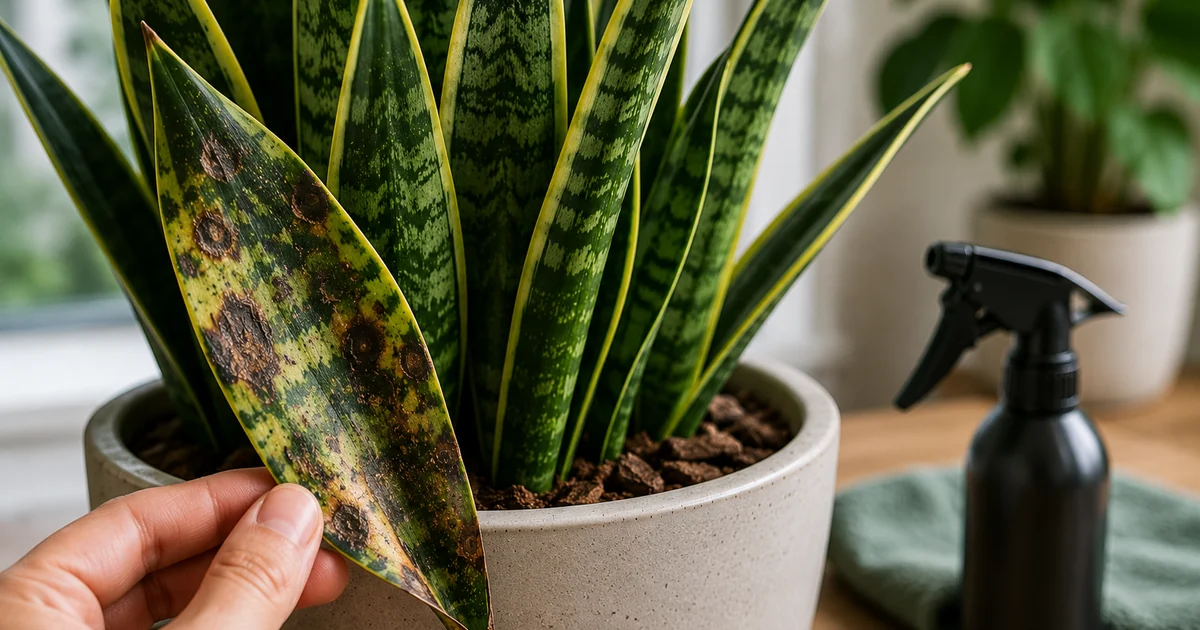
- Brown or black spots on leaves
- Yellowing around damaged areas
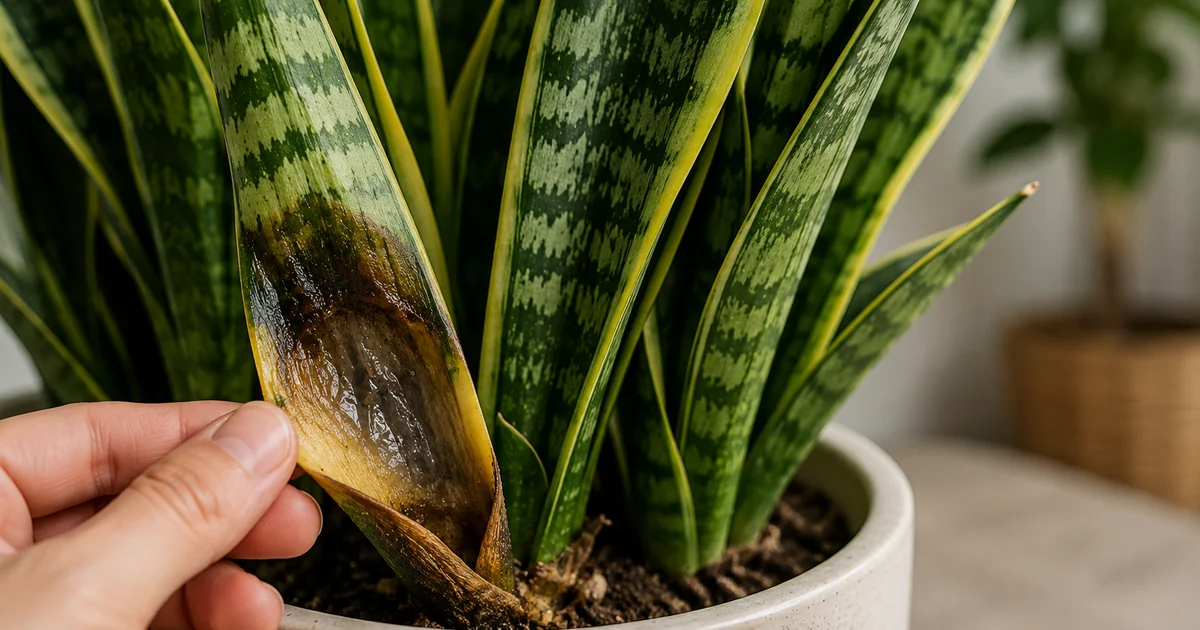
- Soft or mushy leaf tissue
- White, gray, or fuzzy growth
- Powdery-looking patches
- Leaf discoloration
- Rot around the base of the plant
- Unpleasant-smelling soil
- Declining or collapsing leaves
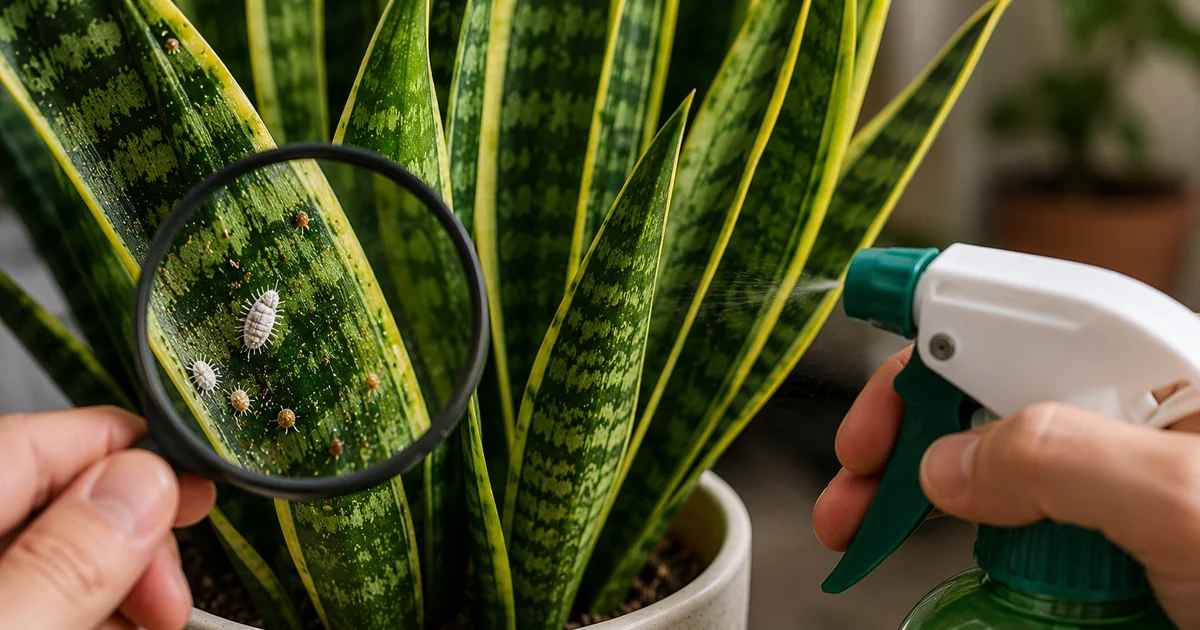
Keep in mind that not every brown spot or yellow leaf is caused by fungus. Overwatering, sunburn, physical damage, pests, and nutrient problems can cause similar symptoms.
How to Treat Fungus on Snake Plant
1. Isolate the Affected Plant
If you suspect a fungal infection, move the snake plant away from other houseplants.
This reduces the possibility of spreading pests or pathogens through contact, splashing water, contaminated tools, or plant debris.
2. Remove Affected Leaves
Inspect the plant carefully and identify leaves with significant fungal damage.
Use clean, sharp pruning shears to remove severely affected leaves or damaged sections. Dispose of the infected plant material rather than leaving it in the pot or using it as compost.
After pruning, clean and disinfect your tools before using them on another plant.
3. Stop Overwatering
One of the most important steps is correcting the moisture problem.
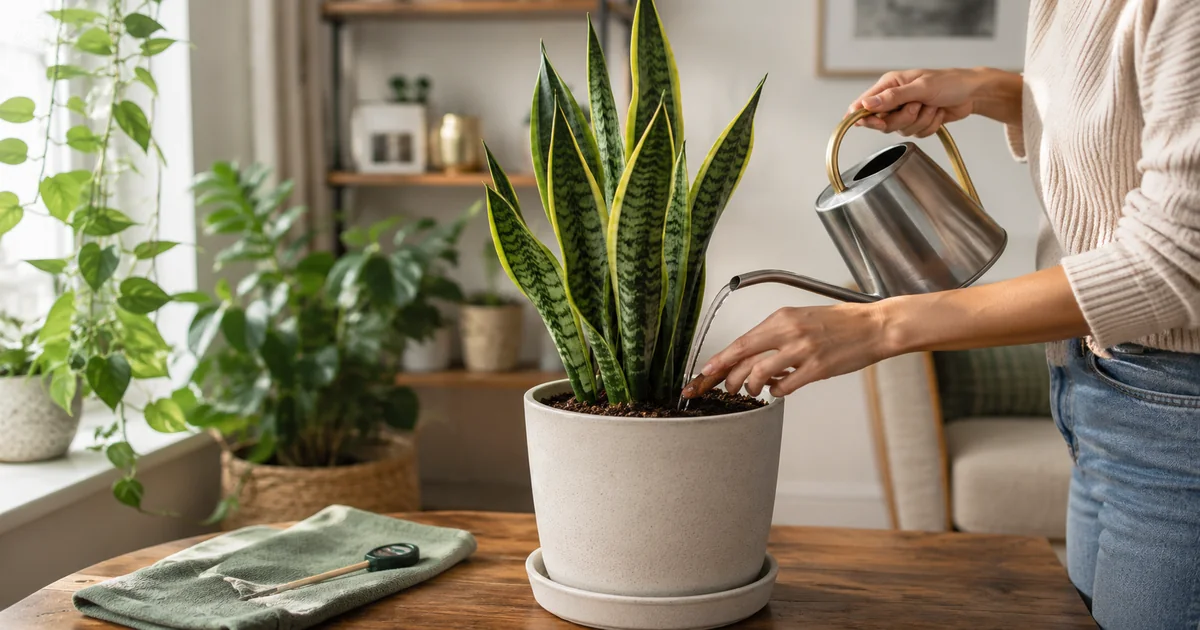
Don't water your snake plant simply because several days have passed. Check the soil first.
If the soil is still wet, allow it to dry before watering again. Snake plants are generally much more tolerant of dry conditions than constantly saturated soil.
4. Improve Drainage
Check whether water is draining freely from the container.
Your snake plant should be planted in a pot with drainage holes. If water remains trapped in the container, consider repotting the plant into fresh, well-draining soil.
Avoid using a pot that is much larger than the root system because excess soil can retain moisture for longer.
5. Repot if the Soil Is Constantly Wet
If the potting mix stays wet for an unusually long time or has developed an unpleasant smell, repotting may be necessary.
Carefully remove the plant and inspect the roots.
Healthy roots should be firm. Rotten roots may be dark, soft, mushy, or slimy.
Remove clearly rotten roots with sterilized pruning shears and place the remaining healthy plant material into fresh, well-draining potting mix.
6. Improve Air Circulation
Good airflow can help foliage dry more quickly and reduce conditions that favor some fungal diseases.
Avoid crowding your snake plant tightly between other plants or placing it directly against a wall where air circulation is limited.
A fan can be useful in a poorly ventilated room, but it doesn't need to blow strongly directly onto the plant.
7. Keep the Leaves Dry
When watering, try to direct water toward the soil rather than repeatedly wetting the leaves.
If the foliage becomes wet, allow it to dry properly.
Avoid misting a snake plant that is already experiencing a fungal problem.
8. Provide Appropriate Light
Adequate light helps maintain healthy growth and can help the potting mix dry at an appropriate rate.
Snake plants can tolerate relatively low light, but extremely low-light conditions combined with frequent watering can leave the soil wet for too long.
Bright, indirect light is generally a good choice.
9. Use a Fungicide When Appropriate
If the problem appears to be a fungal disease affecting the leaves, a fungicide labeled for use on ornamental houseplants may be appropriate.
Always:
- Read the product label.
- Confirm that it is suitable for the specific plant and problem.
- Follow the recommended concentration.
- Test the product according to label directions.
- Keep treated plants away from children and pets as directed by the label.
Fungicides work differently depending on the disease, so using the correct product matters. They should not be treated as a substitute for fixing overwatering or poor drainage.
How to Treat White Fungus on Snake Plant Soil
If you see white fuzzy growth on the surface of your snake plant's soil, it may be fungal or mold growth associated with consistently moist organic material.
This doesn't necessarily mean the plant itself is infected.
You can:
- Remove the affected layer of soil.
- Allow the remaining soil to dry appropriately.
- Improve ventilation.
- Reduce unnecessary watering.
- Check that the pot drains properly.
- Replace the potting mix if the problem keeps returning.
If the plant itself is healthy and the growth is limited to the soil surface, correcting moisture and airflow may be more important than treating the plant with a fungicide.
How to Tell Fungus From Root Rot
Fungal growth on leaves and root rot aren't exactly the same problem, although excess moisture can contribute to both.
Possible signs of root rot include:
- Soft roots
- Brown or black roots
- Mushy rhizomes
- Leaves becoming soft at the base
- Leaves falling over
- Persistent wet soil
- A foul smell from the pot
If you suspect root rot, remove the plant from the pot and inspect the roots and rhizomes rather than simply treating the leaves.
Can Baking Soda Treat Fungus on Snake Plants?
Baking soda is sometimes recommended as a homemade treatment for fungal problems, but homemade sprays can damage plant tissue if used incorrectly.
For a confirmed fungal disease, a properly labeled product intended for ornamental plants is generally a more predictable option.
Don't apply concentrated baking soda directly to your snake plant.
Can Cinnamon Help With Fungus on Snake Plants?
Cinnamon is often suggested as a natural antifungal treatment for houseplants. However, it shouldn't be considered a reliable cure for a serious fungal disease.
If the plant has significant leaf or root damage, focus on removing affected tissue and correcting the underlying moisture and drainage problems.
How to Prevent Fungus on Snake Plants
Once the problem has been treated, prevention is key.
Water Only When Needed
Check the soil before watering. Don't follow a rigid watering schedule.
Use Well-Draining Soil
Choose a potting mix that allows excess water to drain easily.
Use a Pot With Drainage Holes
Good drainage helps prevent water from accumulating around the roots.
Avoid Excessive Humidity
Snake plants generally don't require high humidity. Avoid placing them in constantly damp environments.
Maintain Airflow
Give your plant enough space for air to circulate around its leaves.
Remove Dead Leaves
Don't allow dead or rotting plant material to remain around the base of the plant.
Clean Your Gardening Tools
Disinfect pruning tools between plants, especially when you've been cutting diseased tissue.
Frequently Asked Questions
How do I get rid of fungus on my snake plant?
Remove severely affected leaves, reduce excess moisture, improve drainage and airflow, and allow the soil to dry appropriately. A suitable fungicide may be needed if the plant has a confirmed fungal disease.
Why does my snake plant have white fungus on the soil?
White growth on the soil is often associated with excess moisture and decomposing organic material. Allowing the soil to dry appropriately and improving airflow can help prevent it from returning.
Should I cut off leaves with fungus?
If a leaf is severely affected, removing it with clean pruning shears can help eliminate damaged tissue. Don't remove healthy leaves unnecessarily.
Can an overwatered snake plant develop fungus?
Yes. Constantly wet conditions can create an environment favorable to fungal problems and can also contribute to root and rhizome rot.
Can a snake plant recover from fungus?
Yes, many snake plants can recover if the problem is identified early and the underlying growing conditions are corrected. Recovery depends on how much of the plant has been affected and whether healthy roots and rhizomes remain.
Final Thoughts
If you're learning how to treat fungus on a snake plant, don't focus only on killing the fungus. The most important step is correcting the conditions that allowed the problem to develop.
Reduce excessive watering, improve drainage and airflow, remove severely affected tissue, and provide suitable light. If a fungal disease is confirmed and continues to spread, consider a fungicide specifically labeled for ornamental houseplants.
With proper watering and good drainage, snake plants can remain healthy and are generally much less likely to develop recurring fungal problems.