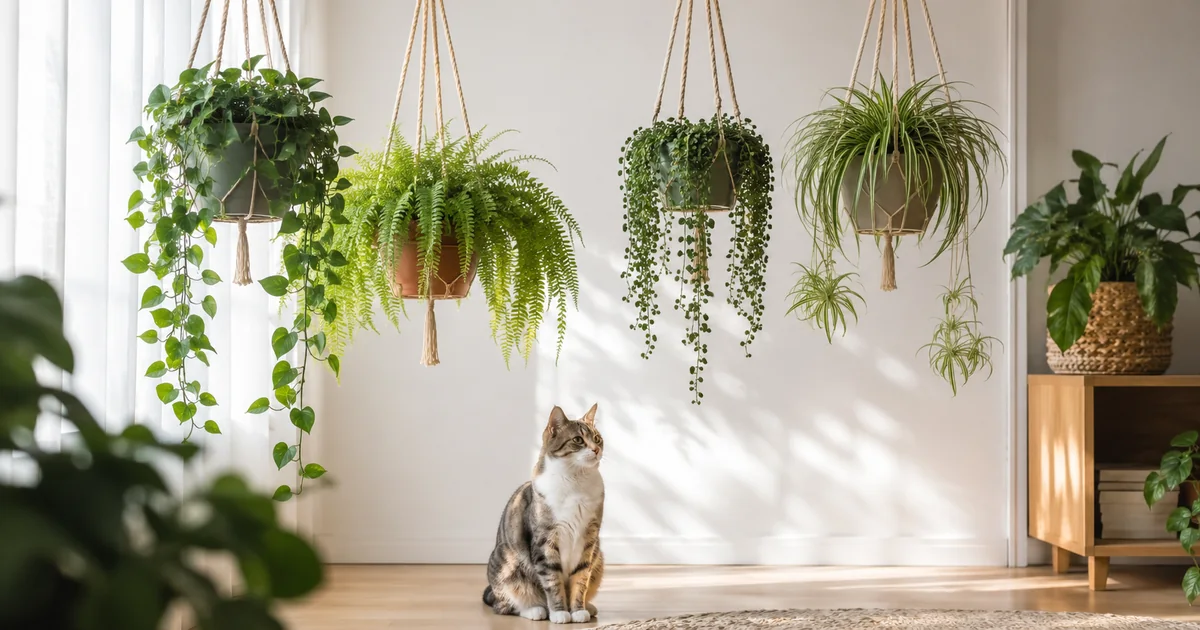
If you're a cat owner who loves indoor plants, you've probably wondered what hanging plants are safe for cats. Cats are naturally curious and often enjoy nibbling on leaves, making it important to choose plants that won't harm them. Hanging plants are a great solution because they keep greenery out of reach while still enhancing your home's décor.
In this guide, we'll explore the best cat-safe hanging plants, plants to avoid, and tips for creating a beautiful, pet-friendly indoor garden.
Why Choose Cat-Safe Hanging Plants?
Many popular houseplants contain toxins that can cause vomiting, diarrhea, drooling, or even more serious health problems in cats. Even when plants are hung from the ceiling, adventurous cats may still find a way to reach them.
Choosing non-toxic hanging plants provides peace of mind while allowing you to enjoy a lush indoor space.
Best Hanging Plants That Are Safe for Cats
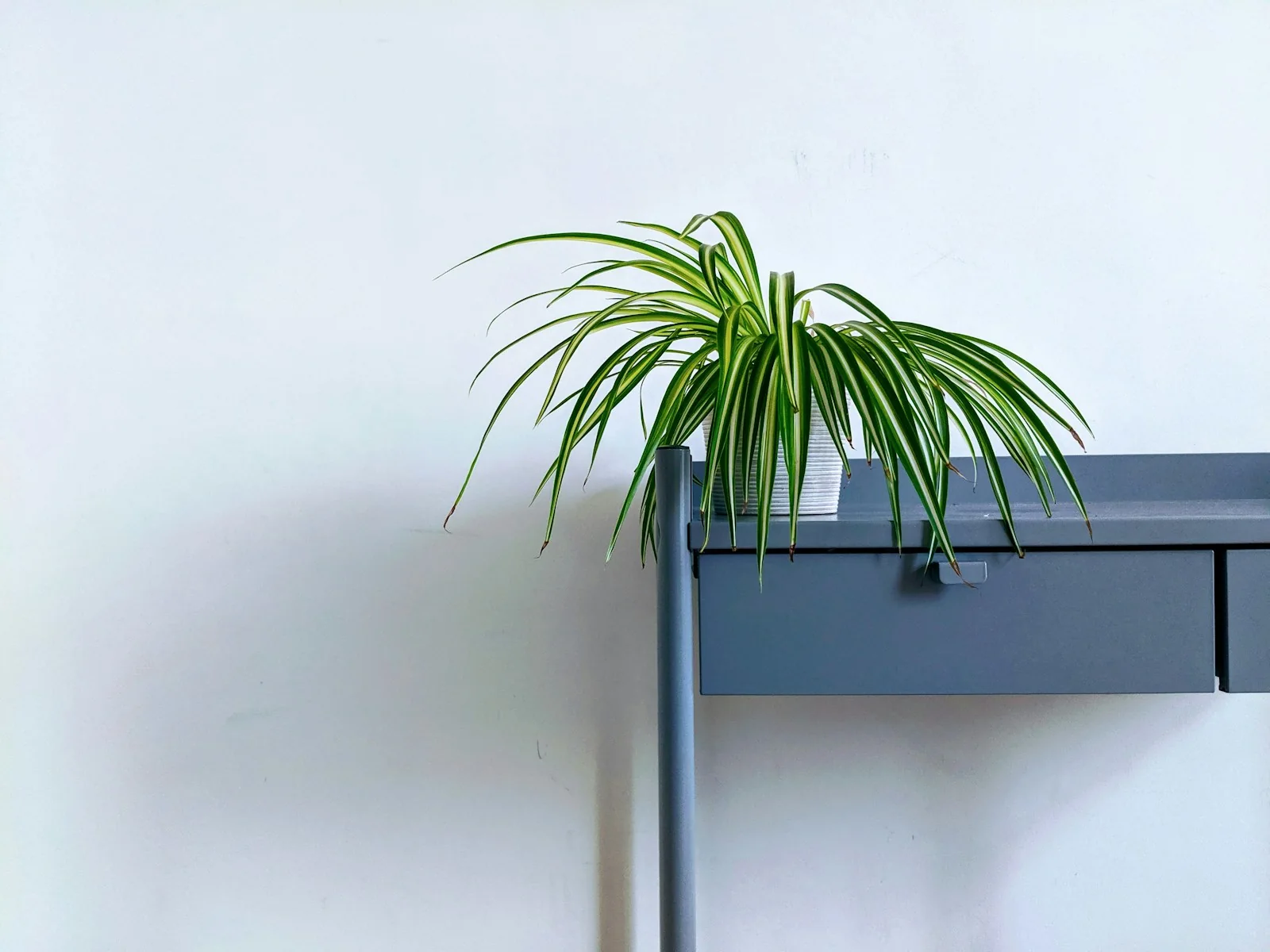
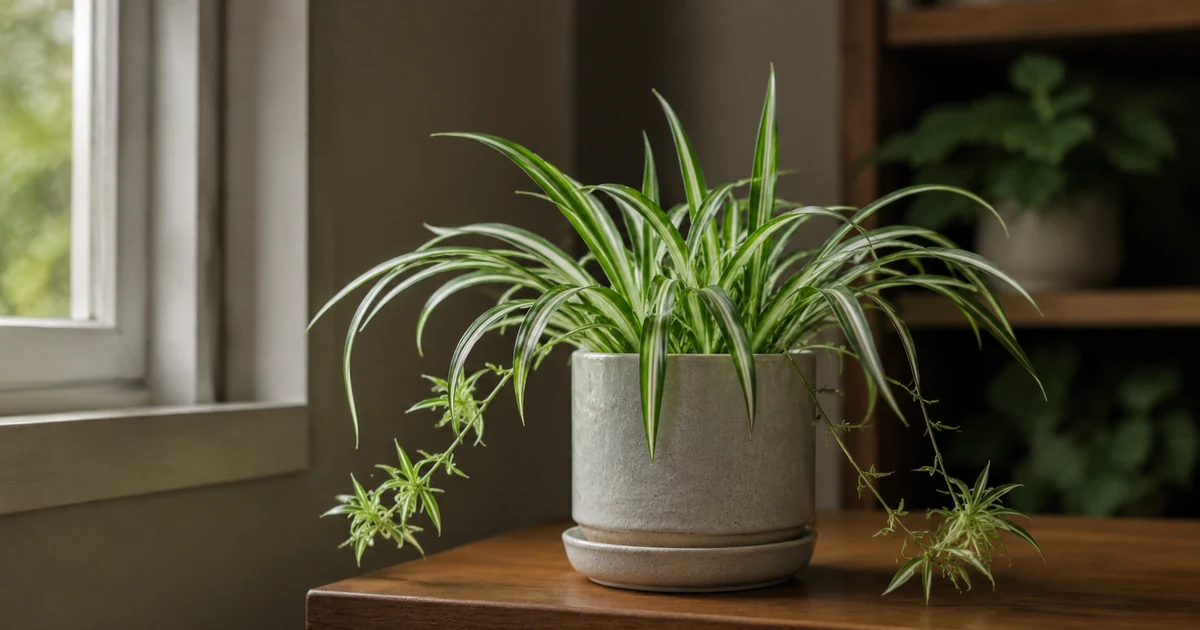
1. Spider Plant (Chlorophytum comosum)
Spider plants are among the most popular pet-friendly houseplants. They feature long, arching green leaves with white stripes that look beautiful in hanging baskets.
Benefits:
- Safe for cats and dogs
- Easy to grow
- Produces attractive arching foliage
- Produces baby plantlets for easy propagation
Care Tips:
- Bright, indirect sunlight
- Water when the soil feels dry
- Well-draining potting mix
2. Boston Fern (Nephrolepis exaltata)
Boston ferns create a lush, tropical appearance with soft, feathery fronds. The ASPCA lists them as non-toxic to cats and dogs.
Benefits:
- Excellent hanging plant
- Adds humidity indoors
- Creates a lush indoor display
Care Tips:
- Indirect light
- Keep soil consistently moist
- Enjoys higher humidity
3. Prayer Plant (Maranta leuconeura)
Prayer plants are known for their colorful patterned leaves that fold upward at night, resembling praying hands.
Benefits:
- Safe for cats
- Attractive foliage
- Great for hanging baskets
Care Tips:
- Medium indirect light
- Keep soil slightly moist
- Avoid direct afternoon sun
4. Peperomia
Peperomia varieties are compact, decorative, and considered non-toxic to cats and dogs. Their trailing growth makes many varieties perfect for hanging containers.
Popular varieties include:
- Peperomia Hope
- Peperomia Rotundifolia
- Peperomia Prostrata (String of Turtles)
Care Tips:
- Bright indirect light
- Allow soil to dry slightly between watering
5. Baby's Tears (Soleirolia soleirolii)
Baby's Tears produces tiny, delicate leaves that spill beautifully over hanging baskets.
Benefits:
- Non-toxic to cats
- Fast-growing
- Soft cascading appearance
6. Swedish Ivy (Plectranthus verticillatus)
Despite its name, Swedish ivy is not true ivy and is considered safe for cats.
Benefits:
- Easy to grow
- Cascading stems
- Attractive glossy leaves
7. Fishbone Cactus (Disocactus anguliger)
This unusual cactus has zigzag-shaped stems that make a striking hanging plant.
Why Cat Owners Love It
- Non-toxic
- Low maintenance
- Unique appearance
8. Christmas Cactus (Schlumbergera)
Unlike many desert cacti, the Christmas cactus is safe for cats and produces beautiful blooms during the holiday season.
Care Requirements
- Bright indirect light
- Moderate watering
- Well-draining soil
9. Burro's Tail (Sedum morganianum)
Burro's Tail features long stems covered with plump leaves that cascade beautifully from hanging baskets.
Although delicate, it's considered non-toxic to cats.
10. Cast Iron Plant (Aspidistra elatior)
While often grown in pots, smaller varieties can also be displayed in hanging containers.
It is:
- Pet-safe
- Extremely hardy
- Tolerates low light
Hanging Plants That Are Toxic to Cats
Not every hanging plant is pet-friendly. Some common varieties should be avoided.
These include:
- English Ivy
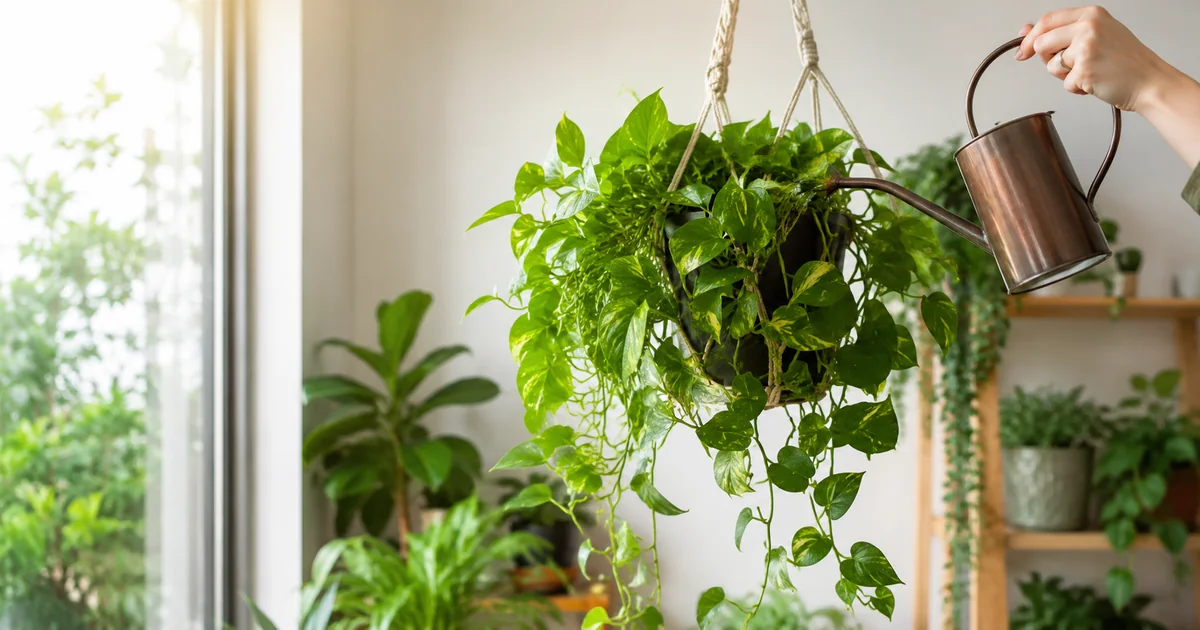
- Devil's Ivy (Pothos)
- String of Pearls
- Philodendron
- Arrowhead Plant
- Heartleaf Philodendron
These plants may cause:
- Mouth irritation
- Vomiting
- Drooling
- Difficulty swallowing
- Digestive upset
Always verify a plant's toxicity before bringing it home.
Tips for Keeping Cats Safe Around Hanging Plants
Hang Plants Securely
Use strong ceiling hooks and sturdy hangers to prevent plants from falling if your cat jumps.
Keep Plants Out of Reach
Place hanging baskets near windows or high corners where cats cannot easily climb.
Offer Cat Grass
Providing cat grass gives your feline a safe alternative for chewing.
Inspect Plants Regularly
Remove dead leaves and ensure hanging baskets remain secure.
Avoid Chemical Sprays
Use pet-safe fertilizers and avoid pesticides that could leave harmful residue.
Benefits of Hanging Plants for Cat Owners
Choosing safe hanging plants offers several advantages:
- Maximizes small spaces
- Adds greenery without clutter
- Adds natural texture and visual interest
- Reduces temptation for cats
- Enhances home décor
- Creates a calming indoor environment
Frequently Asked Questions
What hanging plant is the safest for cats?
Spider plants, Boston ferns, prayer plants, peperomia, and Christmas cactus are among the safest hanging plants for cats.
Can cats still reach hanging plants?
Yes. Cats are excellent climbers and jumpers. Always hang plants high enough and use secure mounting hardware.
Are succulents safe for cats?
Some succulents are safe, while others are toxic. Always research each species individually before purchasing.
Should I stop my cat from eating plants?
Yes. Even non-toxic plants may cause mild stomach upset if consumed in large quantities.
Final Thoughts
Knowing what hanging plants are safe for cats helps you create a home that's both stylish and pet-friendly. Plants like Spider Plant, Boston Fern, Prayer Plant, Peperomia, Swedish Ivy, Fishbone Cactus, and Christmas Cactus offer beautiful greenery without putting your feline companion at risk.
Before adding any new houseplant to your home, double-check its safety with reliable plant toxicity resources. With the right choices, you can enjoy thriving indoor plants while keeping your curious cat happy and healthy.