
How to Water Hanging Plants: A Complete Guide for Healthy, Thriving Plants
- July 28, 2026
- 5 min read
Share
Hanging plants are a beautiful way to bring greenery into your home, balcony, or garden. Whether you’re growing pothos, spider plants, ferns, or flowering baskets, proper watering is the key to keeping them lush and healthy. Since hanging planters dry out faster than traditional pots, knowing the right watering techniques can prevent common problems like root rot or underwatering.
In this guide, you’ll learn exactly how to water hanging plants, how often they need watering, and expert tips to help your plants flourish year-round.
Why Hanging Plants Need Special Watering Care
Unlike plants placed on the ground, hanging plants are exposed to more air circulation and sunlight, which causes their soil to dry out more quickly. Smaller containers also hold less moisture, making regular monitoring essential.
Proper watering helps:
- Promote healthy root growth
- Prevent leaf yellowing and wilting
- Encourage blooming and lush foliage
- Reduce the risk of pests and diseases
How to Water Hanging Plants Correctly
1. Check the Soil Before Watering
Before reaching for the watering can, test the soil moisture by inserting your finger about 1–2 inches into the potting mix.
- If the soil feels dry, it’s time to water.
- If it’s still moist, wait another day or two.
Avoid watering on a fixed schedule without checking the soil first.
2. Water Slowly and Evenly
Pour water slowly around the entire surface of the soil rather than in one spot. This allows the roots to absorb moisture evenly.
Continue watering until water begins draining from the bottom of the planter. This ensures the entire root ball is hydrated.
3. Let Excess Water Drain
Never allow hanging plants to sit in standing water. Empty drip trays after watering to prevent root rot and fungal diseases.
Good drainage holes are essential for healthy hanging baskets.
4. Lower the Basket for Easier Watering
For high-hanging baskets, carefully lower the planter before watering whenever possible. This helps you:
- Water more evenly
- Avoid spills indoors
- Inspect leaves for pests or disease
- Prune dead foliage
If lowering isn’t practical, use a long-spout watering can or a watering wand.
How Often Should You Water Hanging Plants?
There is no one-size-fits-all schedule. Watering frequency depends on several factors:
Indoor Hanging Plants
Most indoor hanging plants need watering every 5–10 days, depending on humidity, temperature, and plant type.
Outdoor Hanging Plants
Outdoor baskets may need watering:
- Every 2–3 days during mild weather
- Daily during hot summer months
- Twice a day during extreme heat or strong winds
Always check soil moisture instead of relying solely on the calendar.
Best Time to Water Hanging Plants
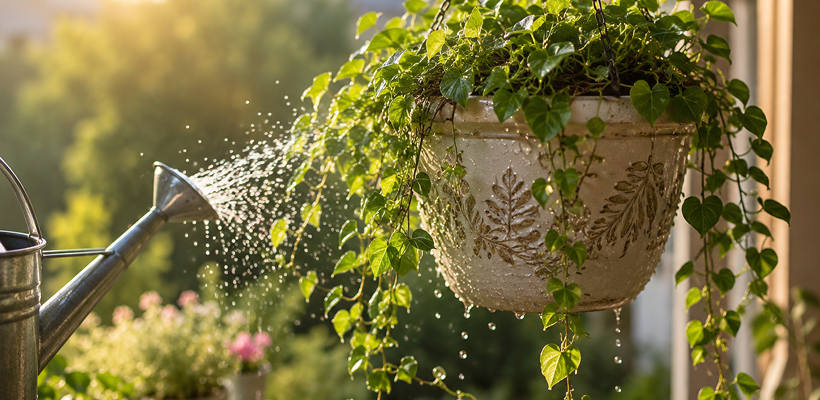
The ideal time is early morning.
Morning watering allows:
- Better water absorption
- Reduced evaporation
- Leaves to dry before evening, lowering disease risk
Avoid watering during the hottest part of the afternoon when moisture evaporates quickly.
Signs Your Hanging Plant Needs Water
Watch for these common symptoms:
- Drooping leaves
- Dry soil pulling away from the pot
- Crispy brown leaf edges
- Slow growth
- Lightweight pot
Water the plant thoroughly as soon as you notice these signs.
Signs You're Overwatering
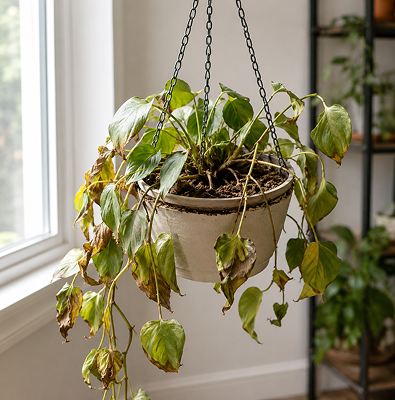
Too much water can be even more harmful than too little.
- Yellow leaves
- Mushy stems
- Moldy soil surface
- Fungus gnats
- Root rot
- Persistent wet soil
Allow the soil to dry slightly before watering again.
Best Tools for Watering Hanging Plants
Using the right tools makes watering easier and more effective.
Helpful options include:
- Long-spout watering can
- Watering wand
- Self-watering hanging baskets
- Plant moisture meter
- Step stool or hanging basket pulley system
Tips to Keep Hanging Plants Healthy
Follow these simple tips for thriving plants:
- Follow these simple tips for thriving plants:
- Fertilize every 2–4 weeks during the growing season.
- Remove dead flowers and yellow leaves regularly.
- Rotate indoor hanging plants for even sunlight
- Add mulch or moss on top of the soil to reduce evaporation.
- Choose containers with proper drainage holes.
Common Mistakes to Avoid
Many plant owners accidentally damage hanging plants by:
- Watering too frequently
- Ignoring drainage
- Wetting leaves excessively indoors
- Using compact garden soil instead of potting mix
- Waiting until plants wilt severely
Learning how to water hanging plants isn’t difficult once you understand their unique needs. The key is to check the soil regularly, water deeply, ensure proper drainage, and adjust your watering routine based on the weather and season.
Final Thoughts
Learning how to water hanging plants isn’t difficult once you understand their unique needs. The key is to check the soil regularly, water deeply, ensure proper drainage, and adjust your watering routine based on the weather and season.
With consistent care, your hanging plants will reward you with vibrant foliage, healthy roots, and beautiful blooms throughout the year.
- FAQs
Frequently Asked Questions
Can I water hanging plants from the bottom?
Yes. Bottom watering works well for smaller hanging pots. Place the pot in a shallow container of water for 15–30 minutes, then let it drain completely before rehanging.
Should hanging baskets be watered every day?
Only during very hot weather. In cooler conditions, always check the soil first before watering.
Is misting enough for hanging plants?
No. Misting increases humidity but does not adequately hydrate the roots. Plants still require regular soil watering.
Why do hanging baskets dry out so quickly?
Their elevated position exposes them to more airflow, sunlight, and heat, causing moisture to evaporate faster than in ground-level containers.
Recommended Blogs
- Beginner Plant Guide, Low-Light Indoor Plants, Spider Plant Care
- July 29, 2026
- Beginner Plant Guide, Hanging Plant Care, Indoor Plant Watering
- July 28, 2026
- Beginner-Friendly Plants, Indoor Plants, Pet-Friendly Plant
- July 14, 2026
- Beginner-Friendly Plants, Indoor Plants, Pet-Friendly Plant
- July 13, 2026