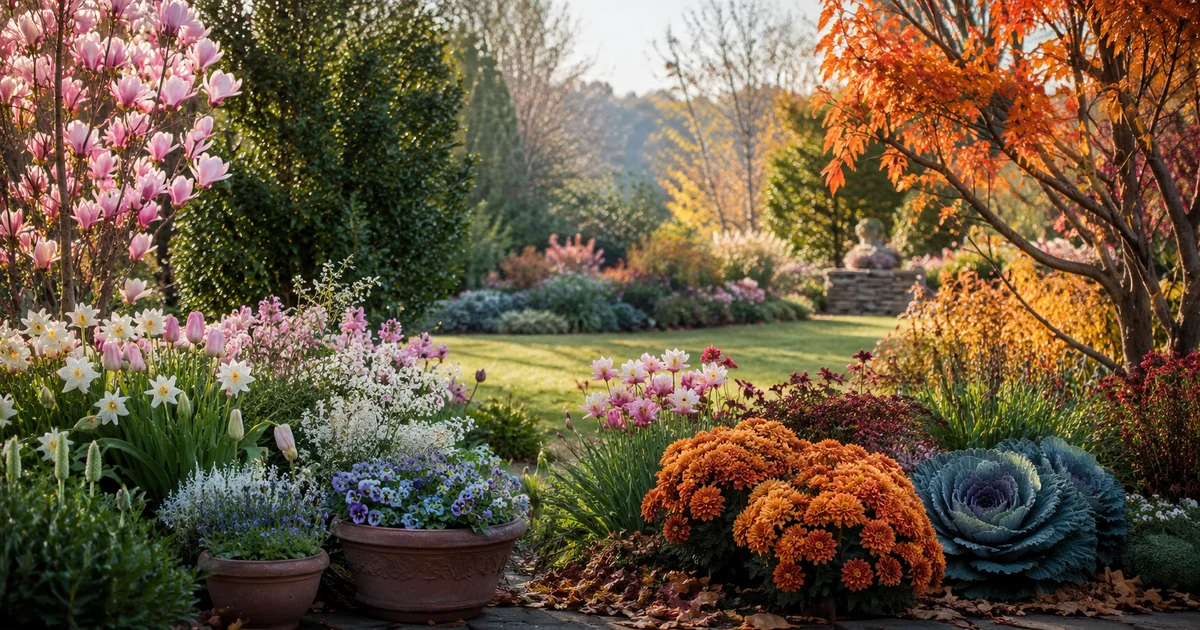
“Seasonal plant” is a gardening description, not a precise botanical category. It may mean an annual sold for one display season, a crop that grows best in cool or warm weather, a frost-tender perennial treated as an annual, or an indoor plant used for a holiday display. The right season therefore depends on the plant, your climate, and how you plan to grow it—not simply the month on a generic calendar.
What “Seasonal” Can Mean
Gardeners and plant sellers use the term in several ways:
- Cool-season or warm-season plant: Its active growth or crop production is best within a particular temperature range.
- Seasonal display plant: It is planted or purchased for a period of bloom, foliage color, or holiday use, even if it could live longer under suitable conditions.
- Annual used for one growing season: It completes its life cycle in one year, or is removed when the display ends.
- Tender perennial grown as an annual: It can live for years in a warm climate but is killed by cold and replanted each year in a colder one.
That last distinction matters. A plant can be perennial by biology but seasonal in a particular garden. Likewise, a hardy perennial may flower in only one season while its roots and crown remain alive year after year.
Annual, Perennial, and Seasonal Are Not Synonyms
| Term | What it describes | What it does not tell you |
|---|---|---|
| Annual | A plant that completes its life cycle within one year | The exact month to plant it in every climate |
| Biennial | A plant that usually completes its life cycle across two growing seasons | Whether it will survive every local winter |
| Perennial | A plant capable of living for more than two years | Whether it is hardy where you live |
| Tender perennial | A perennial damaged or killed by temperatures below its tolerance | Whether it must be discarded; it may be overwintered indoors |
| Seasonal display plant | A plant being used for a particular season or event | Its true botanical life cycle |
Use the plant label or a trusted species reference to identify its life cycle. Then use local temperature, frost, and hardiness information to decide when and where it can grow.
Cool-Season and Warm-Season Growth
Cool-season plants establish and perform best during cooler parts of the local growing year. Many tolerate some frost, but tolerance varies by species and growth stage. Warm-season plants need warmer soil and air and are often injured by frost.
These groups are more useful than “spring plant” or “autumn plant” because seasons do not bring the same conditions everywhere. University of Minnesota Extension notes that soil temperature, air temperature, and crop type are more reliable planting guides than a calendar date. It describes a light frost near 32°F (0°C) as potentially damaging to tender plants and a hard frost near 28°F (-2°C) as lethal to many warm-season crops. Those temperatures are planning cues, not guarantees for every species or microclimate.
For example, lettuce may be a spring crop in a cold-winter region, an autumn or winter crop in a hot-summer region, and difficult during the hottest part of either location’s year. The plant has not changed; the useful growing window has.
A Decision Aid for Choosing the Right Season
| Question | Why it matters | What to check |
|---|---|---|
| Where do you live? | Latitude, elevation, coastal influence, and urban heat all affect temperature | A local extension planting calendar and recent local weather |
| Which hemisphere are you in? | “Spring” and “autumn” occur at opposite times north and south of the equator | Local season names and months, not a Northern Hemisphere chart |
| What are your first and last frost dates? | They define the typical frost-free window for tender plants | Local climate records; treat averages as probabilities, not deadlines |
| Container or ground? | Containers change temperature and dry faster than garden soil | Pot exposure, drainage, root-zone temperature, and whether it can be moved |
| Annual or perennial? | Life cycle affects whether replacement is expected | Botanical label and reliable species information |
| Warm- or cool-season plant? | Temperature affects germination, establishment, flowering, and harvest | Species-specific soil and air temperature guidance |
| Indoor or outdoor use? | Indoor temperature may remove frost risk, but light can still be limiting | Window light, room temperature, humidity, and the plant’s actual needs |
Frost Dates and Hardiness Zones Answer Different Questions
An average frost date helps estimate when frost may begin or end locally. It is not a promise: frost can arrive earlier or later in any year, so check a current forecast before planting tender material.
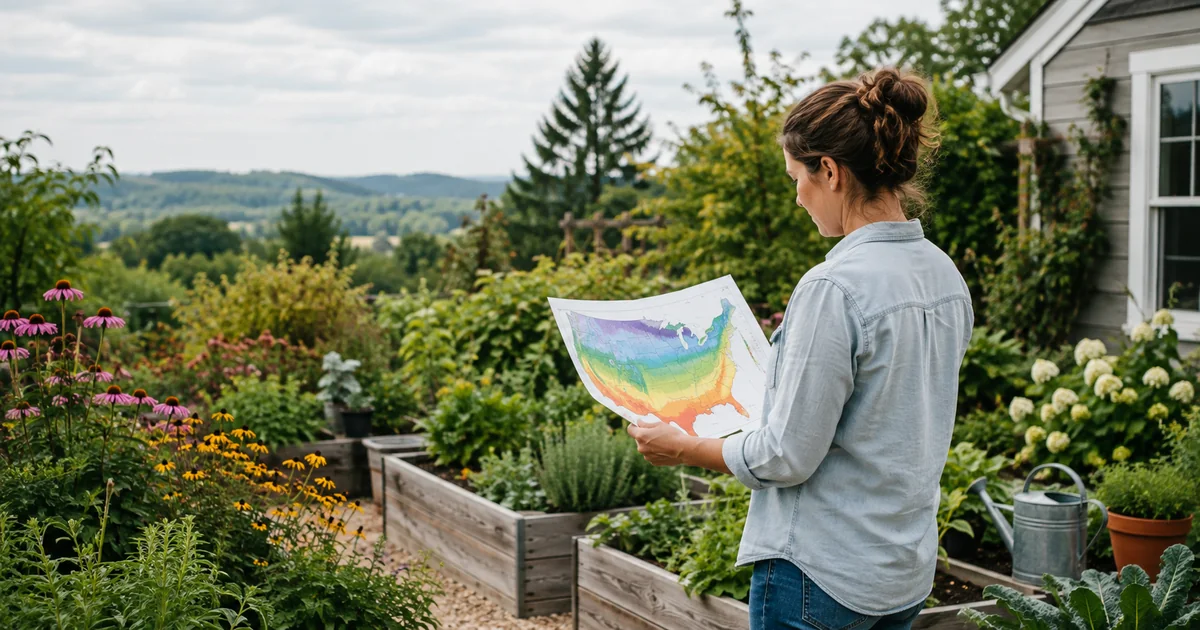
A USDA Plant Hardiness Zone answers a different question. The 2023 map is based on the average annual extreme minimum winter temperature and is mainly used to judge which perennial plants are likely to survive winter. It does not give an annual planting date, describe summer heat, or predict the next frost. Our guide to finding your gardening zone explains how to use the USDA map without treating it as a complete climate profile.
Outside the United States, use the locally relevant climate and hardiness resources. Even within one mapped zone, a sheltered wall, exposed balcony, low frost pocket, or raised container can create a different microclimate.
How to Plan a Seasonal Planting
- Identify the plant precisely. A common name alone may cover plants with different tolerances.
- Separate life cycle from cold tolerance. Determine whether it is annual or perennial, then find its frost and temperature limits.
- Check local timing. Use a local extension or horticultural calendar, average frost data, and the current forecast.
- Assess the planting site. Note daily light, drainage, wind exposure, and whether the root zone is in a pot or the ground.
- Decide the purpose. A three-month container display and a permanent border require different choices.
- Watch conditions, not only dates. Cold soil can slow a warm-season plant even after the average last frost; unexpected heat can shorten a cool-season crop.
- Keep a simple record. Note planting date, weather, and performance so next year’s timing is based on your site.
Containers, Garden Beds, and Indoor Displays
Containers
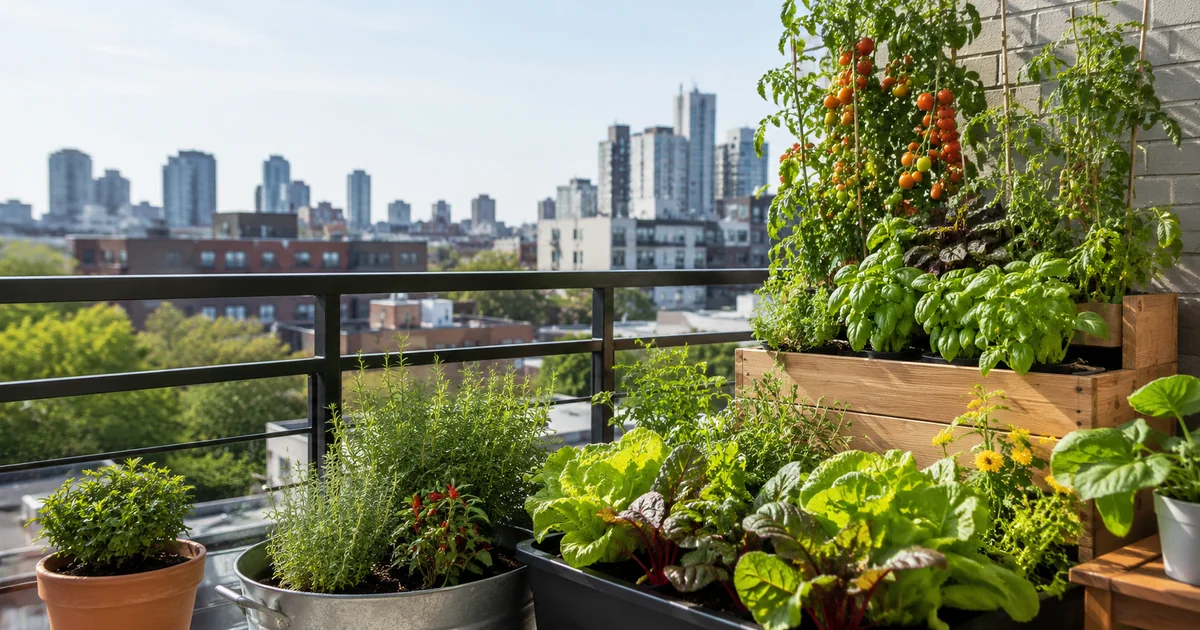
Containers make seasonal changes easy, but their roots experience faster temperature and moisture swings. A frost-tender plant in a pot may need protection sooner than the same species in a sheltered bed. Check moisture directly rather than watering on a fixed seasonal schedule.
Garden beds
For permanent planting, confirm mature size, drainage needs, and local hardiness before treating a plant as a perennial. For annual crops and flowers, match the plant’s temperature needs to the local frost-free period and expected heat.
Indoor seasonal plants
Indoor displays are buffered from outdoor frost but not from poor light, heater drafts, cold glass, or overwatering. A plant sold for a holiday can still have long-term care needs. Decide whether it is a temporary display or a plant you want to maintain, then research that species rather than assuming all indoor seasonal plants need the same care.
What Not to Do
Avoid choosing plants from a universal “spring,” “summer,” “autumn,” or “winter” list without location context. Do not assume every annual likes heat, every perennial is hardy locally, or every plant sold in season should be discarded afterward. Most importantly, do not use the USDA hardiness zone as a planting calendar: combine it with local frost information, soil and air temperature, and the plant’s own requirements.
Sources
- 2023 USDA Plant Hardiness Zone Map — what hardiness zones measure and how the ZIP-code lookup is used.
- USDA: How to Use the Maps — limits of hardiness-zone data and the role of microclimates.
- University of Minnesota Extension: A Minnesota Guide to Garden Timing — soil temperature, air temperature, crop type, and frost terminology.
- University of Minnesota Extension: Planting the Vegetable Garden — cool- and warm-season planting principles.
- University of Minnesota Extension: Extending the Growing Season — first and last freeze information and season-extension context.